 |
|
Happy Sunday. Welcome back to Dry Powder.
|
|
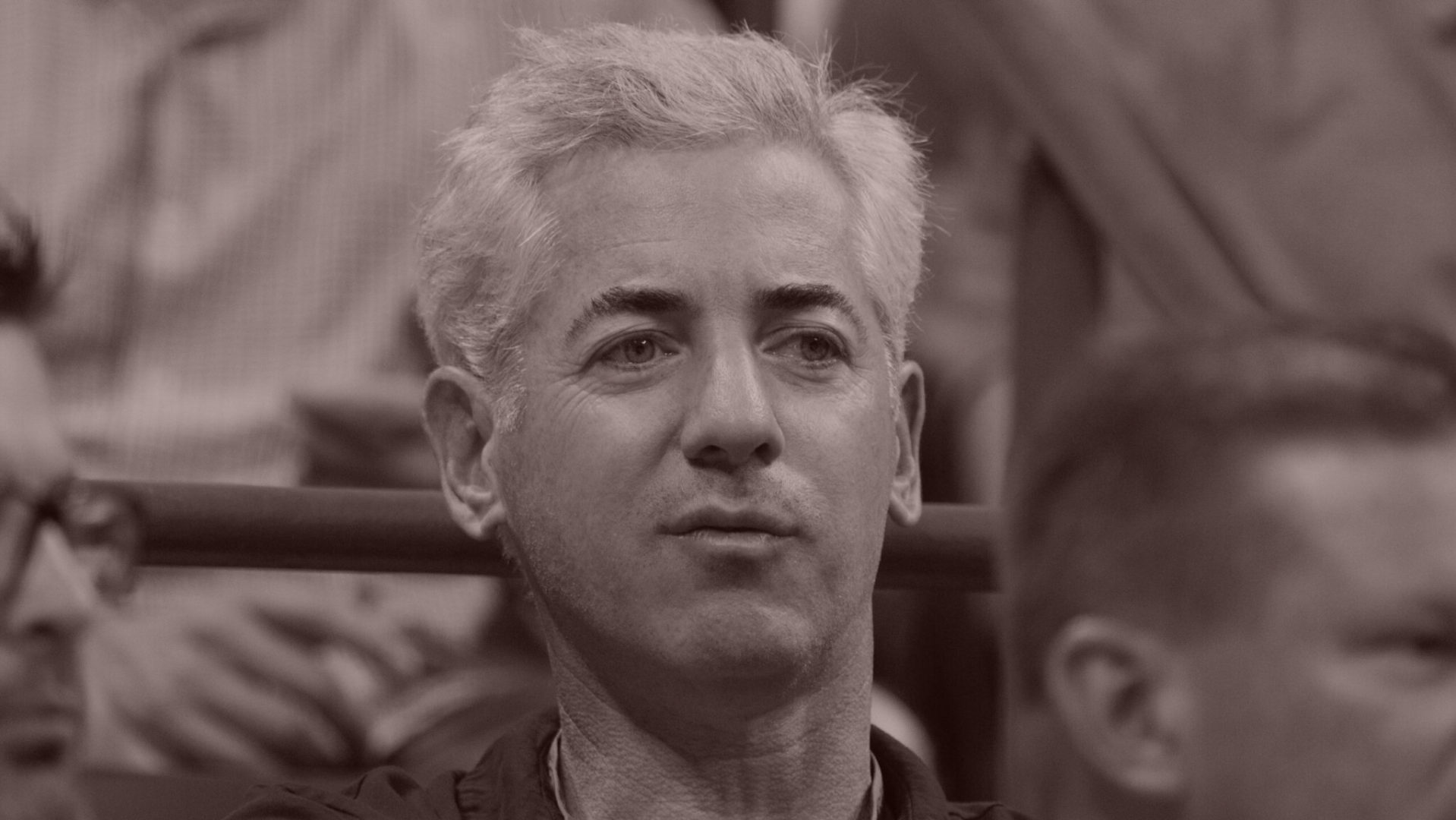
All of the qualities that have defined Bill Ackman as a hedge fund manager—in particular, the willingness to follow a cause to the bitter end—are now appearing in his Twitter crusade against M.I.T. and Business Insider. In today’s issue, my thoughts on where Ackman’s warpath might lead, the latest developments in the Peltz vs. Iger proxy war, and Jimmy Pitaro’s nearly $1 billion megadeal with the NCAA.
|
|
|
| If I’ve learned anything about Bill Ackman over the 11 years I’ve known him, he’s a pitbull in sheep’s clothing. Outwardly, and most of the time, he is refined, polite, thoughtful, even caring. But once the bit is in the mouth, watch out; he doesn’t easily let go of it. He fought the Herbalife fight for years, even though it was clear relatively quickly, and certainly once Carl Icahn and Dan Loeb took the other side of the trade, that he was fighting a losing battle. And lose he did—to the tune of $1 billion. Not to be outdone by that loss, he then rode Valeant Pharmaceuticals into the ground, vaporizing $4 billion. That would have been the death knell for most other hedge fund managers. But not Bill Ackman.
He bounces back, time and again, the Rasputin of hedge fund managers. His gutsy bet on credit default swaps in the first weeks of the pandemic, in which he turned $27 million into $3.6 billion, remains one of the greatest trades of all time. Over the years, Ackman has had other dramatic successes—Burger King, General Growth Properties—and other embarrassing mistakes (Target, JCPenney). Never in his life has he appeared to internalize the losses.
So if you thought Ackman would be placated by the resignation of University of Pennsylvania president Liz Magill, following the congressional hearing during which she and other academic leaders fumbled their answers about antisemitism on campus, then you haven’t been paying attention. After the hearing, Ackman—a graduate of Harvard and Harvard Business School—took aim at Harvard president Claudine Gay, criticizing her response to growing antisemitism on the Harvard campus and then amplifying accusations that she had plagiarized other scholars. After she also resigned, he moved on to M.I.T., where he is calling for the ouster of president Sally Kornbluth and has accused Mark Gorenberg, the new chairman of the M.I.T. board of trustees, of tax fraud. “Et tu Sally,” he tweeted after Gay’s resignation. (So far, M.I.T. has steadfastly backed Kornbluth and issued a statement to the media, “Our leadership remains focused on ensuring the work of M.I.T. continues.”)
On Thursday and Friday, the battle became more personal when Business Insider stepped into the fray with two reports accusing Ackman’s wife, the accomplished American Israeli designer and former M.I.T. academic Neri Oxman, of plagiarizing portions of her doctoral dissertation from Wikipedia, among other sources. Oxman apologized for the citation errors, but Ackman has vowed holy war, threatening to review the work of every M.I.T. professor, administrator, and board member for instances of plagiarism—and, for good measure, suggested that he might investigate every Business Insider journalist, too. He has asked the Twitterverse for help finding an A.I. program that would help him do the work and promised to put his “findings” in the “public domain” when they are finished, in the “spirit of transparency.”
Axel Springer, the parent company of Business Insider, appears to be taking the controversy seriously. “While the facts of the reports have not been disputed, over the past few days questions have been raised about the motivation and the process leading up to the reporting,” a spokesperson for the company said on Sunday. “We are going to take a couple of days to review the processes around these stories to ensure that our standards as well as our journalistic values have been upheld. We will be transparent with our conclusions.”
In some ways, Ackman’s current battles against M.I.T. and Business Insider are like any other activist campaign he has waged: He will not give up until he has achieved victory on the battlefield or his army has been decimated. In that way, he is sui generis as a hedge fund manager. Others, such as Dan Loeb, dart in and out of investments, hoping to make their money and move on. (The faster you can make your money, the higher your internal rate of return, and investors like high IRRs.) Sure, Ackman knows how to take a win, like with his pandemic bet in 2020, or when he shorted Treasuries this past fall. But he is most passionate when he is trying to make a point, such as Herbalife being a fraud and taking advantage of unsuspecting people. That belief is why Ackman shorted the stock for years, losing money pretty much the whole time. (He kind of made his point, in the end, but it cost him 10 figures.)
But his fights against Harvard, M.I.T., and now Business Insider and its reporter Katherine Long, are more deeply felt. Ackman has the Harvard pedigrees, of course, and wrote his undergraduate thesis about how for years Harvard discriminated against Asians and Jews in its admissions policies. He’s also given more than $25 million to Harvard to endow professorships and the crew program. (He rowed at Harvard and once boasted to me about how many RPMs he can still do on his home erg.)
His fight against M.I.T. is also personal. “I guess @MIT Chairman Gorenberg did not like it when I outed him for apparent tax fraud using @MIT’s donor advised fund,” Ackman tweeted on Friday. “By doing so, he put at risk MIT’s tax exempt status.” He demanded that Gorenberg step down. Oxman, an artist and a new-media philosopher, was a graduate student there—she got her Ph.D. in 2010—and was also a professor working in the famed Media Lab. (She also once gifted a sculpture to Jeffrey Epstein after he made a donation to the Media Lab, causing Ackman to defend her in a series of emails that got leaked.) Bill is utterly devoted to Neri and thinks she is one of the smartest and most creative people he has ever known. They have a daughter together.
So when Business Insider escalated its campaign against Neri on Friday, as the Ackmans were leaving their holiday vacation in the Dominican Republic, giving them a few hours to respond, you just knew it was going to be war. And that Ackman would not only defend his wife (and that she would also defend herself) but also that, in effect, he has now doubled down. “Is it plagiarism when you use an online dictionary for a definition of a word or term?” he tweeted Friday night. “How can one defend oneself when one learns about a 12-page plagiarism accusation at 5:40 p.m. on Friday night when one celebrates Shabbat and you are told the article would be published shortly, in this case 7:10 p.m.?” (For her part, Long tweeted that she had reached out to Ackman “earlier” on Friday, to which he replied, by tweet, that she did not contact him and “I have never spoken to her in my life.”)
The irony, of course, was not lost on anyone that Gay had resigned after being accused of plagiarism—charges that Ackman had amplified on Twitter/X to his 1 million followers—and now his wife was in the same crosshairs, although obviously, Oxman is not the president of Harvard. Ackman has not been shy about calling it retaliation for his campaigns against Gay, at Harvard, and Kornbluth, at M.I.T., even though he would be the first to say he did not want Gay to lose her job over the plagiarism charges. He wanted her to lose her job because of the way she has handled protests against Jewish students on Harvard’s campus. “It is unfortunate that my actions to address problems in higher education have led to these attacks on my family,” he tweeted on Friday. But he also didn’t want Gay returning to her position on the Harvard faculty at the same salary she received as Harvard’s president. “There would be nothing wrong with her staying on the faculty if she didn’t have serious plagiarism issues,” he tweeted.
He added that rewarding her “with a highly paid faculty position sets a very bad precedent for academic integrity at Harvard.” Then, on Saturday night, as if he didn’t have anything better to do, he posted another lengthy essay about the whole matter to X. “Last night, no one @MIT had a good night’s sleep,” he started, before starting to wind down, several thousand words later, with “Over the last several days, we have seen some of the worst forms of journalism and how it operates…”
This is just Bill being Bill, of course. He’s got the money, the time, and the determination to conduct such a campaign—it’s what he does for a living!—and like many wealthy people who feel wronged by one thing or another, he’s going to keep fighting until the battle is either won or definitively and thoroughly lost. And even then, he may keep fighting some more. I don’t know what this quality is, per se: blind ambition or admirable determination, perhaps, or the fact that shame seems to be in very short supply in America these days.
I have to say I got a real kick out of one of Dave Portnoy’s tweets about Bill’s battle. Portnoy, of course, is not known for having any shame either. Like Ackman, he’s a rich and sui generis fighter, the man who bought his company back for $1 last year and then bought the most expensive home on Nantucket. He also likes pizza. “In 20 years of doing this @BillAckman may be the most intimidating person I’ve ever seen,” Portnoy tweeted. “He’s smart, persistent and deadly. Luckily, so far I’ve been on his side on every issue he takes on. But if I was his enemy and saw him walking down the street I’d cross to the other side.” |
|
|
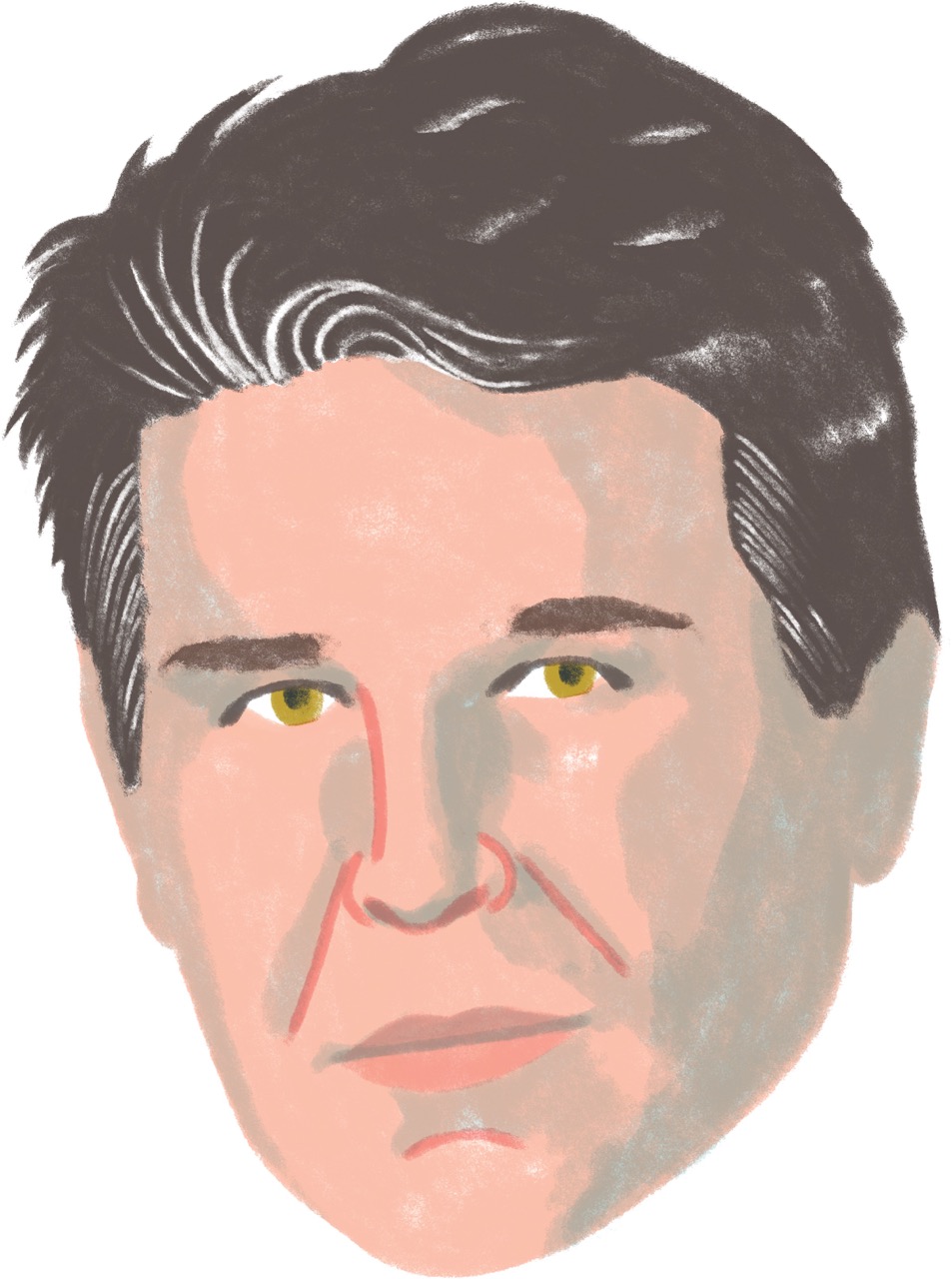
| Speaking of fights, it’s quite clear that Bob Iger is not going to go down to Nelson Peltz without a fight, either. Earlier this week, activist hedge funds ValueAct Capital and Blackwells Capital pledged their support to Disney as Iger works to fend off a proxy fight with Peltz’s Trian Fund Management. ValueAct apparently has a deal with Disney to support its director nominees to the board; Blackwells nominated three directors of its own, but said they would support Iger’s strategy against Peltz.
Of course, I’ve been of the view for a while now that there’s very little momentum for Peltz in this fight, and it’s no longer even clear to me that he’s even going to file a proxy statement. Early last year, you may recall, in the first round of Peltz vs. Iger, Trian never followed through on its “Restore the Magic” proxy statement, withdrawing before the vote, probably because Peltz knew he was going to lose. Anyway, by that point, Iger had already done enough of the things on Peltz’s original list of demands—cutting jobs, reorganizing the company, and pledging to restore the dividend—to allow Peltz to walk away and still be able to declare victory.
So what does Nelson, the “Smiling Crocodile,” have going for him this time that he didn’t before? Well, he’s now a bigger equity holder—his fund owns a total of some 7.3 million shares, worth $660 million, and has proxy control of his buddy Ike Perlmutter’s 25.6 million shares, worth $2.3 billion. That makes Nelson one of the larger Disney shareholders, although still smaller than both BlackRock and State Street, the behemoths of institutional investors, which both have more than 100 million Disney shares. Nelson also has Jay Rasulo in his corner, a onetime Disney C.F.O. who has been labeled by his foes as a “disgruntled former employee,” whom Nelson wants to install on the board, along with himself. And there is the fact that the Disney stock has barely budged under Iger II, suggesting that investors are frustrated with Iger’s strategic moves so far.
The stalled stock price, in particular, would normally be an opening for an activist investor such as Peltz. But I’m not feeling it this time, especially since the problems at Disney are more of the macro variety. (Its problems don’t seem all that different from those of its various competitors, including Comcast, Warner Bros. Discovery, and Paramount Global.)
And, of course, Iger has been clever about lining up the support of other shareholders, including ValueAct, which has a “significant” undisclosed stake in Disney. Usually, but not always, activist types stick together. But that does not seem to be happening this time. “[W]e believe Mr. Peltz’s latest effort is driven by animus against Mr. Iger, and an ego-driven urge to claim credit for a transformation already underway,” Blackwells Capital, the other activist siding with Disney, said in a statement. “Flip-flopping, self-interest and personal quarrels have no place in a [b]oardroom.” Jason Aintabi, the chief investment officer at Blackwells, demanded that Peltz “end his peacocking so that Disney can focus on its bright future, and not be dragged backward in time.”
Peltz has won his share of proxy fights. He’s a wily veteran and, at 81 years old, he’s pretty much seen it all. And after what he did at GE without a proxy fight—securing a board seat for his son-in-law, then getting rid two C.E.O.s, Jeff Immelt and John Flannery, in order to install his own guy, Larry Culp—he’s hard to bet against. But I’m not seeing where Nelson’s support is coming from this time, aside from Ike. Maybe we’ll know more, if and when he files a proxy statement next week. |
|
|
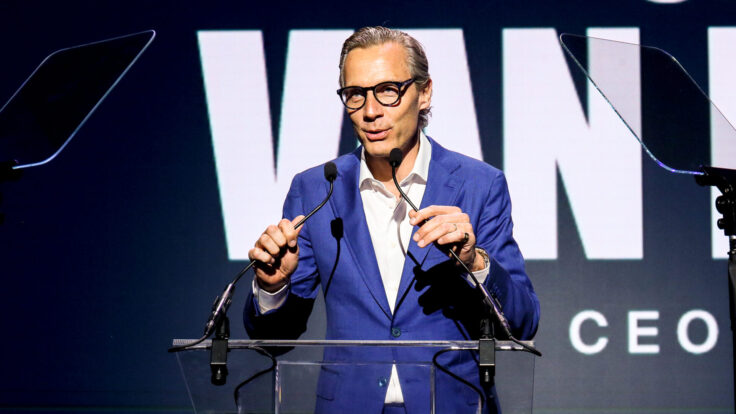
| ESPN’s new eight-year, $920 million deal with the NCAA to broadcast up to 40 championship matches in a variety of sports is, in many ways, a testament to the growing popularity of women’s collegiate athletics—a trend that was punctuated last week when national sports coverage was dominated by Iowa basketball superstar Caitlin Clark’s game-winning, half-court buzzer-beater against Michigan State. Title IX enthusiasts may fairly remark that the deal belatedly values the impact of the women’s game. But the new, nearly billion-dollar deal brings ESPN’s commitments to various live sporting events between now and 2027 (and beyond) to more than $45 billion.
That’s a lot of money, but what choice does ESPN have? It’s pretty much a live sports network, after all. If it’s not broadcasting or streaming live sports, what’s the point of it? Among the myriad of problems facing our friend Jimmy Pitaro is the fact that, when you cut right through it, there is the NFL and then everything else when it comes to broadcasting live sports. Of the 100 most watched linear television broadcasts in 2023, 93 of them were NFL games! And when you add in college football broadcasts, that number increases to 96 of the top 100 shows. So if ESPN isn’t investing in and broadcasting the NFL games, I’m not exactly sure how it’s going to get a return on its invested dollars.
And, of course, the price of the NFL broadcast contracts keeps spiraling upwards, given that all of CBS, NBC, and ABC/ESPN, plus Amazon and Apple, are competing for the TV rights—and there’s little likelihood that this dynamic will be changing anytime soon. The “Familiar shorthand is that ‘live sports’ is the last lifeline of the linear television industry,” my Puck partner Dylan Byers tweeted on Friday, “but the truth is that it’s really just football, and by football we really just mean the NFL.”
This has all got to be quite the conundrum for Jimmy. At the same time that Jimmy has to fight the battle of the purse, he also has to contend with the growing reality of cord-cutting and a shrinking subscriber base, which means less revenue and profit generally. And then he has to figure out how to introduce, and to price, a fully fledged digital version of ESPN to scratch out some more revenue from the people who like to watch live sports, but don’t want to keep paying a monthly cable bill that prices in other, unwanted content.
The challenge for Jimmy is a version of the challenge facing Bob Iger, David Zaslav, Bob Bakish, and Brian Roberts (albeit to a lesser degree): How do you replace the declining profits from a dying linear TV business with revenue (and hopefully profit) from a growing digital offering? And how do you get cord-cutters to sign up for a new digital offering when they are probably dancing a jig about not having to pay a monthly cable bill anymore?
And then, of course, there is the whole question of how, and if, ESPN continues to be part of Disney. I know Iger professes his love for live sports, and there’s no question that Disney has committed a tremendous amount of capital to ESPN, although the $45 billion falls short of the $60 billion Iger has pledged to Disney’s parks business. (And who knows what he’s going to give to the film business.) But would Disney be better off without its 80 percent stake in ESPN? (Hearst owns the other 20 percent.)
We can all still remember when Dan Loeb, the activist hedge fund manager, suggested that Disney spin off ESPN, loaded with some billions in debt, into its own publicly traded company, essentially to relieve Disney of the problems with which Pitaro is trying to grapple. That was a good idea, and it’s still a good idea. (This is not investment advice.) But, of course, it’s an idea that Iger has rejected, although the reasons why aren’t particularly clear. Yes, he likes live sports and he seems quite taken with the idea of broadcasting the same content on both ABC and ESPN on a Saturday night. But live sports is like an addictive and very expensive drug for ESPN and Disney, and the truth is that Disney would be better off if ESPN were floated off on its own, or used as currency for Disney’s upcoming purchase of the one-third stake in Hulu that it’s about to buy from Comcast.
I’ve written about this idea many times before now. Nothing ever comes of it, I know, and if it’s part of the consideration in the Hulu deal, it hasn’t surfaced, or leaked, yet. But there’s still time, Bob, to suggest swapping a stake in ESPN for Comcast’s stake in Hulu. I’d be happy to share with you how it all could work. |
|
|
|
| FOUR STORIES WE’RE TALKING ABOUT |
|
|
|
|
|
 |
|
|
|
Need help? Review our FAQs
page or contact
us for assistance. For brand partnerships, email ads@puck.news.
|
|
You received this email because you signed up to receive emails from Puck, or as part of your Puck account associated with . To stop receiving this newsletter and/or manage all your email preferences, click here.
|
|
Puck is published by Heat Media LLC. 227 W 17th St New York, NY 10011.
|
|
|
|