 |
 |
|
Welcome back to Dry Powder. I’m Bill Cohan.
Wall Street has been buzzing over Bill Ackman’s Pershing Square USA, his ostensibly historic closed-end fund open to retail investors, which has, to put it mildly, not hit the benchmarks that Ackman himself set out. Herewith, a close look at the latest strange twists on Friday and over the weekend as we continue the forced march toward I.P.O. day…
But first…
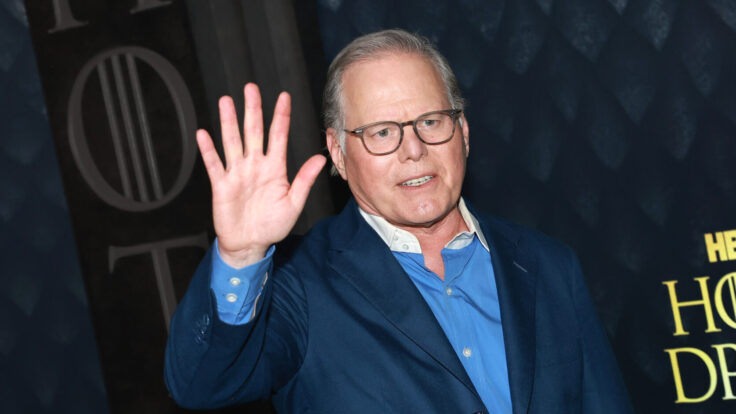
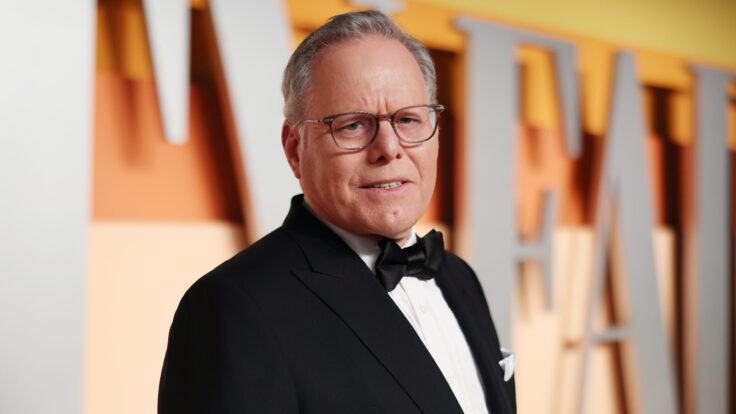
- Another Khan antagonist: David Zaslav may be enjoying a Parisian July, as he sues the NBA and continues on his journey of efficiently reducing WBD’s debt load. But it seems like Zaz wants to be known these days as the guy standing up for the large (but not large enough) mediacos as they fight to fend off the trillion-dollar market cap companies that have entered his space. Zaz’s slightly ham-fisted comments in Sun Valley about favoring the presidential candidate who most effectively alleviates regulatory hurdles was the latest sign that he wants to pursue M&A opportunities to compete against the FAANGs. His main obstacle, of course, is federal regulators, particularly Lina Khan at the F.T.C.
He’s hardly the only person who feels this way. This week, billionaire Reid Hoffman agreed to give $7 million to Kamala Harris and then went on to urge her to fire Khan. In a CNBC interview with my friend Andrew Ross Sorkin, Barry Diller offered a similar perspective. Asked point-blank if he would lobby Harris to boot Khan from the F.T.C., he responded: “Yeah, I would. I think she’s a dope.”
Khan may be a lot of things, but she’s not a dope. She’s a graduate of Williams College—she wrote her senior thesis on Hannah Arendt—and Yale Law School. And I suspect Harris won’t touch the idea of appointing someone else as F.T.C. chair, unless and until she wins in November. And even then, there’s limited circumstances in which a president can legally remove an F.T.C. commissioner, even if she may want her own person in the job. Sorry, Barry.
- The Paramount stalking horse beat: I know the 45-day go-shop period for the David Ellison/RedBird Paramount deal doesn’t end until August 21, but it sure seems like there isn’t a whole lot out there to convince the special committee of the Paramount board to change its recommendation. All the supposed pretenders—including the aforementioned Barry, who’s in Paris, where he’s presumably not doing due diligence on Paramount Global—seem to be coming a cropper. (Barry’s also reportedly said he’s done looking at Paramount.) Haven’t heard a peep from Sony/Apollo, Bronfman/Bain, or Steven Paul. I know there are still 24 days to go here, but I’m going to call this one for Ellison/RedBird. That leaves the various annoyed shareholders to flex their legal muscles and see what kind of additional consideration they can extract here. I await the filing of the proxy statement and further shareholder lawsuits.
- The phony Vance investor narrative: Kudos to The Wall Street Journal for digging up J.D. Vance’s venture capital and SPAC track record. It’s as inexplicable and brief as his political career. According to the Journal, Vance spent five years as a venture capitalist at two firms before starting his own firm, Narya Capital Management, in Ohio. (He and his partner raised $120 million, mostly from the likes of Peter Thiel, Marc Andreessen, and Eric Schmidt.) After graduating from Yale Law School, in 2013, Vance moved to San Francisco to try to become an entrepreneur, an atypical path for a law school graduate. He tried to get a job with Thiel’s firm but it wasn’t hiring. He somehow then became the chief operating officer at a small biotech company. (How does that happen?) He pitched the company as an investment to Thiel on several occasions, the Journal reported. Three years later, in 2016, the year Hillbilly Elegy was published, he joined Thiel’s firm as a “junior investor,” which seems like a hood ornament position.
He only worked for Thiel’s firm for a year and then—again, somehow—got a job working for Steve Case’s firm, Revolution, where he was tasked with identifying overlooked investment opportunities in the heartland. According to the Journal, during his two years at Revolution, he was the “lead partner” or “co-lead” on 14 investments. (That strikes me as a lot of deals to do in a two-year period; sounds like Revolution is being overly generous with credit.)
One of his investments at Revolution, AppHarvest, a Kentucky-based indoor farming company, later merged with a SPAC, Novus Capital, giving AppHarvest a short-lived valuation of around $1 billion. In July 2023, AppHarvest filed for bankruptcy protection. Two months later, the company’s assets were sold and the bankruptcy plan was confirmed. Vance invested in AppHarvest twice—first at Revolution and then at his own firm, Narya. He also was an AppHarvest board member. At Revolution, Vance also invested in defense tech startup Anduril Industries and A.I. company Pryon, according to the Journal. He joined Pryon’s board in 2019.
According to an investor report, obtained by the Journal, as of March 2023, Narya returned to investors a multiple of invested capital of 1.67x and an internal rate of return of 24.35 percent. Nothing shabby about that, although certainly not the astronomical returns that are so often associated with successful venture capital investors. Vance left Narya in 2022 to run for the U.S. Senate. According to his Senate filings, Vance had income from Narya in 2023 of $110,146 and $121,376 in book royalties. He had $1.7 million to $3.6 million in mutual funds and owned between $100,001 and $250,000 in Bitcoin. He owns a single-family townhome in Washington that he values between $500,001 and $1 million, a net worth of around $5 million, about right for a onetime venture capitalist waiting for his ship to come in.
|
 |
| Ackman of the People |
| News and notes on the bizarre and bewildering saga of Pershing Square USA’s long journey to the public market. |
|
|
|
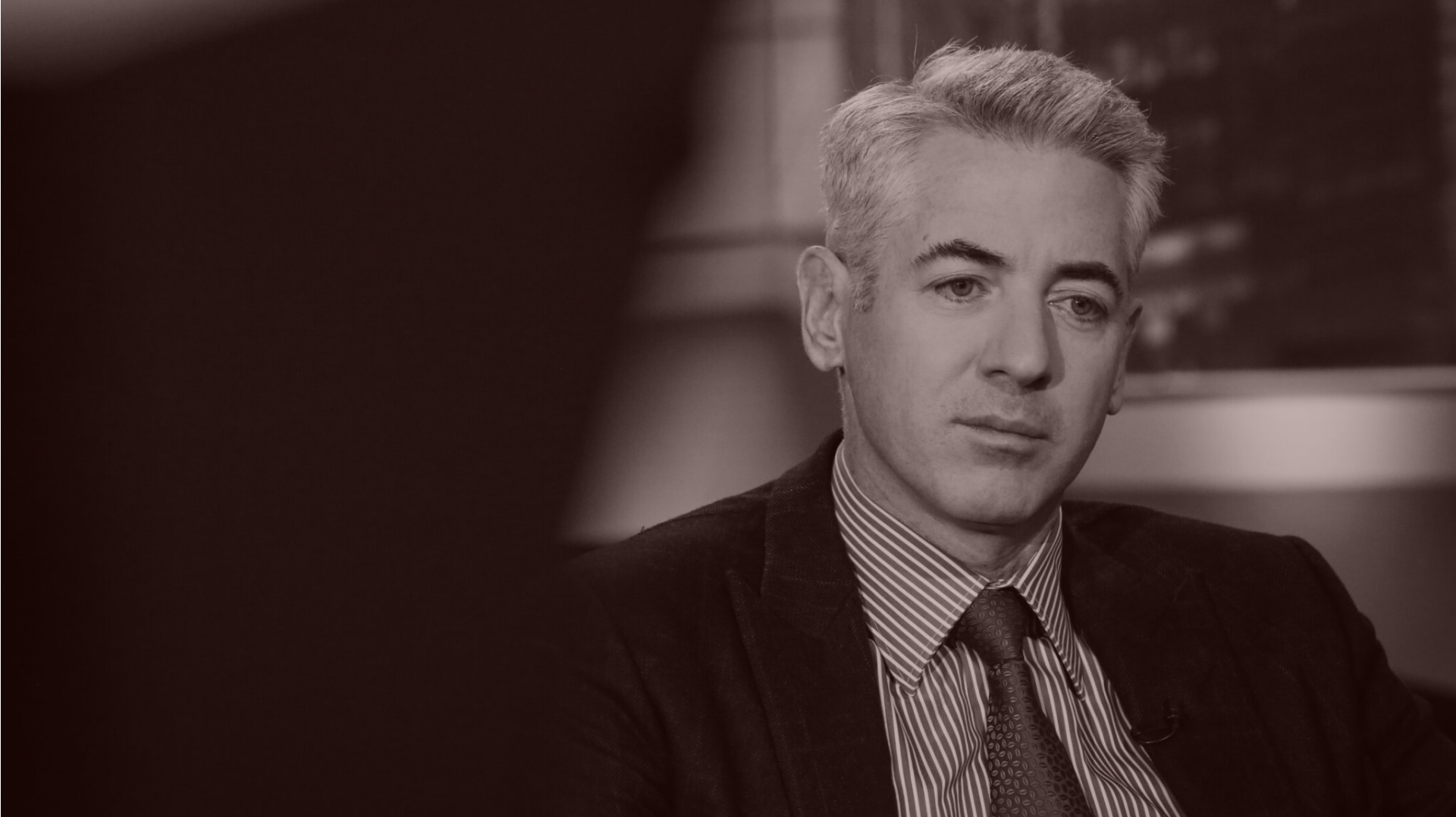
| Late on Friday, another bizarre twist emerged in Bill Ackman’s chaotic attempt to take public Pershing Square USA, his closed-end fund that will mirror the investments in his Pershing Square hedge fund and is open to any retail investor with 50 bucks and a dream—and that might elevate Ackman into the position of meme stock lord. As you’ll recall, some leaks emerged several weeks ago suggesting that Pershing Square USA was on track to raise as much as $25 billion—which would have made it the largest-ever closed-end fund by a factor of five. Last week, it was revealed that the hoped-for war chest had shrunk to around $10 billion, and more likely to between $5 billion and $10 billion. Strange days. And then on Friday, Bill did not file the “final” prospectus, as he said he would in a letter sent Thursday to accredited, high-net-worth investors in Pershing Square, whom he was encouraging to invest in Pershing Square USA. Per Ackman’s letter, the new fund seemed to have lowered its targeted haul again: to a now-promised $2.5 billion to $4 billion.
After this new revelation, a number of media entities reported that the New York Stock Exchange posted a brief note on its website announcing that the Pershing Square USA I.P.O. had been postponed. But I can’t find the note. (Apparently, the NYSE amended its headline, saying the offering had been delayed instead of postponed.) And then, around 6 p.m. on Friday night, Pershing Square USA announced that it was proceeding with the I.P.O. but did not make any statement regarding how much money Ackman now intended to raise. A spokesman for Bill declined to comment beyond the Pershing Square USA statement. Then on Saturday morning, Bill published a tweet presumably aimed at the media outlets that reported the deal was effectively dead. “How can it be legal for a reporter to write a false, misleading, and libelous story based on one anonymous source?” he wrote on X. |
|
A MESSAGE FROM OUR SPONSOR
|
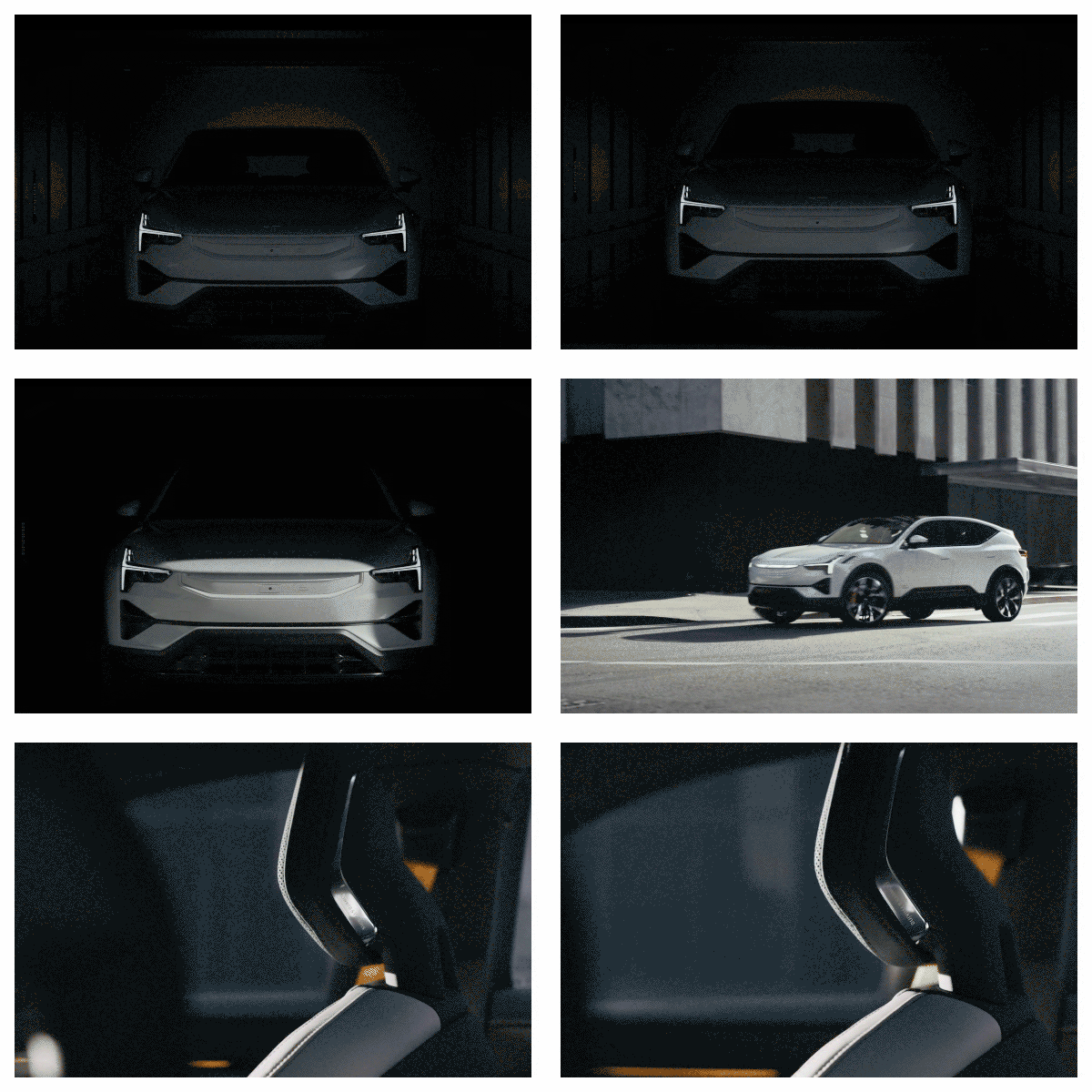 |
| The electric SUV that drives like a sports car. Polestar 3. Sleek design, responsive handling, & luxurious interior with 25 speakers, 3D Bowers & Wilkins, and Google built-in. Up to 315 miles of range (EPA). Polestar 3 is designed with meticulous attention to detail, so every time you drive, it can be the best time of your day. Be among the first to experience Polestar 3. Schedule your test drive today. |
|
|
|
|
| This latest chapter in the Pershing Square USA saga began on Thursday with Bill’s now-infamous letter begging a bunch of Pershing Square investors to also invest in Pershing Square USA. Needless to say, his letter was quite revealing. Not only did it hint at Bill’s concern over the deal, it also shed light on the dynamics and politics around I.P.O. pricing and the very crucial role played by underwriters in fomenting demand. (Bill is in the final stages of working with Citigroup, UBS, Bank of America, and Jefferies to raise the equity for Pershing Square USA.)
In the letter, Bill confirmed that the $25 billion number was fiction—rather, that number “anchored investors in thinking the deal would be too large,” Bill wrote. “Ultimately, I expect this ‘anchoring’ to be helpful to the final outcome,” an assertion that appears increasingly in doubt. He also wrote that the deal size would be capped at $10 billion. And then he said the quiet part out loud: “The typical approach is to show a small deal size to make market participants concerned that they will miss the deal if they don’t put their order in quickly.”
That notion, of course, makes me wonder why Ackman decided to anchor the market at the $25 billion number, where supply would obviously outstrip demand. In the letter, he referenced his pandemic-era SPAC deal, which he announced would only raise $1 billion; he got orders for $12 billion and then raised $4 billion. So he knows how the game is played. But now, it appears, he’s found religion. In the letter, he wrote that he expected Pershing Square USA to file a revised prospectus on Friday—which will probably happen on Tuesday now—with a deal size of between $2.5 billion to $4 billion “on the cover.” That’s quite the revision, and obvious evidence that investors turned out to have a tepid response to the offering. But even at that size it would be one of the largest I.P.O.s of the year. “The ultimate deal size will depend on how demand builds Thursday, Friday and Monday,” he wrote. “We will price Monday night unless we have to refile due to a material increase in the size of the deal above tomorrow’s filing range.” (The pricing will no longer be Monday, but rather sometime next week or the following week.)
He then committed another faux pas or two. First, he revealed the names of several of his hedge fund investors who had committed to investing in Pershing Square USA, including the secretive and highly respected Seth Klarman, at Baupost, for $150 million (I suspect he’s not happy about the disclosure); Putnam, the mutual fund company, for $40 million, which “would grow,” he wrote, depending on certain factors; and the Teachers Retirement System of Texas, for $60 million. He also teased the fact that an unspecified family office with lots of money had indicated to him it was prepared to buy 9.9 percent of the ultimate offering. Bill wrote that even if that amounted to $1 billion—10 percent of $10 billion—it would be a relatively “small” investment, since the assets of the family are “in excess of $65 billion.” Let the guessing games begin!
He then asked the recipients of the letter to pony up for Pershing Square USA as soon as possible. “In short, this is a moment when you can be very helpful to Pershing Square by participating in the PSUS offering and giving your order to the banks, the sooner the better,” he wrote. “An order today will enable us to improve the strength of tomorrow’s initial message to the market on deal size. Orders that come later are of course still very helpful as the book will build and we create momentum over the weekend into Monday.” Incredibly, the emphasis was Ackman’s.
Ackman presumably didn’t think the letter would become public, but I suspect his lawyers decided it had to be disclosed since it seemed like a solicitation from the C.E.O. of Pershing Square USA. In a surprise S.E.C. filing, company lawyers warned investors not to rely on Bill’s assertions when deciding whether to invest in Pershing Square USA. “The Company,” the lawyers wrote in the filing, “specifically disclaims the statements made by Mr. Ackman.” This is some wild ass shit. |
|
|
| I was an M&A guy for nearly 20 years, not an equity underwriting guy, and maybe this is the way the sausage is made—with the principal rallying potential investors to an I.P.O. when things are looking dicey. But that’s usually the job of the underwriters, not the company’s C.E.O. That is probably why the lawyers made his letter a disclosable item and then disavowed it, as embarrassing as this was to Bill.
For me, Bill’s comments about the secretive underwriting process are actually the most captivating. (I wrote about this years ago in a Fortune cover story.) As Bill wrote in his letter, most C.E.O.s care about how a newly introduced stock trades long term, in the aftermarket, and he said that he was doing everything he could to make Pershing Square USA trade well after a desired first-day pop. “The banks also play a very important role,” Bill wrote. “While they are nominally fiduciaries for us on this deal, ultimately they care more about the regular I.P.O. buyers who buy every deal more than any one issuer. They will always favor Fidelity, Blackrock and others versus us. It is therefore very important that the banks get a sense that a deal’s momentum is building as they convey that feeling of momentum to the capital markets desks of every institutional investor, and the financial advisor community also wants to hear that the institutions are interested and motivated.” |
|
|
| I know we are in an era where everyone lets everything hang out in the public square. And Bill Ackman, on his X account, has been among the most active abusers of that social media strategy. But even by those base standards, this letter and the legal response to it has been something to behold. One veteran Wall Street equity capital markets banker wrote to me, “Selling anything in the I.P.O. market is about articulating a fundamental investment thesis (he’s not checking that box) and assuring participating investors that there are others who have done the work and are coming to a similar view. Given vagaries of deal size and institutional vs. retail participants (letter went out to his LPs), who is he trying to convince? If there is really demand for this, he would go as big as possible because the management fees will drive the value of his [management company] I.P.O. and demonstrate his ability to innovate ways to increase assets under management. That’s his key issue. Have to be some difficult conversations tonight.” |
| The Management Company I.P.O. |
|
| In June, Ackman sold a 10 percent stake in his hedge’s fund management company to a bunch of well-heeled investors for $1.05 billion. The deal valued his private management company at $10.5.5 billion, and increased Bill’s net worth to $9 billion. The sale of the minority stake was a step toward Bill’s plan for an I.P.O. of his management company, Pershing Square Capital Management Capital Management, which collects fees and profits for managing the hedge fund, the European publicly traded fund, and Pershing Square USA, if it comes to fruition.
Will that still happen? Between the Pershing Square USA debacle and the unexpected $1.2 billion loss Bill suffered this week on his stake in Universal Music Group due to a poor earnings report, people on Wall Street are wondering if some of those investors in Bill’s management company will want their money back, or might possibly sue him if he won’t return it. (I’m sure Bill would say they are still very happy with him.) Added another longtime Wall Street player about Bill and the Pershing Square USA mess, “It is so undisciplined and an example of his hubris. He’s so smart yet does the dumbest things.”
The Bill I know always seems unfazed by his various blunders, whether it’s his $4 billion faceplant on Valeant Pharmaceuticals or the wrecking of J.C. Penney after he made his investment in the company and brought in a new C.E.O. from Apple, who then failed to fix the retailer. That stoicism is his superpower.
I suspect he sees the 25 percent hit that UMG took this week as a long-term buying opportunity, not a short-term headache. Now, Pershing Square USA is his latest Job-like test. I’m not sure why he keeps doing these things to himself, and I wish him the best as he tries to salvage the deal. But no matter how it turns out—and we’ll know in a week or so—it’s damn interesting to watch. |
|
|
|
| FOUR STORIES WE’RE TALKING ABOUT |
 |
|
 |
|
 |
|
 |
| Hillbilly Blues |
| Plus, documenting how Trump is modulating to Kamala Harris. |
| TARA PALMERI |
|
|
|
|
|
 |
|
|
|
Need help? Review our FAQs
page or contact
us for assistance. For brand partnerships, email ads@puck.news.
|
|
You received this email because you signed up to receive emails from Puck, or as part of your Puck account associated with . To stop receiving this newsletter and/or manage all your email preferences, click here.
|
|
Puck is published by Heat Media LLC. 227 W 17th St New York, NY 10011.
|
|
|
|