 |

|
|
Welcome back to Dry Powder. I’m Bill Cohan.
Congratulations to my partner Lauren Sherman, whose new book, Selling Sexy, a forensic look at the rise and fall of Les Wexner’s Victoria’s Secret empire, was beautifully reviewed in the Times this morning. I blurbed the book; I know a winner when I see one. (You can order it here.) Of course, integral to the story is the long and sinister shadow of Jeffery Epstein, who was also inseparable from the fall of Leon Black, whose fresh legal machinations were the subject of my reporting last Sunday, and on which I have an update on below.
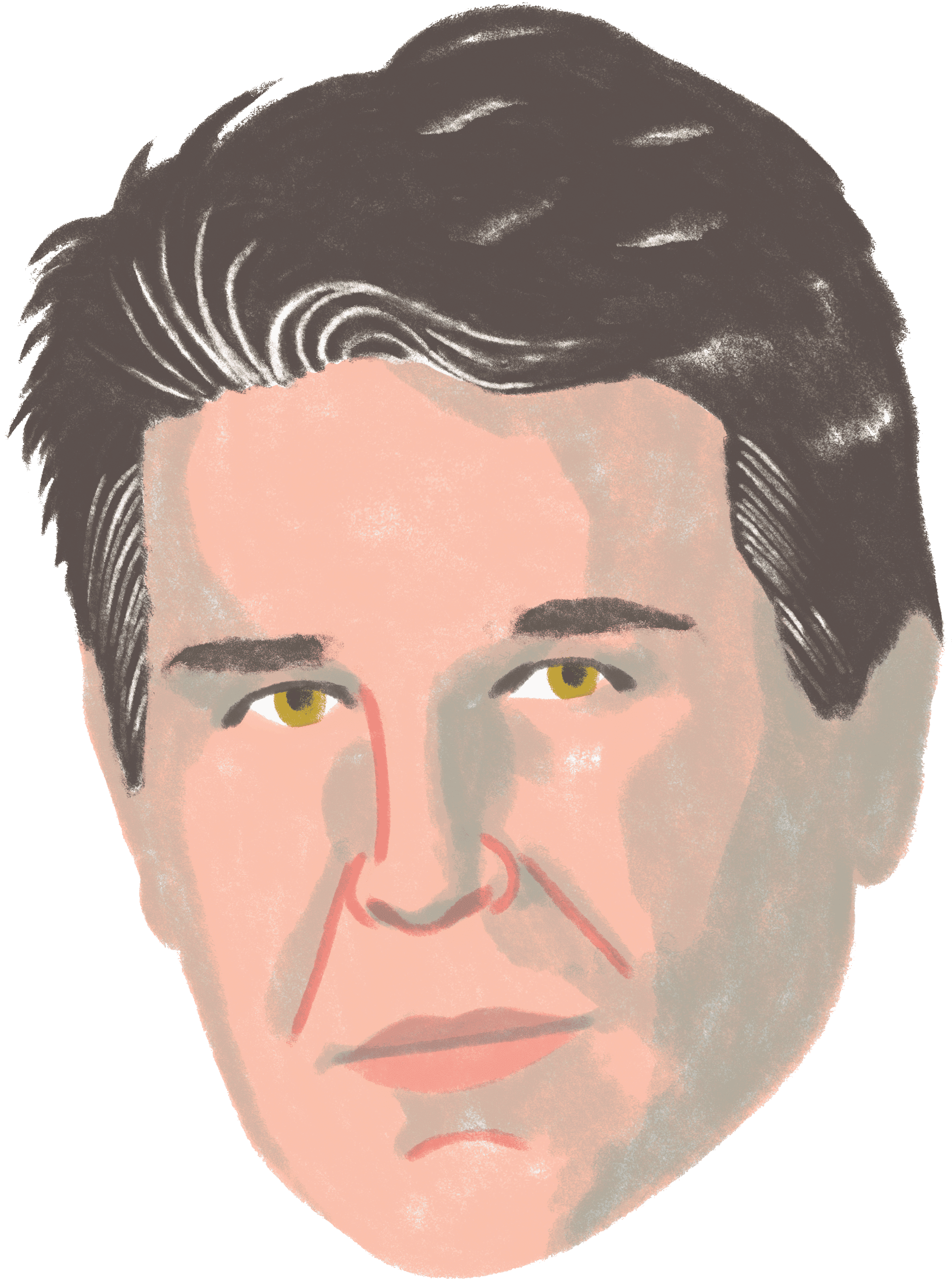
Today’s big story, however, concerns our favorite hedge fund manager, Bill Ackman, who once again has his alma mater, Harvard University, in his crosshairs…
But first, a dispatch from my partner Eriq Gardner on CAA’s latest legal mess, before a short update from me on Leon Black…
- Bryan v. Bryan, Part 2: Bryan Lourd’s CAA, which recently accused a group of former employees of running an unlicensed talent agency, is now defending itself against allegations of running an unauthorized law firm. The charge is from litigator Bryan Freedman, who, when he’s not representing the Range Media founders or quietly working to spring the Menendez brothers from jail, has a habit of loudly challenging CAA in court. This time, he’s representing former ESPN host Sage Steele, an ex-CAA client. (She originally signed at the agency with Nick Khan, a former attorney and co-head of television at CAA who is now the president of WWE.)
Steele sued in June, accusing CAA of failing to uphold its fiduciary duty to a client. The agency allegedly wouldn’t support her after she was reluctant to apologize for criticizing Disney’s Covid vaccination mandate—a scuffle that led to her exit from ESPN. Shortly after the lawsuit was filed, the California Labor Commissioner’s Office resolved a related matter, determining that Steele verbally agreed to pay CAA its usual 10 percent commission, or about $750,000. The agreement included legal services from CAA’s internal business affairs group, but Steele failed to show that the attorney work extended to protecting her free speech rights. The labor commissioner concluded that CAA did not violate its fiduciary duty—in part because Steele knew that Khan’s skills and the agency business affairs group were focused on negotiating contracts—clearing the way for the agency to collect its fee.
Now, Freedman is changing his strategy. He’s leveraging the labor commissioner’s determination that the contract included legal services to highlight a California law that requires attorneys who represent a client on a contingency basis to have the fee arrangement in writing, or the contract may be deemed void. Freedman is using this point to challenge the validity of Steele’s CAA contract, potentially adding another layer to the already complex interplay among agents, managers, and lawyers in Hollywood. —Eriq Gardner
- Back to Black: I promise I won’t dwell on every twist in the ongoing legal saga between “Jane Doe” and Leon Black, which I detailed on Sunday. But there were a few interesting developments in recent days that I want to bring to your attention. First, no surprise, Susan Estrich, one of Leon’s high-powered attorneys in the case, continues to argue that Judge Jessica Clarke should allow Leon to access the proceedings that occurred in the separate federal courtroom of Judge Jed Rakoff regarding whether the same Jane Doe misled the administrators of the $290 million JPMorgan Chase settlement fund designed to compensate the victims of Jeffrey Epstein.
Leon’s team believes that Rakoff ruled that Jane Doe must pay back the millions of dollars she received from the fund because she was not actually an Epstein victim. They believe she fabricated that story, along with the one they allege she made up about Leon. “Documents relating to the hearing are relevant both because they bear on whether [Jane Doe] was, in fact, trafficked by Epstein, and because they bear on [Jane Doe]’s credibility more broadly,” Estrich wrote Judge Clarke on October 7. “Accordingly, the discovery sought by Mr. Black is highly probative of the claims and defenses at issue in this case.” Obviously, Jane Doe’s attorneys at Wigdor want to keep the Rakoff proceeding sealed.
On Monday, Leon’s legal team also asked Judge Clarke to publicly reveal the identity of Jane Doe. Leon and his legal team and investigators know her name, of course. That’s how they were able to track down her mother and her family and discover, at least according to their version of events, that she had a history of fabricating stories about herself and that she has made up the story about Leon, too. They also were able to find many tweets, using her real name, where she alleged that Epstein trafficked her, as well as times she participated in Twitter Spaces conversations, where she also discussed her alleged treatment by Epstein. (Leon’s team found the tweets in an online archive, even though Doe had deleted them.) In any event, Leon’s legal argument is that Jane Doe outed herself repeatedly on Twitter and no longer deserves the protections of anonymity. Judge Clarke will decide both of these issues in the coming weeks.
|
|
Now, to the main event…
|
 |
| Ackman’s Big Harvard Short |
| After a topsy-turvy year in both the public markets and his personal life, Bill Ackman has returned to a familiar activist target: his alma mater, its fiscal mismanagement, woke mind virus, and illiquid investment portfolio. |
|
|
|
| Last week, in an 18-minute presentation at the annual Grant’s Interest Rate Observer conference, Bill Ackman (Harvard ’88, HBS ’92) assailed his alma mater as a severely underperforming asset, worthy of one of his legendary activist investing campaigns, like Herbalife or JCPenney. In a slick, 49-page slide deck titled Veritas?—a play on Harvard’s motto—he illuminated his thesis on the university’s financial and cultural failures. “It’s an investment idea,” he told the crowd, “the oldest corporation in America, one of the leading educational institutions, 7,000 enrollment, 20,000 faculty and staff, a $51 billion endowment, invested largely in illiquid assets, about $6 billion of revenue, $5.9 billion of expenses, significant capex, and, interestingly, about $6.25 billion of debt.”
The biggest “short-term threat” facing the university, he told the audience, was from alumni withholding their donations, which he said he thinks are down some 80 percent in the last year. “That caused Harvard to have to access the bond market, which it obviously freely was able to do,” he said. “But, if you’re an alum—they now have something like $6.5 billion of debt—how good do you feel about writing a check to your university when it goes out the door to pay interest to bondholders? And why, with a $50 billion endowment, are they having to access the bond market? It sort of speaks to how illiquid the investment portfolio is.”
Harvard, obviously, is familiar terrain for Bill. A year ago, he went to town on Claudine Gay, then the university president, harping on her lack of qualifications for the job and inability to control pro-Palestinian protests on campus. He also alleged that Gay had committed plagiarism in her thesis, though his examples could also be viewed as sloppy citations. Ackman kept up a steady stream of attacks on Gay, primarily on X, until she resigned earlier this year following a disastrous appearance before Congress, during which she wavered on whether students calling for the genocide of Jews violated Harvard policies. “I wanted her to be fired, basically, or be forced to resign, because of failures of leadership,” he told Lex Fridman in February.
Of course, Ackman’s higher-education activism also led to some blowback—prompting the now-infamous series of Business Insider articles about Bill’s wife, Neri Oxman, and alleged plagiarism in her Ph.D. thesis at MIT. Business Insider found four instances in which Oxman allegedly violated the university’s academic integrity guidelines by omitting quotation marks around passages she’d lifted from scholarly sources for her doctoral dissertation. A second article alleged an additional 28 cases of plagiarism by Oxman related to passages she took without attribution from Wikipedia, peer-reviewed academic papers, websites, and a textbook. (Again, the alleged errors just seemed like some faulty citation work, but by this point we had entered bizarro world and the gloves had come off.)
The Business Insider articles prompted Bill to defend his wife in a series of public spats with Mathias Döpfner, the German billionaire who runs Axel Springer, which owns Business Insider as well as Politico. Bill made repeated threats to sue the publication for defamation and libel, and hired Clare Locke, the law firm that specializes in suing journalists, to write a 77-page tome, in February, threatening Business Insider with a lawsuit, and releasing the letter publicly for all to enjoy. The last time I checked in with Bill, I was told he and Döpfner were still looking for an off-ramp, all these months later. But there’s been no settlement or lawsuit filed. Ackman did collect one scalp when Nich Carlson, the publication’s longtime editor-in-chief, stepped down in the wake of the affair.
During his Veritas? presentation at Grant’s conference last week, Ackman returned to criticizing the university that set him off in the first place. He said that Harvard, the envy of the global education system, was “a low-growth story.” Ackman, always prepared, had data points to support his thesis: The number of students had remained essentially flat at Harvard over the past 20 years, and faculty numbers had been relatively flat over the past 14 years. The number of administrators at Harvard, however, had grown some 40 percent in the past 20 years—from nearly 13,000 people in 2004 to 18,300 people now. “The administration staff looks more like a growth company, maybe 15x the growth of the faculty and infinitely ahead of the student body,” he said.
Meanwhile, he pointed out, the cost of attending Harvard as a four-year undergraduate had ballooned from $152,000, some 20 years ago, to more than $300,000 these days. The Harvard endowment, Bill shared, has grown at a “subpar” rate of 4.4 percent annually net of distributions in the past 20 years, from $23 billion to $51 billion. (The annual distribution, it should be said, amounts to a pretty healthy 5 percent dividend.) “It’s not been a great story,” he said. “They compare themselves against other Ivies, and Harvard is a bottom decile, a bottom 20 percent performer versus Ivies. It never made sense to me why they compare themselves to other institutions. I think they should compare themselves to other alternatives, including liquid alternatives like the S&P [500 index]—and of course, by that standard, they’ve massively underperformed.”
Bill then turned to Harvard’s income statement, where the school has increased its revenue by charging more. He said that 40 percent of Harvard’s annual expenses were covered by the endowment, while 11 percent came from the government. “The government’s not very happy with Harvard right now,” he said, without elaborating. Another 8 percent of Harvard’s costs are covered by gifts from alumni. “The alums are not particularly happy, either,” he said, also without elaboration. He argued that, as a business, Harvard has been “marginally profitable” and that after taking capital expenditures into account, the university has been a “cash-flow loser,” which has only survived by borrowing money from the public markets, even though it has a $51 billion endowment. In other words, in Ackmanese, it was a total financial mess. |
|
A MESSAGE FROM OUR SPONSOR
|

|
|
Checking your step count? Clocking a new personal record?
You see fitness milestones. We see record demand for data centers.
Blackstone connected an explosion of data with a growing need for digital infrastructure, investing early in today’s fastest-growing data center platform. We spot the trends transforming how the world lives, works and connects – and help build the companies leading the way. Build with Blackstone.
Learn more.
|
|
|
| Bill’s Year of Magical Thinking |
|
| Outside of his newfound university activism, Ackman has had a weird year. In June, he sold a 10 percent stake in his hedge fund’s management company, Pershing Square Holdings, for $1.05 billion to a group of investors I’ve never heard of, including Arch Capital Group, BTG Pactual, Consulta Ltd., Iconiq, and Menora Mivtachim. The deal, which valued Pershing Square at $10.5 billion, instantly increased his net worth to $9.3 billion, according to Forbes.
That might have been the high point of the year, professionally, for Bill. At the end of July, he withdrew his efforts to raise a publicly traded closed-end fund that would have given Regular Joes the chance to invest in the same kinds of deals that his hedge fund trades in. (Of course, anyone can buy the same stocks as Bill, without paying his fees, using his public quarterly filings.) In typical Bill fashion, he aimed very high with the closed-end fund, Pershing Square USA—seeking, at first, $25 billion, which would have made it one of the largest, if not the largest, closed-end funds ever. He was hoping to capitalize, I think, on his newfound social media popularity. He’s become big buddies with Elon Musk and invested $10 million of his own foundation’s money in Musk’s failed $44 billion buyout of Twitter/X, where Bill now has 1.4 million followers. Indeed, his campaign against Claudine Gay certified his status as a right-wing culture warrior, for better or worse.
In any event, even after downsizing the fund to $2 billion, he and his underwriters couldn’t generate sufficient interest. He was forced by his lawyers to release a letter he had written to his hedge fund investors encouraging them to invest in Pershing Square USA. He also disclosed, seemingly as a merit badge, that legendary investor Seth Klarman was supporting the closed-end fund. Klarman and the other investors Bill identified were pissed. On July 31, Bill pulled the deal and announced he was rethinking its “structure.” As for the performance of his Pershing Square hedge fund, it was up 6.3 percent this year through the third quarter. Not bad, except for the fact that the S&P 500 is up 20 percent year-to-date. A 14 percentage-point miss versus the S&P 500 is not the stuff of hedge fund legends. (His long-term track record is legendary, to be fair.)
Politically, Bill has also had a rather baffling journey. For a while, he threw his weight and his money behind Dean Phillips, the Democratic congressman and gelato mogul, donating $1 million to a political action committee supporting his presidential bid. (Alas, Phillips dropped out of the race in March.) Ackman’s political predilections have since shifted far to the right, although he has continued to support Democrats such as Hakeem Jeffries, Ritchie Torres, Ro Khanna, and Jon Tester. He also donated money to the presidential campaigns of Robert F. Kennedy Jr. and Nikki Haley, as well as to Chris Christie and Vivek Ramaswamy. Through the campaign, he’s been a vocal opponent of Biden, arguing, ultimately correctly, that he was “clearly past his physical and cognitive peak.” He’s now all in on Trump. “I am going to formally endorse @realDonaldTrump,” he posted on X on July 14. “I came to this decision some time ago.”
Perhaps his political and financial journeys naturally led him, once again, back to Harvard. During his Grant’s presentation, Ackman also criticized Harvard’s failure to encourage free speech on campus. He cited a study by the Foundation for Individual Rights and Expression (FIRE) which found that, in 2023, Harvard was “dead last” in encouraging free speech on campus and this year it was only a little bit better. “There’s a lot of self-censorship that goes on,” he said, “not just among the faculty, but in the student body.” |
|
|
|
|
| The crux of Veritas?, it seems, is to tie Harvard’s supposed cultural transformation to its economic mismanagement, at least in Bill’s view. Since Ackman graduated from Harvard in 1988, he noted, the economics department has grown by three faculty positions, from 48 to 51, while the number of faculty in the computer science department has increased from 18 to 43. The African and African American Studies Department, he said, was the largest of the three, with 57 faculty positions, up from 15 in 1990, a 280 percent increase. He doesn’t see this as a good thing. “Now what’s interesting is that you would think that Harvard would allocate its faculty according to demand for people seeking degrees and interest in the subject,” he told Grant’s audience. “And that sort of makes sense.”
Ackman pointed out that, last year, there were five times as many economics degrees conferred as economics faculty. The ratio was about four to one in the computer science department. “But interestingly, the African American Studies and African departments—larger than the other two—had only one degree recipient last year,” he said. (This seemed very hard to believe, but I confirmed it was accurate.) “Then, the question is, ‘Is that just an anomalous year?’ And if you look, as the department has grown, the number of students seeking degrees in African American and African Studies has declined. My argument is this is kind of a strange way to allocate your faculty in light of the student demand.”
He argued that this anomaly is due to Harvard’s “mission” and “social agenda,” which he emphasized by looking for specific words in the course catalog, such as “gender”—a “big hit,” he said—“racism,” “oppression,” “liberation,” “truth,” and “antisemitism.” He said there wasn’t “much interest” in antisemitism in the course catalog.
Then Ackman turned to the “impenetrable governance” structure at the university, which he tried to upend, unsuccessfully, earlier this year. Expenses, he said, “are out of control,” and Harvard is “under pressure” from several congressional investigations and civil lawsuits from students and others alleging violation of “discrimination” rules. There are also questions, he said, about foreign donations and whether Harvard still deserves its tax-exempt status. In sum, Harvard is a distressed asset, at least in Bill Ackman’s mind.
Given that the Grant conference was an investor conference, Bill endeavored to answer the question of whether Harvard was a buy, sell, or hold. Harvard, he argued, was “a great business” that has “lost its way,” and therefore would make for a great activist campaign. He said there were plenty of new competitors emerging—he even cited Bari Weiss’s outré new university in Austin as one example, somewhat incredibly—and said that students were “voting with their feet,” since early admission applications to Harvard were down 17 percent this year, while the cost of tuition keeps spiraling upward. “The brand has really been tarnished,” he said, “and the endowment has been really, I would say, mismanaged for at least a decade. So they’ve got real challenges.”
He then shared a cartoon of a mother with her daughter, who is holding a letter, presumably from Harvard, in the vein of a proud acceptance moment. The daughter seems thrilled and announces, reading the letter, “I got out of Harvard.” Bill left the cartoon up on the screen. In conclusion, he said, Harvard was “a hold, pending shareholder activism.”
I, of course, remain eager to engage further with Bill and hear where his Harvard campaign goes from here, and what he would actually do if he were to launch a version of an activist campaign against his alma mater. But he declined to be interviewed. Bill, call me, and let’s talk this out some more. |
|
|
|
| FOUR STORIES WE’RE TALKING ABOUT |
 |
|
 |
|
 |
| Frieze Frames |
| Looking under the hood of Frieze London. |
| MARION MANEKER |
|
 |
| Appalachian Blues |
| On the MAGA disinformation epidemic disrupting Helene relief. |
| PETER HAMBY |
|
|
|
|
|
 |
|
|
|
Need help? Review our FAQs
page or contact
us for assistance. For brand partnerships, email ads@puck.news.
|
|
You received this email because you signed up to receive emails from Puck, or as part of your Puck account associated with . To stop receiving this newsletter and/or manage all your email preferences, click here.
|
|
Puck is published by Heat Media LLC. 227 W 17th St New York, NY 10011.
|
|
|
|