 |
|
Welcome back to Dry Powder. I’m Bill Cohan.
|
|
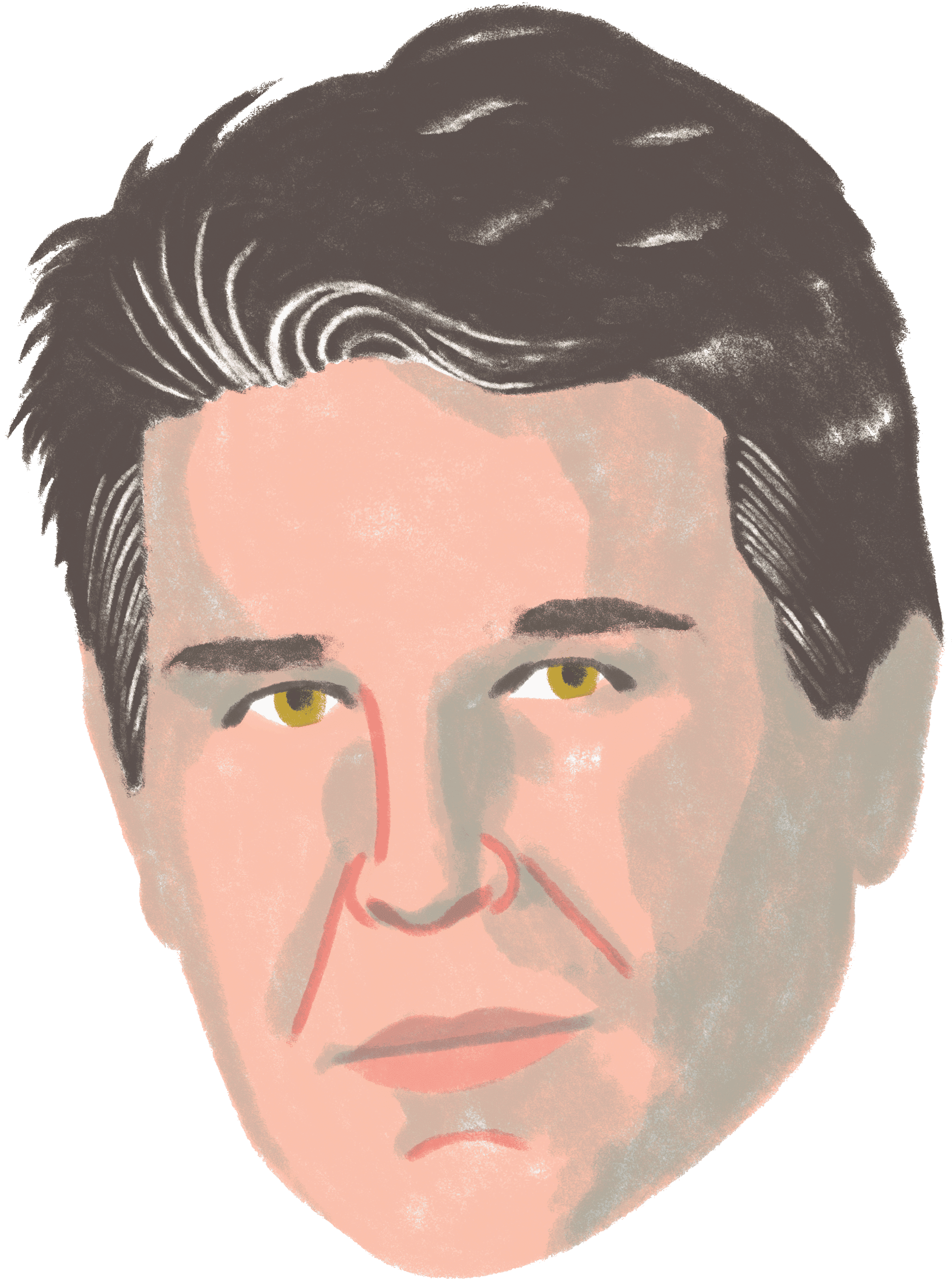
The deluge of Bill Ackman content—winding magazine profiles, Page Six mentions, Twix screeds, and plenty of Puck airtime—has been unceasing ever since his public campaign to oust Harvard president Claudine Gay spiraled into a very public feud with Business Insider. Yet another torrent arrived after the law firm Clare Locke sent a threatening 77-page complaint to Axel Springer chief Mathias Döpfner, demanding “immediate retractions and corrections” of articles published about Ackman’s wife, the academic Neri Oxman. (“I’m just getting started,” he emailed me earlier today.) In today’s issue, a close look at a recent podcast appearance that revealed much about Ackman’s psychology at this strange juncture in his life.
But first…
- An Apollo free-for-all: Allow me to be the first to report that the feud continues between Leon Black, the billionaire founder of Apollo, who was collateral damage in the Epstein imbroglio and its blast zone, and one of his longtime partners, Josh Harris, the billionaire owner of the Washington Commanders and the Philadelphia 76ers. This week, the two men are about to start a financial arbitration, somewhere in Manhattan. The revelation of their arbitration—which follows a series of previous lawsuits between the two men that were dismissed, including a RICO lawsuit that Leon brought against Josh claiming that he was part of a conspiracy to chase him out of Apollo back in 2021—shows up in a New York State Supreme Court filing in an unrelated and ongoing suit between Leon, his onetime mistress Guzel Ganieva, and the law firm, Wigdor LLP, that once represented her. Other than the mention of the arbitration, there is no other information about it available publicly.
A spokesman for Josh declined to comment, as did a spokesman for Leon. But billions of dollars could be at stake if Leon wins the arbitration, which I suspect stems from the shareholder agreement between the two men and Marc Rowan, who is now the C.E.O. of Apollo. (I am writing my new book about Apollo.) Essentially, prior to Apollo’s 2011 I.P.O., Leon anointed both Josh and Marc, who were part of his original team when he started the firm in 1990, as “co-founders.” This title bestowal raised their profiles and justified their higher compensation and increased ownership in the firm. Leon didn’t have to do that, of course. He could have just as easily fired them if he preferred. But he elevated them, made them billionaires, and put one or both of them in line to be his successor. (In the end, it was Marc, not Josh.)
I presume, too, that with the agreement between the three men, Leon was managing his own downside protection, too—and that, consciously or not, he wanted to avoid the fate of Jerome Kohlberg, who was pushed out of KKR and deprived of attendant vast riches, by his two co-founders Henry Kravis and George Roberts. And my best guess is that this arbitration will attempt to figure out if somehow Josh took actions, in violation of the shareholder agreement, that defenestrated Leon against his will. (Leon, of course, is still plenty rich. He’s worth around $14 billion these days. The late Kohlberg was also plenty rich although not as rich as Henry and George, who are also worth around $14 billion each these days.) I’d pay good money to be able to watch the arbitration proceedings. But, alas, unlike a lawsuit in court, arbitrations aren’t open to the public.
- The Zaz numbers: Obviously, investors didn’t like David Zaslav’s fourth-quarter earnings release, sending the Warner Bros. Discovery stock to an all-time low of around $8.50 a share. The stock was down 14 percent for the week. Oof. The company’s enterprise value is now $60 billion, down from around $130 billion at the time of the merger in April 2022. But I don’t know if things are all that bad in Zaz-world, as I’ve written before. When you are a publicly traded L.B.O., it’s all about paying down debt, and the Zaz-Gunnar Wiedenfels machine still seems to be pretty good at doing that. The company ended 2023 with a bit less than $40 billion in net debt, meaning that Zaz & Co. has paid down $15 billion in debt in the nearly two years since he created this Frankencompany. WBD generated $6.2 billion in free cash flow in 2023, up 86 percent from 2022.
Among the bad news, of course, is that WBD’s streaming business remains deeply troubled. Sure, there were a bunch of headlines in the trades about Max turning a full-year profit. But as my partner Julia Alexander has noted, much of the revenue that pushed direct-to-consumer into the black came from licensing content to other streamers (predominantly Netflix). That might be a recipe for short-term profitability, and a couple good headlines that perhaps WBD will go all Sony on us before too long, but it’s not fooling Wall Street.
So where do things go this year? Gunnar declined to offer guidance on free cash flow, preferring only to say that 2024 would be “another strong free cash flow year.” It better be, or the sun may continue to slowly sink in the west on the WBD experiment. Given that April will be here soon, maybe it’s time for another big M&A deal to make year-over-year financial comparisons next to impossible?
|
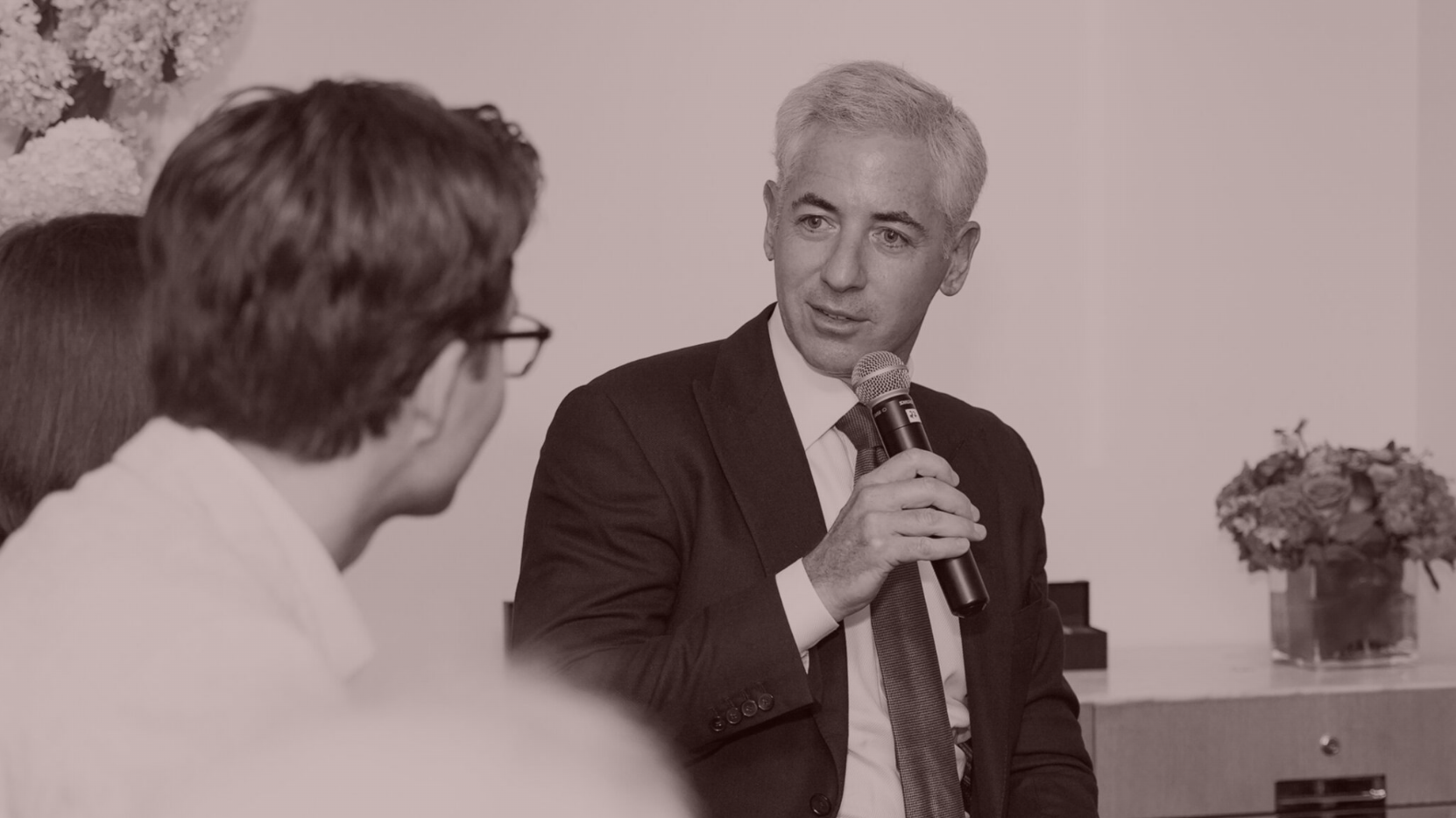 |
| The Measure of Ackman |
| A talmudic reading of the hedge fund manager’s latest three-hour soliloquy, Business Insider counteroffensive, and the general and growing oeuvre of his discontents. |
|
|
|
| There has been an endless stream of Bill Ackman content lately: the lengthy diatribes on Twix; the Washington Post profile; the New York mag cover story; he even made Page Six the other day; and, yes, a little Puck action, too. On Wednesday, my partner Dylan Byers advanced the New York Post’s report on the recent dinner between Ackman and Axel Springer C.E.O. Matthias Döpfner at Daniel by predicting it would lead to a possible face-saving détente between the raging billionaire hedge fund manager and the source of his fury, Business Insider, which accurately but hyperbolically characterized his wife’s scholarship as riddled with plagiarism rather than inadvertent faulty citation.
By the way, just to add a fun detail to the Ackman-Döpfner dinner, it came about as a result of a text sent by Niall Ferguson’s wife, Ayaan Hirsi Ali, after all four were at Henry Kissinger’s memorial service. Afterward, Ali texted Ackman and Döpfner, “Sitting at Henry Kissinger’s memorial service. I know he would have urged you to get together as soon as possible. I know you were both on the same side of the fight for our civilization. I also know the value of face to face meetings. Take it from here, with admiration, Ayaan.”
So the dinner happened, and then, on Friday, Clare Locke, the law firm that loves to sue journalists (including me) wrote a 77-page letter to Döpfner, on behalf of Ackman’s wife, Neri Oxman, with liberal mentions of Bill throughout. 77 pages! The letter described the B.I. articles about Oxman as an “orchestrated hit job” and asked for retractions and corrections of the articles, or else.
That’s a lot of Bill. But wait, there is more—much, much more. For reasons that are hard for me to fully understand—and I’ve been writing about Bill Ackman for more than 10 years now—he sat down for a live, obviously on-the-record interview with podcast host Lex Fridman the other day, perhaps to hype this biblically long legal threat. They spoke for three and a half hours! Now that is, I think I’m safe to say here, a torturous amount of Bill Ackman. And he’s not done. “I’m just getting started,” he emailed me earlier today. (And he is, believe me, after my own long conversation with him.)
As this is a family show, I’ll spare you the play-by-play and focus on several of his more aggressive observations. After all, who besides me had three and a half extra hours to listen to more of Bill Ackman? But I will mention that about two and a half hours in, around that time that Bill called Joe Biden “done” and an “embarrassment” as both a candidate and as president, he boasted that he could do more pull-ups now, at 57, than he could as a kid. Bill will always be Bill. |
|
|
| As a warm-up, Bill lectured Lex on things a hedge fund manager focuses on in his or her day job: the meaning of “value investing”; the importance of investing in cash-flow-positive businesses; why he has invested in fast-food companies over the years, such as Burger King and Chipotle, and made a killing; and, how to remain calm investing in volatile markets. They also spoke about the “evolution” of activist investing, and why he’s mostly given that up to become a long-term investor like his hero, Warren Buffett. Plus, they dabble in the matter of how he also made a killing investing in bankrupt, or near-bankrupt companies.
Then the conversation started to get interesting. Bill talked about his biggest loss as an investor, the $4 billion catastrophe he suffered in Valeant Pharmaceuticals. To that point, it was a rare passive investment for Pershing Square, his hedge fund. “And the company made a series of decisions that were disastrous,” Bill said. “And then we stepped in to try to solve the problem. It was the first time I ever joined the board. And the mess was much larger than I realized on the outside. And then I was kind of stuck. And it was very much a confidence-sensitive strategy. Because they built their business by acquiring pharmaceutical assets. And they often issued stock when they acquired targets. And so once the market lost confidence in management, the stock price got crushed and impaired their ability to continue to acquire low-cost drugs, and we lost $4 billion.”
“$4 billion?” Lex asked.
“Yeah,” Bill replied. “How’s that for a big loss? It’s up there.”
“I’m sweating this whole conversation, both the wins and the losses and the stakes involved,” Lex said.
“And by the way,” Bill continued, “that loss catalyzed other what I call ‘mark-to-market’ losses. So, very high-profile, huge number, disastrous press. Then people said, ‘Okay, Bill is going to go out of business. So we’re going to bet against everything he’s doing. And we know this entire portfolio’ because we only own 10 things.”
He then recounted his disastrous $1 billion loss shorting Herbalife, wherein he failed to recognize that his fellow hedge fund managers, including his nemeses Carl Icahn and Dan Loeb, could initiate, and execute, a successful short-squeeze against his Herbalife short. With Fridman, Ackman made a connection between the Icahn-Loeb Herbalife short-squeeze and the Valeant disaster, although the Herbalife squeeze was well before the Valeant investment, and loss. In any event, he said the Valeant loss led to a loss of more than 30 percent of the value of the Pershing Square portfolio. “The Valeant loss was real, and was crystallized, selling the position, taking that loss,” he continued. “Most of the other losses were what we call ‘mark-to-market losses’ that were temporary. But many people go out of business, … and people assumed that if we got put out of business, we’d have to sell everything, or cover our short position. And that would make the losses even worse. So Wall Street is kind of ruthless.”
What made it worse, he said, was that at the time he was also going through some personal challenges, including his divorce from his first wife and their legal battle over his net worth at the time, and how to divide it up. |
|
|
| Ackman also disclosed, for the first time he said, a battle he had around 2017 with another billionaire hedge fund manager, Paul Singer at Elliott Management, who was trying to force Bill out of business by striking him while he was down. What happened, Ackman explained, was that Elliott took a “big position” in Pershing Square Holdings—the U.K.-based, publicly trading investment company that is Bill’s version of Berkshire Hathaway. He said Elliott then shorted all the stocks in Bill’s portfolio and went long on the stock he had shorted, “making a bet that we’d be forced to liquidate.”
Bill said that Elliott then came to him and tried to “force” him to liquidate. It was a nightmare scenario. “I envisioned an end where the divorce takes all my resources,” he said, “the permanent capital vehicle ends up getting liquidated, and another activist in my industry puts me out of business.” And then he met Oxman “and I had fallen completely in love with her.” But the nightmare persisted. “I was envisioning a world where I was bankrupt, a judge found me guilty of whatever and he sends me off to jail. … I find myself in this incredible mess. And I decided I didn’t want things to end that way.”
He then did something he pledged to himself that he would never do: borrow money. He went to JPMorgan Chase and, on “a handshake” with the bank, borrowed $300 million. (“I had been a good client over a long period of time,” he said.) He used the money to buy up enough blocks of stock in Pershing Square Holdings to thwart Elliott’s strategy. “I got that done,” he said. “And that, I knew, was the turning point. I resolved my divorce. … We resolved the litigation. I was buying blocks of our stock in the market. I remember the day I bought a big block of stock in the market and I get a call from Gordon Singer, who’s Paul Singer son who runs the London part of their business. He’s like, ‘Bill, was that you buying that block?’ I said, ‘Yes.’ He said, ‘Fuck.’ He knew that once I got that, they were not going to be able to succeed and they went away. And that was the bottom. And we’ve had an incredible run since then.” |
|
|
| Then, of course, they talked about Neri, their marriage, and her battle with Business Insider and his concerns about the state of journalism in America. Fridman had previously had Oxman on his show and said he admired her work and had been a “fan of hers” for a long time. “She’s the most beautiful person I’ve ever met,” Ackman said. “And I mean that from, like, the center of her soul. She’s the most caring, warm, considerate, thoughtful person I’ve ever met. And she couples those remarkable qualities with brilliance, incredible creativity, beauty, elegance, and grace. I’m talking about my wife. But I’m talking incredibly dispassionately. When I say she’s the most remarkable person I’ve ever met, and I’ve met a lot of remarkable people, I’m incredibly fortunate to spend a very high percentage of my lifetime with her ever since I met her six years ago.” (Bill did the research and said that he discovered their ancestors grew up 52 miles apart from each other in Eastern Europe. They took DNA tests to make sure they weren’t related. “Which we were not,” he said. “But we share incredible commonality on values.”)
Then they got to talking about the Business Insider articles. “She’s an extremely sensitive person,” he said of Neri. “She’s a perfectionist. Okay, imagine thinking that the entire world thinks you’ve committed academic fraud. And so that was very hard for her. She’s a very positive person, but I saw her, I would say, at her darkest, emotional period, for sure. She’s doing much better now. But you can kill someone by destroying their reputation. People commit suicide. People go into these deep, dark depressions.” (In fact, on January 12, according to Clare Locke’s 77-page letter, someone sent a message to Neri suggesting she “consider suicide.”)
“Well, my worry, primarily, when I saw what Business Insider was doing is that they might dim the light of a truly special scientist and creator,” Fridman said.
“It’s not going to happen,” Bill said.
He said the “problem” with “the media” is that defamation law in the United States is “so favorable” to the media and “so unfavorable to the victim” and the “incentives are all wrong.” He said that by going from journalism on paper to digital journalism you suddenly can track how many people click on a story and that drives the amount of advertising dollars, which drives the economics, or did for advertising-based digital publications. “If you can show an advertiser more clicks, you can make more money,” he said. “Right? So a journalist is incentivized to write a story that will generate more clicks. How do you write a story that generates more clicks? You got a billionaire guy. And then you go after his wife. And you make a sensationalist story, and you give them no time to respond.” And here he went into the details of how Business Insider gave him and Neri three hours to respond to the first story and 92 minutes to respond to the second story. “They basically accused Neri of an academic crime,” he said. “And then 92 minutes later, they said she committed an academic crime, and that should be a crime. And that should be punishable with litigation. And there should be a real cost. And we’re going to make sure there’s a real cost, reputationally, and otherwise to Business Insider, and Axel Springer because ultimately, you’ve got to look to the controlling owner, they’re responsible.”
He then bopped around a bit: He mentioned with approval the motto at Dalton, his daughter’s school: Go Forth Unafraid; he gave thanks to Elon Musk for allowing people like him to unleash, at length, on Twix without censorship; he mentioned the Washington Post article and how he didn’t think it was “a fair story”; he reiterated the importance of his efforts to defenestrate Claudine Gay, at Harvard (“I wanted her to be fired, basically, or be forced to resign because of failures of leadership”); and he offered some bon mots: “Reputation in my business is basically all you have,” he said. “And as they say, ‘It takes a lifetime to build a reputation and it takes five minutes to have it disappear.’ And the media plays a very important role. And they can destroy people. At least we now have some ability to fight back.” He then told the story of how he was with his hero Warren Buffett talking about the media, “a business he really loves,” and “He says, ‘You know what Bill? The only person who could cause you more harm than a thief with a dagger is a journalist with a pen.’ And those were very powerful words.” |
|
|
|
| FOUR STORIES WE’RE TALKING ABOUT |
 |
| Gospel of Marc |
| Inside Marc Andreessen’s political awakening and D.C. incursion. |
| TEDDY SCHLEIFER |
|
 |
| Italian Jobs |
| An insiderly dispatch from Milano fashion week. |
| LAUREN SHERMAN |
|
 |
| Goodell Riddance |
| On the simmering beef between the NFL and College Football Playoff. |
| JOHN OURAND |
|
 |
|
|
|
|
|
 |
|
|
|
Need help? Review our FAQs
page or contact
us for assistance. For brand partnerships, email ads@puck.news.
|
|
You received this email because you signed up to receive emails from Puck, or as part of your Puck account associated with . To stop receiving this newsletter and/or manage all your email preferences, click here.
|
|
Puck is published by Heat Media LLC. 227 W 17th St New York, NY 10011.
|
|
|
|