{{ 'now' | timezone: 'America/New_York' | date: '%b %d, %Y' }} |
|
|
|
Happy Sunday and welcome back to Dry Powder. I’m Bill Cohan.
In
any rational market, equities would be in retreat if, say, the president threatened the destruction of an entire civilization, broke energy markets, and fueled global inflation. And yet here we are: The S&P 500 and Nasdaq are hovering near all-time highs while Wall Street’s five largest banks just recorded nearly $50 billion in quarterly profits. Yes, there is something faintly absurd about a market rallying into geopolitical uncertainty, but Trump’s haywire
pronouncements seem to trigger short-term sell-offs followed by new, TACO-inspired highs. I’ll get under the hood today.
Mentioned in this issue: Bill Ackman, Davide Cerrato, Tom Cruise, Jim Breyer, Sahil Bloom, Donald Trump, Peter Baker, Jamie Dimon, Jeremy Barnum, Matt O’Connor, Mark
Spitznagel, Mike Mayo, John Waldron, Manan Gosalia, and more…
But first… |
-
Another Ackman micro-drama: As I reported last week, the legal drama at Bill Ackman’s family office, Table, began when he installed his nephew to investigate various operational inefficiencies at the firm. According to Bill, his fellow Harvard-man nephew had previously proved himself by helping to turn things around at
Bremont, the fancy British watchmaker that Bill had taken a “substantial minority stake” in for some $60 million. The company had been operating at a loss of nearly £15 million, and his nephew “did a superb job” righting the ship, Bill wrote on X.
But is Bremont actually fixed? After buying out several other shareholders and getting warrants that enabled him to increase his stake to about 70 percent, Bill now controls the private company and its board of directors. He also recruited
Davide Cerrato, the former head of Montblanc’s watch division, as C.E.O. Bremont has appeared to stabilize, generating sales of nearly £22 million—up around 7 percent—in fiscal 2024, the last year for which financial information is available. That year’s £10 million or so operating loss was also an improvement over 2023. I’m told 2025 was about the same financial performance as 2024, but that the brand is poised for a breakout 2026. We’ll see.
Nevertheless, one of my
faithful correspondents, an avowed watch collector, wrote that he was “gobsmacked” that Ackman thought his nephew had done a “good job” at Bremont. Ackman, he wrote, had turned an “interesting brand with a loyal following and interesting story” into one of the “most generic” brands out there, “killing all the goodwill the brand had with the enthusiast community.” That’s a pretty harsh assessment, of course. Bill declined to comment extensively—he didn’t want to steal the thunder from his C.E.O.
But he did say it’s ironic, given the supposed exclusivity of luxury brands, that Rolex produces something like 1.2 million watches a year, compared to Bremont’s 10,000. “Do you want to wear a watch that everyone else on Wall Street is wearing, or do you want to wear something and people are like, Wow, what’s that?” he said, calling Bremont a “largely undiscovered, super-niche brand.”
Back in April 2025, Bill published a lengthy missive on X about his investment in Bremont and
Cerrato’s turnaround effort. “Over the past 23 months, Davide and team have redesigned and focused Bremont’s range around three core offerings in Land, Sea, and Air—the Terra Nova, the Supermarine, and the Altitude—while upgrading materials, movements, and quality, updating the logo to reflect the new Land and Sea offerings (Bremont was previously perceived to only be an aviation brand), and dramatically improving manufacturing and service,” Bill wrote. “The company has extended its warranty
from three to five years on its new watches reflecting these improvements.”
I suspect my faithful correspondent may be upset with the changes that Bill is making at Bremont—the new management, new logo, and new models and designs. It seems to be morphing from a small, niche British watchmaker favored by grumpy old wealthy men into a hipper, more global phenomenon. I’m told that Tom Cruise owns 39 Bremonts, and investor Jim Breyer and thinkfluencer
Sahil Bloom are big fans (or so they wrote on X). Apparently, the Bremont booth at Watches and Wonders was packed after the company promoted the watch that’s going to the moon, with a replica of the rover at the booth. In any event, good luck finding another high-end branded tourbillon watch for $52,000 or less.
|
|
|
|
The economy is slowing and the Middle East is on fire, but the Big Five banks are
printing record profits and stock markets keep hitting new highs. Is this the last song before the music stops, or were the bears wrong all along? |
|
|
|
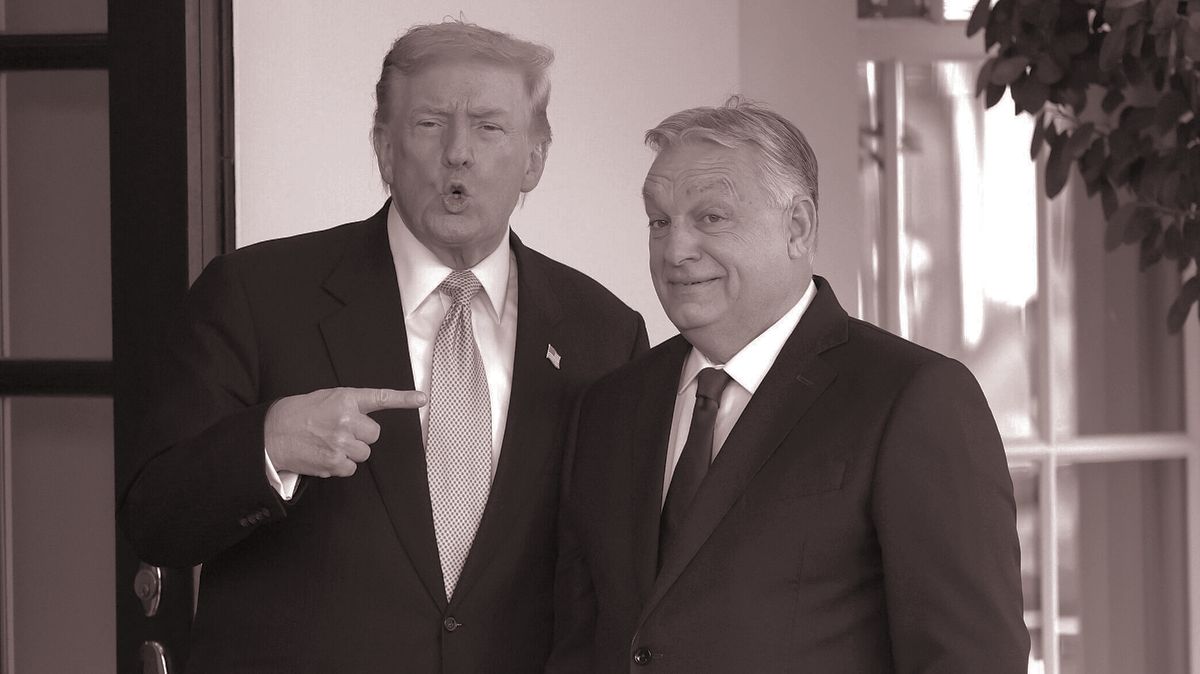
Here’s a real head-scratcher: We now find ourselves in the middle of Donald
Trump’s stupid, no-way-out war in Iran, with rising oil and commodity prices, increasing inflation and interest rates, and a president who picks fights with the pope and the chairman of the Federal Reserve. (No surprise there, I guess.) My friend Peter Baker has written a Times piece about whether
Trump has lost, or is losing, his mind. And yet… the broader stock market indices are at, or near, all-time highs. The S&P 500 is now at 7,126—up nearly 4 percent for the year and some 12 percent since the index hit a recent low on March 30. The Nasdaq is also at, or near, its all-time high—and, incredibly, up more than 17 percent since the same date.
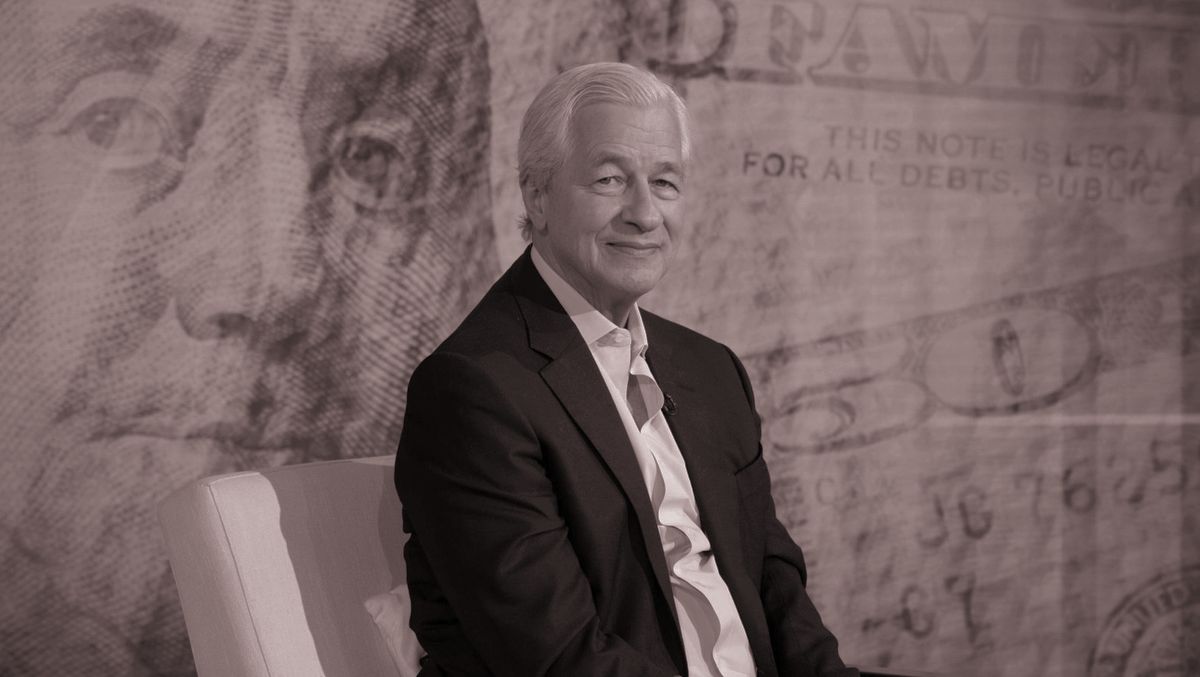
In fact, the top Wall Street banks just had the most profitable quarter in history, led by Jamie Dimon’s JPMorgan Chase,
which posted net income of $16.5 billion. Collectively, the Big Five—JPMorgan Chase, Goldman Sachs, Morgan Stanley, Bank of America, and Citigroup—posted first-quarter 2026 profits of nearly $50 billion. In the commentary around the earnings releases, Wall Street C.E.O.s could barely contain their enthusiasm about their outlook for the rest of the year.
What’s going on here? Are the Fed and Treasury so determined to inflate away our economy that the Wall Street banks, as the
ultimate interstitial men, are perfectly positioned to manage the flood of fiat dollars? Do investors expect a near-term end to the war? Do they believe Trump’s claim that the Iranians are begging for an end to the conflict?
Or are they expecting one of those TACO economic boomerangs—you know, when the president appears to bring the world to the brink (absurd global tariffs, war with Iran, kidnapping the president of Venezuela) before backtracking on his perceived goals, thereby
inadvertently allowing the markets to recover and exuberantly exhale to new highs? Nearly every day, I’m getting emails from TACO-inspired options traders who cannot believe the bets they’re seeing made in advance of Trump’s blitherings, only to find that the participants have been richly rewarded when their short-term positions turn out to be “prescient.”
I also continue to be struck by something Mark Spitznagel, at Universa Investments, told me back on March 19. He
proposed the market swoon brought on by Trump’s war with Iran was a “bear trap” and not the beginning of a serious, and much needed, correction. He was absolutely right. |
Let’s look more closely at the astounding bounty that Wall Street has reaped in its first quarter.
JPMorgan Chase reported net income of $16.5 billion, driven by record trading revenue and a 28 percent increase in investment banking revenues. Bank of America posted $8.6 billion in net income, also driven by trading and investment banking. Citigroup reported $5.8 billion in net income, driven largely by a 39 percent surge in equities trading and impressive growth in investment banking fees. Goldman Sachs and Morgan Stanley reported net incomes of $5.6 billion and $5.4 billion,
respectively.
I note that while Goldman did report blowout earnings, they would have been even higher save for the fact that the revenue in the bank’s bond trading division fell 10 percent in the first quarter, missing analyst expectations by some $900 million. JPMorgan Chase’s fixed income trading revenue, on the other hand, jumped 21 percent, while Morgan Stanley’s increased 29 percent.
Something was kind of fishy at Goldman. “It seems something went wrong at Goldman in fixed
income,” Wells Fargo analyst Mike Mayo told CNBC. Explained John Waldron, Goldman’s president, at the Semafor conference: “In the period of time when you have a lot of volatility around rates in particular and commodities, you can get in traffic where things don’t go your way at any given moment in time. … I have no concerns about our FICC business.”
In any event, I listened in on the JPMorgan Chase earnings call, led by Dimon and the C.F.O.,
Jeremy Barnum, who did most of the talking. Matt O’Connor, an analyst at Deutsche Bank, noted that JPMC’s trading revenue—$13 billion in the first quarter, up 19 percent—keeps going up, despite shocks in the quarter to commodities prices, interest rates, equities, and credit. “I’m just wondering if you have any thoughts on why it’s been so consistently strong across a variety of environments?” Matt asked. Jamie took that one, saying the bank buys and sells
$4 trillion worth of securities a day. “You make a little bit each time you buy and sell,” he said—you’ve got to love the interstitial men. And occasionally, he implied, the bank is on the wrong side of a trade and there’s a loss. “But, to me,” Jamie continued, “that’s kind of the cost of doing business. That’s like a retailer having inventory that they can’t sell. The real question is, Do you serve your clients every day, with great products and great services, great
execution? And the answer is yes, and that’s where the real business is.” Jamie said when the bank finds itself on the wrong side of a trade, he tells traders not to panic, and to just accept it. “Because we’re there serving clients,” he said. “And very often, if we’re on the wrong side of the trades, the client wants to sell and you’re not really dying to buy, but you do it anyway to serve clients. It’s a business. It’s a very good business.”
Manan Gosalia at Morgan
Stanley piped up to ask, “How resilient is consumer spend[ing] and credit, if energy prices remain high? And are there any signs of cracks that you’re seeing at all?” Barnum replied that consumer credit remains “healthy” because the labor market remains “strong.” But, he cautioned, “If you get bad outcomes in the Middle East, much higher energy prices—or other problems that … eventually crack what has been, I think, from many people’s perspective, a surprisingly resilient American economy, and a
very resilient U.S. consumer—and that winds up having knock-on effects on the labor market, then you will see that come through clearly. But right now, in the end, the story remains the same, which is: a resilient consumer that’s doing fine despite higher gas prices.” Jamie added that the economy is also being helped by higher tax refunds. Interestingly, they barely discussed economic gains from A.I., although JPMorgan is quietly benefiting from that, too. |
To try to put this bizarrely robust quarter on Wall Street into some perspective, I rang up Mayo,
the dean of Wall Street analysts, who told me it was a function of the three Rs: replenishment, resiliency, and returns. Amid pent-up demand for investment banking services, such as M&A advice and debt and equity underwriting, and the ongoing deregulation of the industry spurred on by the White House, Mayo said he hadn’t expected how quickly the investment banking backlogs would be refilled in the past quarter. “The biggest surprise is just how bullish the big banks were across the board about
their outlooks and the degree that the pent-up demand and deregulation … transcend the [Iran] conflict for now,” he said. But, he added, the “conflict clearly creates this chance for big downside and a lot of disappointment, but the possibility for a capital markets super-cycle is still out there, if the conflict gets resolved in the not-too-distant future.”
Mayo said he’s been impressed by the resiliency of the trading desks across Wall Street, with the exception of the blip at Goldman.
Sometimes volatility stymies trading and sometimes it encourages it, he noted. This was a quarter where people were anxious to trade the volatility. “If there were a war 20 years ago, you wouldn’t expect the replenished investment banking backlog that you have, and you wouldn’t expect resilient trading like you’ve seen,” he said. “So this is the type of performance that is almost unprecedented during a conflict such as this.”
Finally, he said, the robust returns on equity among the big
banks this quarter were basically a measure of profits divided by a bank’s equity capital. JPMorgan Chase reported a return on equity of 19 percent; Goldman 20 percent; and Morgan Stanley 21 percent. He said the R.O.E. for the big banks exploded during the quarter, with each institution reporting between 200 and 400 basis points of improvement, “which is quite amazing.”
Mayo wasn’t surprised by the first-quarter results. “I expected good capital market results,” he said. “I was expecting
good investment banking trading results. I was surprised at the degree of bullishness about the outlook. Like, wow—it’s a wow. You have unusual tail risks. You have oil. You have conflict. You have all sorts of scenarios that can unfold. And these most significant financiers on the planet are saying, ‘You know, all systems go when it comes to the demand from their clients,’ albeit with the usual caveats. I was surprised by the degree of bullishness.” |
Let’s
Save the Depressing Part for Last…
|
Not for the first time in our ongoing conversations, I asked Mayo when it will all end. When does
the party stop? He said he doesn’t foresee a near-term end to the high level of investment banking and trading activity, and thinks the equity of the big banks could reach new highs if the conflict in Iran is resolved soon. (As always, this is not investment advice.) Mayo predicted that 2026 capital markets activity will be 10 percent above the record for 2025—and that, by 2028, it will be 20 percent above the 2025 levels.
As Mayo pointed out, there is not a bear among the C.E.O.s of the
top Wall Street banks. As evidenced during their earnings calls, they are all bullish on their prospects. “It works until it doesn’t,” Mayo said. “Is there a scenario where it keeps working? Absolutely. Is there a scenario where it doesn’t work? Absolutely. But, as of right now, the results are coming in. The industry’s resilient. They’re replenishing their backlog, and the returns are higher. If the largest banks in the economy are indicative of a country’s strength, well, the U.S. is strong in
terms of its financial foundation.” But, Mike added, “Don’t leave your desk for more than four hours.” |
|
|
|
Join Puck’s chief political columnist, John Heilemann, as he roams the corridors of power and influence in America on
this twice-weekly interview show, taking you beyond the headlines with the people who shape our culture: icons and up-and-comers, incumbents and insurgents, moguls and machers in the overlapping worlds of politics, entertainment, tech, business, sports, media, and beyond. The conversations are rich and revealing, unrehearsed and unexpected… and reliably impolitic. A Puck-Audacy joint, new episodes drop every Wednesday and Friday. |
|
|
|
Puck’s daily political newsletter from Washington on what’s really happening in this town, from the White House to
the Pentagon to Capitol Hill, K Street, and the campaign trail. |
|
|
|
Need help? Review our FAQ page or contact us for assistance. For brand partnerships, email ads@puck.news. You received this email because you
signed up to receive emails from Puck, or as part of your Puck account associated with {{customer.email}}. To stop receiving this newsletter and/or manage all your email preferences, click here. |
Puck is published by Heat Media LLC. 107 Greenwich St., New York, NY 10006 |
|
|
|
|