 |

|
|
Hello, and welcome back to your regular Tuesday foreign policy installment of The Best & The Brightest.
Next week, I’ll be writing to you from the Munich Security Forum—that giant, crazy event during which various heads of state, ministers, cabinet secretaries, parliamentarians, and members of Congress (as well as think-tankers, activists, journalists, and the like) get together for a two-day clusterfuck in the Hotel Bayerischer Hof to talk about geopolitics. Last year, the Munich set fretted about what would happen if the U.S. lost its will to fight for Ukraine. It didn’t even take a year for some of their worst fears to come to life, so I’ll be curious to see what people say now.
Before we get on to the main order of business—Palestinian public opinion, and my interview with Princeton’s Amaney Jamal—I wanted to mention that my friend Alex Ward, author of Politico’s National Security newsletter, has a scoopy, dishy book coming out about how foreign policy was made during the first years of the Biden administration. Pre-order The Internationalists here.
And now, here’s the wonderful Abby Livingston from the Hill…
|
|
A MESSAGE FROM THE ASSOCIATION OF AMERICAN RAILROADS
|
|
|

|
|
America’s freight railroads reinvest an average of $23 billion back into their privately owned networks each year. By advancing safety technology, infrastructure improvements and employee training, these investments power the innovation that safeguards our people and our communities—and have helped lower the mainline rail accident rate by 48% since 2000.
Freight rail remains the safest way to move what powers our economy. And America’s railroads are committed to making freight transportation even safer.
Learn how freight rail works.
|
|
|
|
|
| In the aftermath of special counsel Robert Hur’s explosive report last week, which cleared Biden of wrongdoing while also dramatically questioning his acuity, House Republicans are launching a sweeping, three-committee probe into the president’s cognitive abilities, per a new Axios report. Perhaps understandably, this set off alarm bells in the White House—but even more fascinating will be the response from House Democrats. After all, should these hearings come to pass, rank-and-file Dems on Judiciary, Oversight, and Ways & Means committees will be tasked with playing man-to-man defense for Biden, live on C-SPAN.
At first, I expected House Democrats to greet this news with hair-on-fire panic. (I’ve heard that Biden’s standing is also rough in private House campaign polling, where pollsters often throw in the presidential matchup question.) And yet, after a round of calls on Tuesday, House Democratic-world sources seemed remarkably at ease. Here’s their logic:
- Fool me once: Most Democrats I spoke with responded to the news with a shrug: Over the past year, they’ve watched seemingly countless House Republican hearings go off the rails, and they don’t seem to respect their opponents anymore, at least on this front. “They are so ineffectual that every time they have any public hearing, [specifically] in any of these impeachment hearings, they get embarrassed,” a Democratic Hill staffer told me. Meanwhile, other Democrats interpreted this as a sign of defeat—a signal that Republicans may be shifting away from future impeachment hearings.
- Youth power: House Democrats also expressed confidence in their younger members’ ability to put on powerful, defensive performances at charged hearings. For one thing, millennials and Gen Z members have shirked their elders’ obnoxious tradition of rambling off five minute long questions that are actually speeches, opting instead to pose concise questions designed for TikTok, and which occasionally elicit revelatory answers from witnesses.
This sentiment is particularly strong regarding the Oversight Committee, where Alexandria Ocasio-Cortez and Katie Porter have earned colleagues’ respect for years. House Democrats are also pleased with Jamie Raskin’s handling of the committee as ranking member, and with some of the freshmen committee members: sources specifically named Jasmine Crockett, Robert Garcia, Dan Goldman, and Jared Moskowitz.
- Lessons learned: All that said, serious Democrats are concerned about the problems related to Biden’s age that spilled into public view last week, which is plainly reflected in polling. Whether these probes will move voters is anyone’s guess. But Hur’s report serves as a potent reminder that when presidents put themselves in a position to be investigated, probes can often meander into unforeseen, treacherous territory. To wit: Biden’s handling of classified documents has refocused attention on his age, just as the House Benghazi investigation begat Hillary’s emails, and Ken Starr’s Whitewater investigation begat the 1998 Clinton sex scandal.
|
 |
| The View From Gaza |
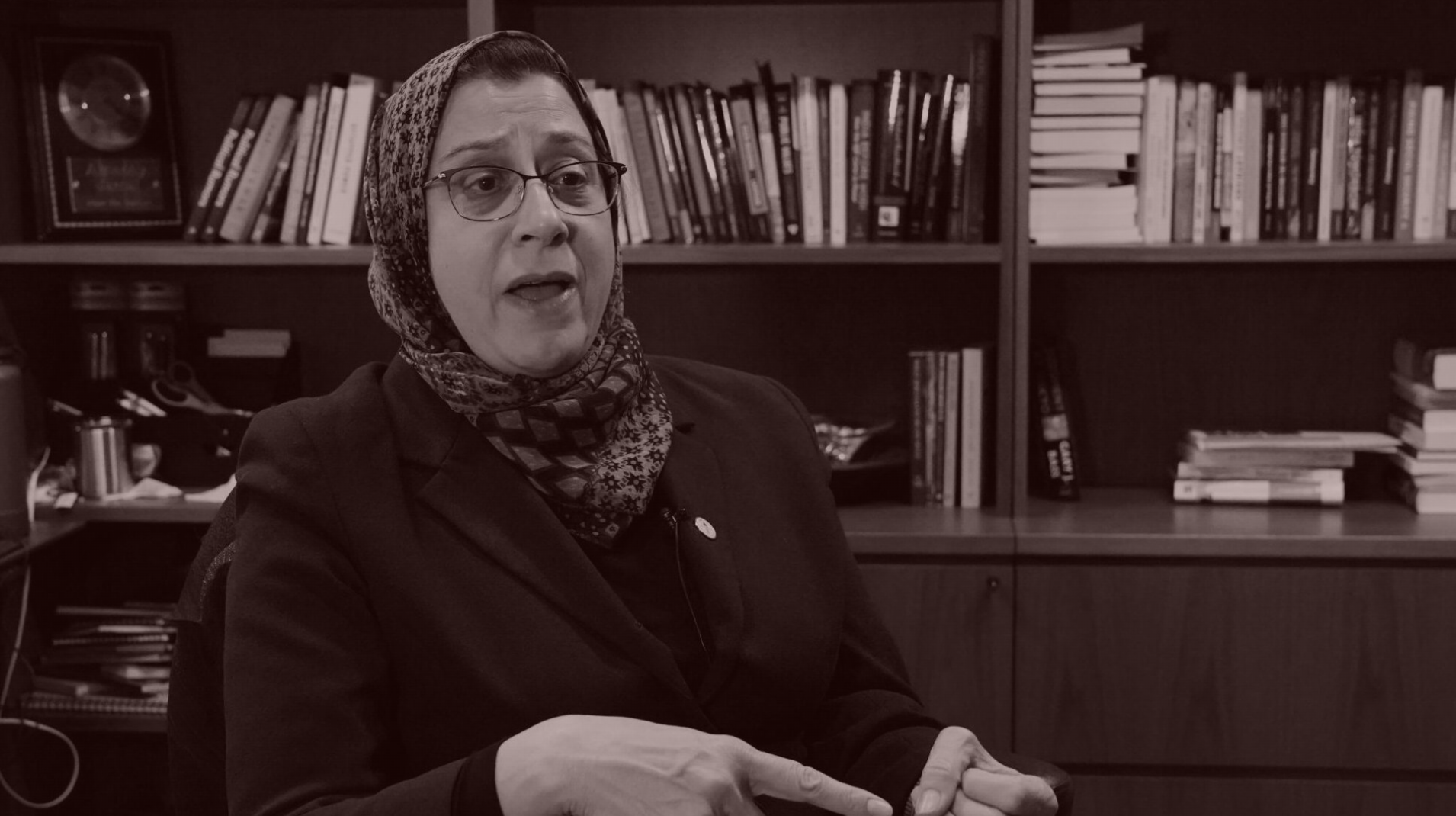
| Amaney Jamal, the Palestinian-American dean of Princeton’s School of Public and International Affairs, on polling inside a war zone, whether both sides still support two states, and how Palestinians are processing a generational calamity. |
|
|
|
| On October 6, 2023, political scientist Amaney Jamal and her researchers at the Arab Barometer wrapped up their polling work in Gaza. They found a grim picture: a hungry and desperately poor population that didn’t much trust their political leadership in Hamas, nor did they see much of a future for themselves and their children. In the West Bank, the land that would theoretically constitute a Palestinian state kept getting occupied and balkanized by Israeli settlements, to the point where Amaney found a two-state solution became a harder and harder policy position to advocate.
“On October 6th, 2023, things weren’t looking really great,” Jamal, who is also the dean of Princeton’s School of Public and International Affairs, told me. But what happened afterward dwarfed all the suffering and frustration her team had witnessed until that point. “Had you told me, ‘Oh, this massive attack on Israel, it’s going to happen where Hamas penetrates the border and kills 1,200 people, including children, and takes all these hostages and brings them across the border’? I could say confidently, for the average Palestinian, that is just like, with all due respect, something coming out of science fiction.”
Jamal, a California native who grew up in Ramallah (and nearly didn’t graduate high school because of the Israeli crackdown during the First Intifada), finds this moment excruciating. Her elderly mother still lives in the West Bank, where Palestinians have been locked down and subject to increasing settler violence and IDF raids. She has friends from Israel and Gaza as well. “Everybody I’ve talked to who’s affiliated or a party to this conflict is in a moment of existential crisis right now,” she said. “To see that we’re caught in a conflict with the right wing of Israel and Hamas is just so depressing, because look at where we are. To see what could have been and where we are, it’s just a very painful moment.”
And yet, when I spoke to Jamal on how Palestinians are processing this calamity, she pointed to her group’s findings that Palestinian support for a two-state solution hasn’t decreased. It was one of the several reasons she told me she remains optimistic, even as Gaza gets ground down to a fine ash. I hope you find our conversation, which has been edited for length and clarity, as fascinating as I did. |
|
A MESSAGE FROM THE ASSOCIATION OF AMERICAN RAILROADS
|
|
|
|
|
America’s freight railroads reinvest an average of $23 billion back into their privately owned networks each year. By advancing safety technology, infrastructure improvements and employee training, these investments power the innovation that safeguards our people and our communities—and have helped lower the mainline rail accident rate by 48% since 2000.
Freight rail remains the safest way to move what powers our economy. And America’s railroads are committed to making freight transportation even safer.
Learn how freight rail works.
|
|
|
|
|
| Julia Ioffe: You did this incredible study that you published in Foreign Affairs, where you wrapped up polling in Gaza on October 6th, and the picture it painted, both in Gaza and in the West Bank, was quite bleak. What do things look like now?
Amaney Jamal: Before October 7th there was a lot of disillusionment among Palestinians, among the citizens of Gaza, and disillusionment among the Palestinians of the West Bank. And it’s really geared toward their respective leadership. So you have the Hamas-led government, and you have the Mahmoud Abbas-led P.A., and the vast majority of parties on both sides have little trust in both governments. So Hamas is, year in, year out, losing the popular support of its own people. For all the talk about, Well, the citizens of Gaza are somewhat complicit because they elected Hamas in 2006—first of all, 50 percent of the population of Gaza has been born since 2006. So all these children who now find themselves in the middle of this war, they had nothing to do with this.
But more importantly, Hamas did not win by a landslide victory. Remember, Hamas won with 44 percent of the popular vote. But because of the electoral system and the first-past-the-post system they had at the municipal levels and district levels, Fatah ran more candidates per district, so they liquidated their own vote. Hamas was more disciplined. So they won 44 percent of the vote, but ended up with 70 percent of the seats in parliament. That was just an electoral strategy. All that is to say that, actually, it’s just not true that the citizens of Gaza are supportive of Hamas or complicit in what Hamas did.
Furthermore, our polls showed that two-thirds of Gazans had little or no trust in Hamas the month before these events. Seventy-five percent believed that corruption was widespread in the ranks of the Hamas-led government. More importantly, in 2021, when we polled Palestinians in Gaza, 51 percent said that, in the previous 30 days, they had run out of food and they could not afford to feed their children. Fifty-one percent. By 2023, that number had reached 75 percent. So Hamas now is losing popularity, and a large segment—three-fourths of the population—are saying they can’t afford to feed their children, their families, on a month-to-month basis. So if you’re thinking in terms of leadership, Hamas was in crisis before October 7th.
When we asked them, “Who do you blame for your economic situation?” a larger segment of the Palestinians in Gaza said they blamed the Hamas-led government than the Israeli blockade. Which speaks volumes about the level of frustration with Hamas, to say that the blockade mattered less. Palestinians aren’t saying that the blockade didn’t matter. They’re saying that, under conditions of blockade, there’s some squandering and mismanagement of public funds.
Having said all this, even despite all the poverty, even despite the Israeli blockade—and I’m not trying to paint a rosy picture—I know people who visited Gaza this summer, before October 7th, and they came back and they were talking about the beautiful beaches and the beautiful restaurants and the roads and the new infrastructure projects and summer camps for their kids to learn Arabic. People had lives—built around schools, built around communities, people wanting to enjoy life, despite the conditions and the constraints.
And what about in the West Bank?
In the West Bank things are not much better. Something like 9 percent have trust in the Mahmoud Abbas government. So there, too, you have a crisis of leadership. Still, majorities of both Palestinians in Gaza and Palestinians in the West Bank, when we ask them, “Of these solutions, which one do you support the most: Two-state solution, confederation, one-state solution, or something else/other?” 70 to 80 percent still said the two-state solution is number one. There was very low support for a one-state solution. For “other,” people were able to write in their choice, and about 20 percent wrote in “armed resistance.”
The idea of a one-state solution is very popular among progressives in the West. Why was it so unpopular with Palestinians you polled?
Because for the people living in the West Bank and Gaza with Israel, there’s a history of enmity and a history of wars, and it’s not lost on them also that Israel was established “for the Jewish people.” You also know that you have Arab citizens in Israel that, in some aspects and in some arenas, are treated as second-class citizens. There are some serious issues with their civil liberties in Israel—as documented by Israeli researchers. But the point is that it’s not a very lucrative future to become another member of somebody else’s community. And remember, Palestinians are very proud of their national identity. They see themselves as Palestinian Arabs and Christians. Where will they fit into a Jewish state? You know, the Jewish state is for Jewish people to have sanctity—so that’s a nonstarter for many Palestinians on the ground.
Now, you are totally right that, in the diaspora, it’s all about one state, ending apartheid, civil rights. And I know that this is the growing consensus in the West, but it’s not where public opinion is on the ground in the West Bank and Gaza.
What explains that delta?
I have a lot of respect for everybody, but I do believe the lived experiences of Palestinians in the West Bank led them to believe that they’re going to be ultimately better off in their own, individual state. And maybe also it’s a way of being pragmatic, right? If you ask an Israeli today, especially after October 7th, would you be more supportive of bringing in all the Palestinians from the West Bank and Gaza to be part of your state, or would you be more supportive of separation and two states? The vast majority of Israelis will also say two states. So it’s kind of like, why ask for something that is going to make it even more difficult to negotiate an enduring and lasting peace?
I have to say, I agree with you. I don’t know, given the history and the mutual grievances and distrust, how Israelis and Palestinians serve in the military together.
Exactly. And if they don’t serve in the military together, you create new, different tiers of citizenship. |
|
|
|
|
| How has Palestinian public opinion, as much as you can measure it in these conditions of war, changed since October 7th?
So here I’m going to be very honest with you, Julia. We have not been able to sample in Gaza since October 7th. Our polling is based on area probability and representative samples and, as you know, people are in flux. Plus, we don’t want to put our enumerators in harm’s way. What we know from previous cycles of violence between Hamas and Israel is that the back and forth has always benefited Hamas.
But we’ve also never seen a Hamas attack as egregious and horrifying as what we saw on October 7th. And we’ve never seen an Israeli attack on Gaza that’s been so horrific and widespread. So now, we’re hearing stories that, in some pockets, there might be more support for Hamas, because the P.A. is a sellout and they haven’t done anything and the only people defending the Palestinian people is Hamas. But we’re also hearing stories—and you’re beginning to see some of this in the media—that there have been protests in Rafah and elsewhere, where people are taking to the streets and saying, essentially, “What the hell was Hamas thinking? They did this to us. We had homes, we had schools. Now, we’re sleeping in tents when it’s raining, there’s no food to feed the children, there’s disease. So what was Hamas thinking?”
We’ve heard that people are saying this in the street, they’re protesting, but that Hamas is also sending people to quell them. So given these conditions of war, of oppression upon oppression and despair, we’re not entirely sure. I wouldn’t be confident letting you know where public opinion is. I can tell you this confidently: It’s a mess.
Of course. What about the West Bank?
So in the West Bank, what we’ve seen from Khalil Shekaki’s polls—which were conducted after our poll—is that in the West Bank, support for Mahmoud Abbas has gone down even since October 7th, as has support for the P.A., while support for Hamas has increased. I mean, people will often say that Palestinians hate all Israelis. I always like to say, yes, that is a possibility, but under conditions of war, the unthinkable becomes thinkable. Unfortunately. You know, war does not unleash the kindest feelings toward one another, and I’m shocked that we’re not learning this repeatedly from our own histories. |
|
|
| Do you think that some kind of settlement, something that is more durable and just, is more or less likely now than it was before? And do you think there’s an appetite for it among Palestinians?
Appetite for it among Palestinians? One hundred percent. Because what is the counterfactual? I’ve heard people say, “Well, it would be a horror to reward Palestinians with a state after what happened on October 7th.” Another way to ask that question—and I worry about this as a Palestinian—is that under the conditions of ongoing stalemate and occupation and Gaza being separate from the West Bank, how can we prevent another October 7th? What are the options before us?
It’s not about reward and punishment. It’s about having a mutual agreement in place that is backed up by leadership and support from the international community that basically says, “These two people have the right to live each in their respective territories, with security and dignity, for themselves and their children.” We’re not rewarding people with dignity and security. We are giving them their fundamental rights on both sides. Nobody should live under the circumstances that have happened since October 7th—or beforehand—moving forward.
But do you think it’s more or less likely now that this has happened, meaning both October 7th and Israel’s reprisal?
You know, I’m an optimist. I’m seeing conversations happening among international actors, and even among Palestinians and Israelis, that haven’t been happening for at least 10 to 15 years. Will we have a Palestinian state overnight? Will we have the two-state solution? I don’t know. But I do believe that people are talking about framework and creative thinking around this in ways that I haven’t heard for a while, and that is giving me some encouragement. I’m a die-hard optimist, because otherwise this is pessimism and despair upon despair. |
|
|
| That’s all from me this week, friends. I’ll see you back here next Tuesday from Munich. Until then, good night. Tomorrow will be worse.
Julia |
|
|
|
| FOUR STORIES WE’RE TALKING ABOUT |
 |
|
 |
|
 |
| Musk vs. Iger |
| Assessing Carano’s Musk-backed case against Disney |
| ERIQ GARDNER |
|
 |
|
|
|

|
 |
|
|
|
Need help? Review our FAQs
page or contact
us for assistance. For brand partnerships, email ads@puck.news.
|
|
You received this email because you signed up to receive emails from Puck, or as part of your Puck account associated with . To stop receiving this newsletter and/or manage all your email preferences, click here.
|
|
Puck is published by Heat Media LLC. 227 W 17th St New York, NY 10011.
|
|
|
|