{{ 'now' | timezone: 'America/New_York' | date: '%b %d, %Y' }}
|
|
|
Happy Tuesday, everyone, and welcome back to The Best & The Brightest. I’m Peter
Hamby.
The Angelenos of Puck are running on fumes today after last night’s marathon Dodgers epic, but the hustle don’t stop. Tonight, a new, data-driven report on what went wrong for Democrats in 2024 has party insiders buzzing. Is its message—that Democrats need to completely revamp their positions on a range of issues, especially crime and immigration—too bracing for party leaders to accept?
But first…
|
|
|
 |
Abby Livingston |
|
- The redistricting war
expands: Donald Trump and Hakeem Jeffries have each notched some wins in the redistricting war so far. Republicans are set to gain three to seven seats through new maps passed in Texas, North Carolina, and (pending challenges) Missouri—plus two to three more if
Ohio can get its act together on a court-ordered redraw. Democrats could gain three to seven seats between California’s redistricting referendum (if it passes) and Utah’s court-ordered redraw (also pending
challenges). Now party leaders are eyeing the next fronts in this war of inches.First up is Indiana, where Gov. Mike Braun finally caved to Trump’s pressure and called his legislature into a special session to attempt to draw two additional Republican seats into the map—even
as state sources insist lawmakers don’t have the votes. It’s a similar story in Kansas, where conscientious objectors in the legislature may doom
Trump’s hopes to take out the state’s only Dem-held seat. Florida, too, remains iffy for Republicans.
Meanwhile, Jeffries traveled to Chicago this week to push for a redraw that would net Democrats one new seat in Illinois. In Maryland, Democrats continue to drag their feet on a new map to flip the last Republican-held district.
In New York, Democrats have filed a lawsuit with the aim of putting New York City’s only Republican seat—Staten Island—in play. The most eyebrow-raising news of the past few days has been a tease from Abigail Spanberger, who’s expected to win the Virginia governor’s race next week, that she would not object to tossing aside Virginia’s fair-map policy in favor of redistricting for up to three more Democratic seats. (Although who knows if that could happen in time
for the midterms.)
Looming over all of this, of course, is the Supreme Court’s reconsideration of some key provisions of the Voting Rights Act—which, if struck down, would allow Southern states to dispense with the “majority-minority” districts they carved out to comply with the landmark civil rights law. The consequences for Democrats would be staggering: Even a stalwart like South Carolina’s James Clyburn would be among what the Times
estimates could be 12 lost Democratic seats, though this might not come to pass until 2028. (Other analysts put the number even higher.) But several other Democratic-controlled states seem prepared to offset those losses next term—New York and Colorado could be among them, and I’m even hearing whispers that New Jersey Dems are at least thinking
about dumping their fair maps next term and going for the jugular.
|
|
|
A new 2024 postmortem, released on the eve of the D.N.C.’s own self-autopsy, makes the case
for Democrats cutting the cord with left-wing party activists and winning back normie voters with a return to big-tent, multiracial, middle-class messaging—while learning a little from A.O.C. and Zohran Mamdani, too.
|
|
|
Back in February, as Ken Martin was cruising to victory in his race to be chairman of the
Democratic National Committee, he told committee members at a candidate forum that the party’s message was just fine, thank you very much. “Anyone saying we need to start over with a new message is wrong,” Martin said. “We got the right message.”
This was just a few months after Kamala Harris lost to Donald Trump, and Democrats failed
to win the House or the Senate. Still, dissing the party’s emergency nominee would probably not have boosted Martin’s appeal with the party insiders on the committee. Understandably, Martin’s remark came in for some criticism from other Democrats, some of it well-deserved. What right message was Martin referring to, exactly? Bidenomics? Warnings about the rise of fascism? The Selina Meyer–style implication that Harris would deliver Continuity With Change?
Martin promised
that the D.N.C. would get to work on a so-called autopsy report to figure out what went wrong in 2024—the results of which, I’m told, will be released after next week’s elections. The report, which will focus mostly on strategic and tactical failures, will surely cause some heartburn among the various strategists and consultants who worked for Biden and Harris and their super PACs. In other ways, it’s sort of beside the point: The postmortem won’t tackle any of the big questions
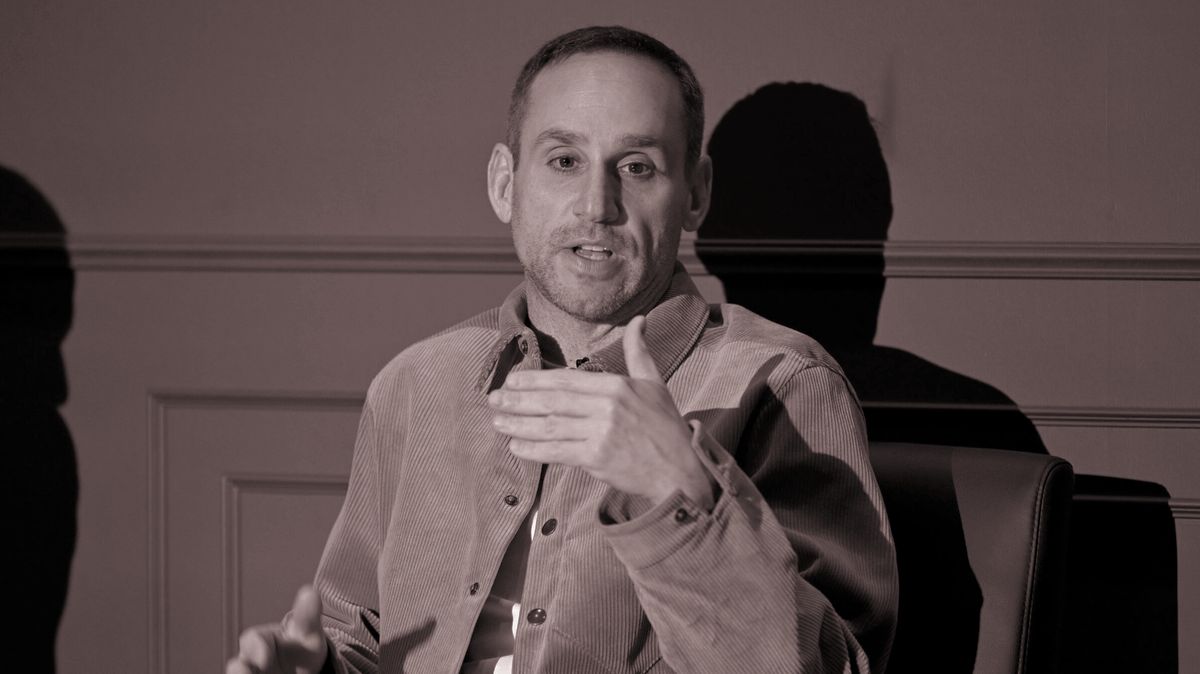
about Democratic policy or Biden’s calamitous decision to run again. But according to Simon Bazelon, a Democratic data analyst, those factors aren’t that important anyway. The problem with Democrats, he told me, is really just Martin’s defiant premise—that their party already has “the right message.” That line of thinking is precisely why Democrats lost in 2024—and might keep losing in 2026 and beyond unless the party gets back to its roots.
|
In Bazelon’s telling, a new message is the only thing that matters—and Democrats can only start winning again
if they refocus on popular middle-class economic issues while distancing themselves from politically toxic positions on crime, immigration, and education. “Everyone is searching for a theory of the case or an explanation that doesn’t pin any responsibility for our defeat on the unpopularity of various Democratic positions,” Bazelon told me. “What we need to do to win is very simple: We need to advocate for positions voters agree with, and focus on the issues they care about most.”
This is
the prevailing theme of Deciding to Win, an almost yearlong research project released this week, authored by Bazelon and backed by Welcome PAC. The newish group is loudly demanding Democrats cut the cord with left-wing activists who, over the last decade, have pushed the party to say and do things that repel normie voters and the multiracial working class. The project has backing, and input, from a
constellation of bold-faced Democrats who have been urging their party to moderate certain positions and return to the kind of big-tent, middle-class, anti-corporate messaging that helped Barack Obama win in places like Iowa, Ohio, and Florida in 2012, and transformed Bernie Sanders into a movement messiah in 2016. It doubles as a rallying cry for the Just Win Baby! wing of the Democratic Party— David Plouffe, James
Carville, Lis Smith, Cheri Bustos, Dan Pfeiffer, Alixandria Lapp, Jesse Ferguson, David Axelrod, and Greg Schultz are among the many Democrats fed up with purity politics who touched the project over the last year. Carville lent the report an endorsement quote that gets to the gist: “Once upon a time, we just called the analysis in Deciding to Win ‘common
sense.’”
Bazelon and his co-authors— Lauren Pope and Liam Kerr—spent the last year studying data from thousands of election results around the country, along with public polling and academic research. Perhaps of most value: Since the 2024 election, they’ve polled more than 500,000 voters to determine what’s actually “common sense” for Democrats and what’s not. Many issues associated with the party, fairly or not, were found to be about as popular
as venereal disease. Voters were repelled by boutique liberal agenda items like cutting police budgets, restoring affirmative action, getting rid of tracking in public schools, subsidizing electric vehicle purchases, and increasing refugee and immigrant admissions. The authors studied Democratic language shifts over time, comparing Democratic Party platforms between 2012, when Obama won reelection, and 2024. Over those dozen years, the use of words like “work,” “middle class,” “jobs,”
“economy/economic” and “man/men” plummeted, while the use of words like “equity,” “justice,” “hate,” “democracy” and various racial and gender terms skyrocketed.
A common theme surfaced no matter how the authors sliced the data: Democrats prioritize issues that Americans either don’t care about or actively dislike. In their polling, voters said they want Democrats to refocus on reducing the cost of healthcare, protecting Social Security and Medicare, and bringing down costs—while also
securing the border, clamping down on unfettered immigration, and reducing crime. The report also found that the shifting cultural priorities of the Democratic Party have led to significant losses with working-class voters—including non-college Black and Latino workers who identify as moderate or conservative—and that Republican policies are now generally seen as more popular than Democratic ones. Certain MAGA priorities that have driven the left crazy under Trump 2.0 have big majority support:
designating drug cartels as terrorist organizations, banning gender-affirming care for minors, increasing police funding, and shutting down asylum requests at the border.
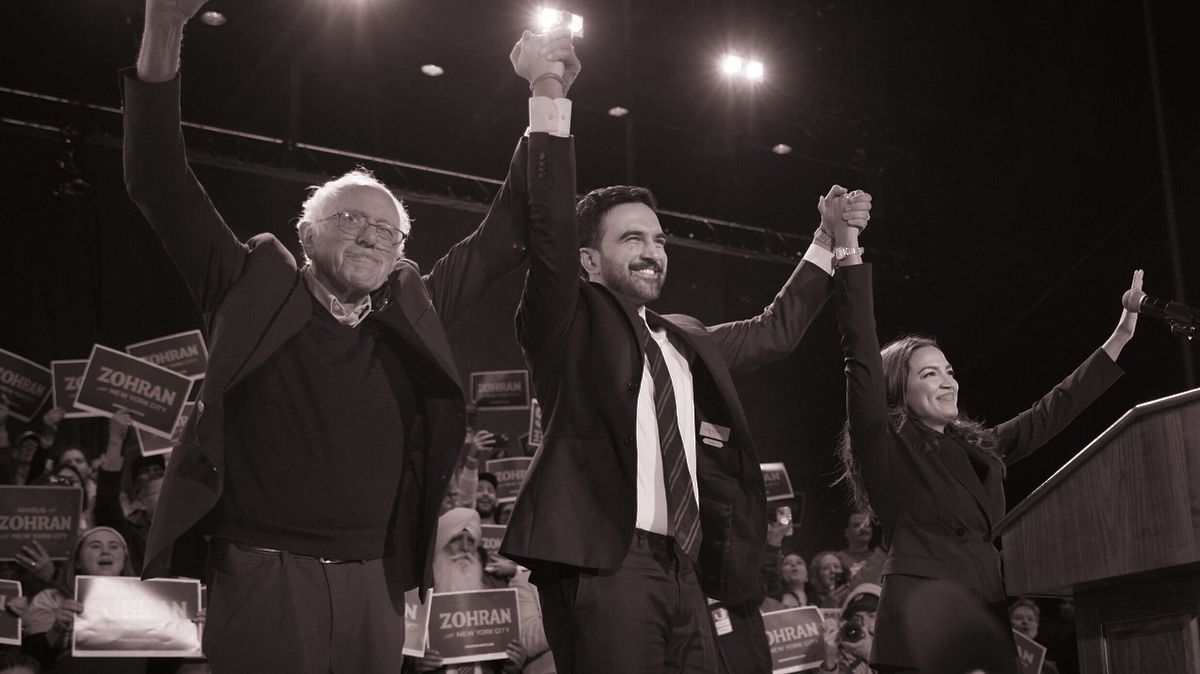
Despite the critiques of the identity left, the report is not a lazy exercise in left-bashing. Bazelon told me that Democrats have as much to learn from the economic messaging of Sanders, Alexandria Ocasio-Cortez, and Zohran Mamdani as they do from red and purple state
(or district) winners like Ruben Gallego, Marie Gluesenkamp Perez, Mary Peltola, and Jared Golden. Many of these winning candidates, to varying degrees, “maintain an unwavering focus on the economic issues that are the top priorities of working-class Americans while meeting voters where they are on issues like immigration and public safety,” per the report.
The point is that Democrats need to ditch the urbane,
box-checking identity politics that defined Hillary Clinton’s 2016 campaign and the race-to-the-left Democratic primaries of 2020, stop worrying about social media screamers and posturing interest groups, and instead run on the issues that impress voters in their states and districts. Winning over swing voters—and getting voters, in general, off the couch—is the whole ballgame.
As a thought experiment, Bazelon reminded me of how Trump won in the first
place: by moderating on unpopular conservative positions held by most other Republicans. Trump not only ruled out cuts to Social Security and Medicare, Bazelon said, but he “partially defused Democratic attacks on abortion in 2024 by promising to veto any federal abortion ban.”
|
Bazelon once worked at Blue Rose Research for David Shor, the online-famous data scientist
who has called on Democrats to adopt a “popularist” approach to campaigns instead of pandering to donors or dogmatic activists. The gist is basically this: If you campaign on stuff that is popular, chances are you might win more votes than your opponent. Simple, right? But in the social-media era, this has proven difficult for Democrats, who worry about pissing off their NESCAC-educated staffers, MSNBC viewers, and the questionnaire-wielding ideologues who show up at their offices demanding
fealty.
During the 2024 campaign, while working at the pro-Harris super PAC Future Forward, Bazelon helped write the secretive weekly “Doppler” emails on message-testing that were circulated to top Democrats. Late in the race, one of those missives warned Harris officials that her ad hominem attacks on Trump’s character and dark warnings about fascism were falling flat with voters who wanted to hear more about their economic concerns. It leaked to Shane
Goldmacher and Maggie Haberman at The New York Times. That experience—and the research that informed Future Forward's economy-focused advertising—stuck with Bazelon.
A running theme throughout the study is that too many of the issues Democrats seem to care about—democracy, climate change, identity and social-justice issues—just feel remote compared to the more pressing stuff that dominates the local news: the cost of living, crime, public safety,
schools. “Winning is a choice—a choice to be disciplined and strategic and to be willing to confront difficult truths about the electorate,” he and his co-authors write in their conclusion. “We must make this choice. The stakes are too high for us to do anything less.”
Deciding to Win has been getting plenty of attention in Democratic circles this week; it’s been sent to every office on Capitol Hill, to senators and staffers alike, and several active campaign teams are already reaching
out for briefings. But I was struck by what’s not highlighted in the report: any real focus on the 2024 campaign tactics and media strategy that have dominated Democratic squabbles since the election and will presumably be the focus of the D.N.C. autopsy. Bazelon and his colleagues are adamant that tools, tactics, and media opportunities don’t matter as much as a wholesale revision of the party’s issue set and priorities. The “Should Kamala Harris have gone on Joe
Rogan?” discourse that launched a thousand think pieces gets only one paragraph in Deciding to Win.
The word “podcast” is mentioned only once, same as “YouTube.” TikTok scores a few more mentions, but only in a subsection arguing that TikTok views and follower counts are less important than candidates’ positioning on issues. “Theories of the 2024 election that hinge on social media dynamics fail to reckon with the variations in performance among congressional Democrats,” the
report states. “Electoral overperformance among Democratic candidates was correlated with more moderate positioning, not with more popularity on TikTok.” In other words, attention is important, but only when you’re saying and doing things that appeal to voters.
I asked Bazelon the Rogan question, and about the theories that Democrats need to appear on more podcasts, YouTube shows, and generally create more cogent content to compete with Trump’s attentional superpowers. He told me yes,
sure, and Harris should “obviously” have gone on Rogan, but the Democrats can’t just go into new media spaces to say the same things—they also have to express views that voters like. It matters more what Harris would have said on Rogan, and how she would have answered questions about the border, crime, affirmative action, trans athletes, and Biden. “Just going on more podcasts isn’t going to help us very much if we’re using those platforms to take positions that voters dislike.”
|
|
|
Join Emmy Award-winning journalist Peter Hamby, along with the team of expert journalists at Puck, as they let you in on the
conversations insiders are having across the four corners of power in America: Wall Street, Washington, Silicon Valley, and Hollywood. Presented in partnership with Audacy, new episodes publish daily, Monday through Friday.
|
|
|
The industry’s go-to source for unflinching reporting on the trillion-dollar business of artificial intelligence - perhaps the
single most important technology of our time. Ian Krietzberg, the powerhouse journalist behind The Deep View, delivers twice-weekly insights into the latest dealmaking and breakthroughs in A.I., and how the intersecting worlds of finance, entertainment, media, and politics are being transformed in its wake.
|
|
|
Need help? Review our
FAQ page or contact us for assistance. For brand partnerships, email ads@puck.news.
You received this email because you signed up to receive emails from Puck, or as part of your Puck account associated with {{customer.email}}. To stop receiving this newsletter and/or manage all your email preferences, click here.
|
Puck is published by Heat Media LLC. 107 Greenwich St., New York, NY 10006
|
|
|
|