Greetings! As you can probably tell, today’s newsletter looks a little different. After three years, we’ve redesigned the look and feel of our private emails, and want to know what you think. If you have any feedback, please click here to take a brief survey.
|
Welcome back to Dry Powder. I’m Bill Cohan.
As a child, I was riveted by the Apollo space missions. So when Matt Gohd, the executive chairman of the Zero Gravity Corporation, invited me to take a ride on his company’s modified Boeing jet to experience weightlessness for close to 10 minutes, I responded with an enthusiastic yes. But as I discovered, Gohd’s tenure at the business has been about as topsy-turvy as the massive parabolas that his planes trace over the Atlantic. It’s a fascinating story, and a hopefully enjoyable interlude from our regularly scheduled programming, which will return, as ever, this Sunday.
By the way, earlier this week, I spoke with my Puck colleague Baratunde Thurston about the various ways that Wall Street is thinking about, and responding to, the rise of artificial intelligence. You can find our wide-ranging exchange, which is presented by Meta, by clicking here.
But first…
|
|
|
 |
John Ourand |
|
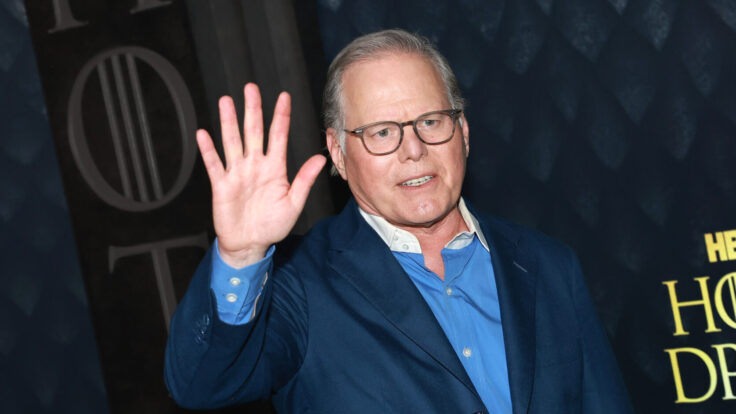
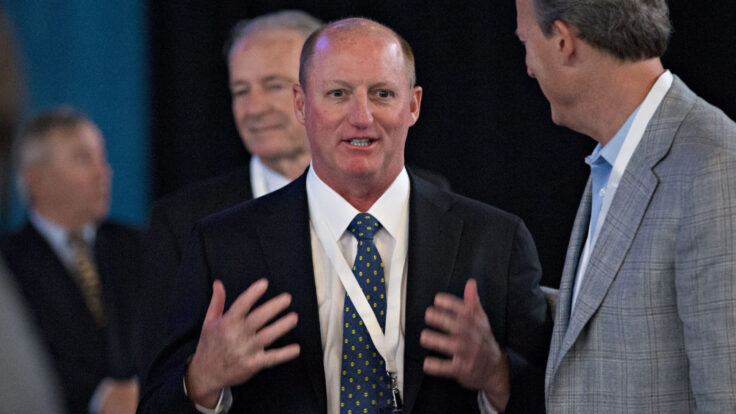
- Zaz and Iger’s Venu setback: The prospects of Venu launching anytime in 2025—or ever, really—took another blow last week when a federal judge denied motions by ESPN, Fox, and Warner Bros. Discovery to dismiss Fubo’s antitrust case and move the case to a different jurisdiction where it could have, potentially, wound up in front of a friendlier judge. The decision essentially guarantees that there’s no escape hatch for the strange bedfellows who teamed up to create Venu and, frankly, already seem headed on disparate paths into the cable dystopia less than one year later.
The appellate courts are going to be crucial here. And it’s important to note that while the appeal continues, the companies will have to deal with a discovery process that no executive wants to be anywhere near. Meanwhile, in retrospect, the denial of the motion to dismiss hardly came as a surprise. (After all, if that motion had any chance of happening, the injunction would not have been issued in the first place.) Fox’s push to switch jurisdictions seemed to have a better chance of succeeding, since it was based on contract language with Fubo, but Judge Margaret Garnett swatted it aside. Not only did she suggest that Fox was trying to judge-shop, but also that the company had waited too long to make its objection.
|
|
|
 |
Marion Maneker |
|
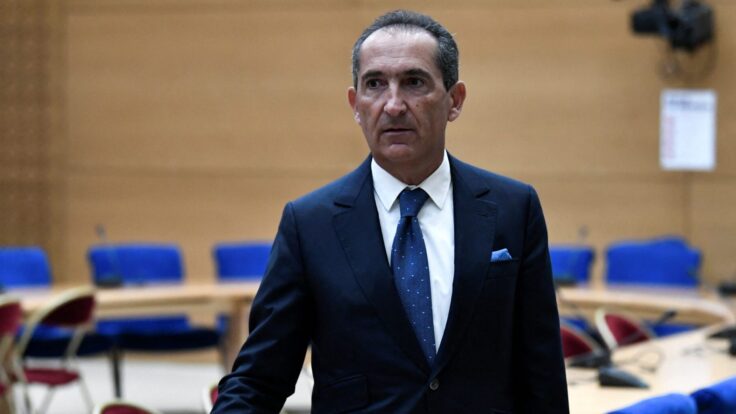
- On the ongoing chaos at Sotheby’s: Yesterday, The Art Newspaper began to question Sotheby’s claims regarding the extent of its layoffs, writing, “only now is the full scale of the cost cutting becoming apparent.” The company is only confirming that approximately 5 percent of its staff has been cut, even though that figure appears to significantly understate the actual tally of departures over the last six months. Meanwhile, Sotheby’s C.E.O. Charlie Stewart finally sent an email to staff on Sunday afternoon addressing the layoffs. Citing a 25 percent drop in consolidated sales, Stewart repeated the “5 percent” figure before indulging in a bit of damage control regarding the messy firings. (Some staffers apparently learned of their fate through condolence notes, according to The Art Newspaper.) “I want to reassure you that nearly everyone affected at this time has been communicated to, and the few remaining conversations will happen early this week,” Stewart wrote. Of course, he went on to blame the media for his own company’s missteps: “It is unfortunate but inevitable that so much of this has been targeted and sensationalized in the press.” Stewart followed up with an internal announcement on Monday that “Masumi Shinohara will assume the role of Managing Director of Sotheby’s Asia” on January 1, freeing up Nathan Drahi, the current Asia M.D. and son of Sotheby’s owner Patrick Drahi, to join Stewart’s executive team, presumably in New York. Drahi’s arrival stateside has been widely expected within the company for some time.
|
|
|
|
The rise, fall, and return of Zero-G, the “zero gravity” lower-priced alternative to Blue Origin, which allows tourists and researchers to experience the flavor of space over the Atlantic for 10 grand a pop.
|
|
|
|
During the predawn hours of December 7, Pearl Harbor Remembrance Day, I drove from Orlando to the Kennedy Space Center in Cape Canaveral, gathered together with my fellow travelers, ate a bagel as directed, signed away all legal liability (also as directed), and got fitted with a modified spacesuit. Matt Gohd, the executive chairman of the Zero Gravity Corporation, had invited me to take a ride on his company’s modified Boeing 727-200 jet to experience weightlessness for close to 10 minutes. During the 90-minute flight, the plane would cut steep, 25,000-foot ascents and trace massive parabolas over the Atlantic—“the most amazing experience there is,” as he’d put it in his email.
Inside the space complex, we were given the rules of the road: Among them, we were to stay prone on the padded floor of the jet during the ascents; focus our eyes on a spot on the plane’s ceiling to prevent severe motion sickness (thanks for the bagel, guys); and, once weightless, resist the urge to try to “swim” through the plane like an astronaut or The Dude in that Big Lebowski dream sequence. Also, we needed to make sure to reorient our feet downward as the weightlessness period ended—it usually lasted around 30 seconds—or else we’d risk falling out of the air onto our heads or onto each other. It was going to be a wild—and fun—ride.
|
|
|
|
A MESSAGE FROM OUR SPONSOR
|
PERFORMANCE UNLEASHED
With a distinct sporting personality, the Range Rover Sport is a
peerless performer.
EXPLORE
|
|
|
|
I’m a child of the 1960s, and I was riveted by the Apollo space missions. I remember the July night when the counselors at my sleep-away camp in Maine gathered us all into the dining hall to watch, on a single black-and-white television, as Neil Armstrong became the first human to walk on the moon. When Gohd invited me down to Orlando, I didn’t have to be asked twice.
But that childlike curiosity could hardly prepare me for our 585-mile trip over the Atlantic. I didn’t suffer from motion sickness, although I was getting close by the time the 15th parabola rolled around. (Gohd explained that NASA astronauts push well beyond that number, but Zero-G caps it at 15 for mere mortals—that’s sort of the vomit comet threshold for the rest of us.) Luckily, the jet only had a few windows, so it was difficult to discern just how steep our ascents and descents were. The weightlessness was cool, otherworldly: I was able to catch a floating peanut M&M and also pluck a droplet of water out of thin air. I never quite mastered the somersault. But there was no mistaking the fact that I was floating through “space.”
Gohd, himself, has also been on quite a ride with Zero-G, following a long and successful career as a Wall Street trader and problem-solver. Gohd got involved in Zero-G, which was founded in the mid-’90s, during its first nadir, in 2019. The company operates on a hybrid business model that allows astronauts to train for missions and researchers to conduct experiments in a weightless environment, and regular people to go on a true once-in-a-lifetime joyride for about $10,000 a pop—a whole lot of cash, to be sure, but potentially a far more memorable experience than sampling a Lafite Rothschild of superior vintage. (The full plane can be chartered for $272,000 for a group of 28.)
At the time Gohd got involved, the executives running Zero-G had made some poor choices: leaving one plane grounded, financing the company with seats on a jet that wasn’t certified by the F.A.A., etcetera. Most of the board quit, as did the C.E.O., who then checked herself into the hospital around Thanksgiving, Gohd recalled. That’s when he got a desperate call from one of the remaining investors in Zero-G: Would he, a Wall Street guy without any relevant experience, consider becoming C.E.O. and try to pull the company out of its tailspin?
|
|
Zero-G was founded in 1993 by entrepreneur and longtime space enthusiast Peter Diamandis and two friends—NASA astronaut Byron Lichtenberg and engineer Ray Cronise. Eager to experience weightlessness like an astronaut, Diamandis raised a $10 million seed funding round from investors including Elon Musk, Sergey Brin, and Esther Dyson. It took the F.A.A. 11 years to certify Zero-G for taking civilians up on a flight. “They did not want that responsibility, of basically certifying a plane that, when you think about it, goes up and nosedives,” Gohd recalled.
As he contemplated joining the company during its dark days, Gohd went into overdrive, learning everything he could about Zero-G and the bespoke zero-gravity flight industry. He spoke with creditors, vendors, customers, and the remaining employees. They all seemed eager to keep Zero-G alive. “I felt that the cultural issues could be solved, the financial issues could be solved, the demand, I knew, was there,” Gohd told me.
At the time, the company desperately needed a new equity infusion. Gohd made five calls and, miraculously, received five positive responses—this is a business with significant risks and CapEx requirements, although they are not insurmountable. He even convinced his new investors to wire the funds before the deal documents could be drafted, using the money to pay the overdue insurance bill and cover maintenance on the jet. Then, he started marketing.
Gohd reached out to his friend Anthony Scaramucci to see if The Mooch would be willing to promote Zero-G at his annual SALT Conference in Las Vegas. He contacted Mike Milken’s people to see if he’d feature Zero-G at the annual Milken Conference at the Beverly Hilton. He sent a proposal to Rob Wiesenthal, the C.E.O. of Blade, to see if Zero-G could partner up with the chopper company. They all agreed to help out. He also got creative about raising new equity with a “standby rights offering,” where an investor or investors agree to buy the shares in a company if other investors don’t exercise their rights to buy shares.
|
|
|
|
A MESSAGE FROM OUR SPONSOR
|
PERFORMANCE UNLEASHED
With a distinct sporting personality, the Range Rover Sport is a
peerless performer.
EXPLORE
|
|
|
|
The company itself appeared to be on a steep ascent when, shortly after Covid hit, NASA announced that it was canceling the use of the Zero-G jet for research purposes—a decision that was going to eliminate about 40 percent of Zero-G’s business at that time. “This was, like, existential,” Gohd recalled. He furloughed all the employees besides his finance executive, returned the $1.5 million of funding that was in escrow, and started using his Platinum Amex card to pay Zero-G’s expenses. Meanwhile, he calculated the amount needed to get the company through the jet’s next scheduled maintenance program in June 2020.
To make up the shortfall, Gohd decided to pivot to an experience business—one poised to benefit from the sort of quirky, devil-may-care spending decisions that wealthier people were making during the homebound days of the lockdown—particularly as consumer space travel, from Richard Branson’s Virgin Galactic to Jeff Bezos’ Blue Origin and Elon Musk’s SpaceX, was becoming a one-percenter bucket-list item. There is even a company, Space Perspective, that offers to take people up to 125,000 feet in a luxury hot air balloon for $125,000. At around $10,000 per customer, Zero-G was much cheaper—and much less risky—than those options.
“It’s not like going up on Blue Origin for a million and a half bucks for a 10-minute rocket ride, which would scare the shit out of 90 percent of the population,” Gohd told me, “or going up with [Branson] on a rocket glider [at $600,000 per flight].” Plus, “Our safety record is impeccable. Nobody’s ever been hurt. We’ve flown 22,000 people plus.” After Gohd proved to the F.A.A. that the air circulating within his jet was purified and filtered, the agency agreed, during Covid, to let the general public experience brief periods of weightlessness.
|
|
In those bizarre days, Zero-G took off. Al Roker took a flight and filmed a segment for the Today show. CBS News’s Norah O’Donnell did, too. “All of a sudden, it was becoming a thing,” Gohd said. Business at Zero-G had improved so much that by the end of 2022, Gohd was ready to turn things over to his chief operating officer and head back to Hawaii, where he lives now. “Let’s work on my exit package,” he told his board, “considering that basically I’ve taken this thing from zero to hero in three years.”
Alas, Hawaii would have to wait. No need to get into the gory details here,, but suffice it to say, six months later, the company was in worse shape than Gohd had found it in 2019: no plane, no pilots, no money. Again, most of the board quit, leaving just Gohd’s chosen successor as C.E.O. and Gohd. He brought back Cronise as a board member and fired the C.E.O. He got the pilots to return and refocused on training NASA astronauts and marketing the weightlessness experience to the general public. In January 2024, he brought on Kevin Sproge, a test pilot and former head of commercial pilot training at Blue Origin, to be the new C.E.O. Gohd, now the company’s active executive chairman, hopes to soon return to just being a board member—and to Hawaii—and to let Sproge have full control.
Despite the company’s challenges, Gohd is aiming high. He told me that “manufacturing in space” could be a big opportunity for Zero-G, although I wasn’t exactly clear on how that would work. He thinks there is interest in zero-gravity flights internationally and that in three years’ time, Zero-G could be a $30 million to $40 million EBIT business. He’s shooting for around $20 million in revenues for 2025 and $6 million in profit, and is trying to raise around $15 million of new money at a $35 million valuation. He’s hoping to buy a second plane, allowing for more commercial flights and a proper maintenance schedule. “Having a second airplane doesn’t double the valuation, it triples it,” he said.
He’s also hoping a ride on a Zero-G flight will become a rewards program of sorts for top performers in business and other disciplines, a way to create accentuated bonds of trust for participants who experience weightlessness together. And he’s proven skilled at attracting media attention for the business, from The Mooch to Norah to, well, me, I suppose. In 2007, Stephen Hawking, who had been bound to a wheelchair for 40 years, experienced weightlessness on a Zero-G flight. Kate Upton, wearing a bikini, got a solo ride on the plane for the Sports Illustrated Swimsuit Issue in 2022. (Sorry, I did not receive a discount code for my exalted Dry Powder readers.)
One thing is for sure: It’s a novel experience to watch control freaks and masters of the universe find themselves in an environment they can’t control while experiencing something they’ve never experienced before. Sounds like a nice holiday gift, doesn’t it?
|
|
|
|
Finally, a media podcast about what’s actually happening in the media—not the oversanitized, legal-and-standards-approved version you read online. Every Tuesday and Friday, join Dylan Byers, Puck’s veteran media reporter, as he sits down with TV personalities, moguls, pundits, and industry executives for raw, honest, sometimes salacious conversations about the business of media and its biggest egos. New episodes publish every Tuesday and Friday.
|
|
|
|
An insider-friendly tip sheet from Matthew Belloni, who spent 14 years in the trenches at The Hollywood Reporter and five before that as an entertainment lawyer. Subscribers also receive What I’m Hearing+, a companion email focused on entertainment law, the streaming industry, and more.
|
|
|
Need help? Review our FAQ page or contact us for assistance. For brand partnerships, email ads@puck.news.
You received this email because you signed up to receive emails from Puck, or as part of your Puck account associated with . To stop receiving this newsletter and/or manage all your email preferences, click
here.
|
|
Puck is published by Heat Media LLC. 107 Greenwich St, New York, NY 10006
|
|
|
|