{{ 'now' | timezone: 'America/New_York' | date: '%b %d, %Y' }} |
|
|
Welcome back to The Best & The Brightest. I’m Leigh Ann Caldwell, headed to
George Washington’s Mount Vernon estate for a screening of Ken Burns’s forthcoming PBS documentary, The American Revolution, timed to commemorate America’s 250th anniversary. I’m hearing this may be Burns’s best yet. I’m looking forward to this, and I’ll share an update tomorrow.
Tonight, I’ve got news and notes on the government shutdown, including a path to a potential resolution. There’s a lot that’s still up in the air, especially
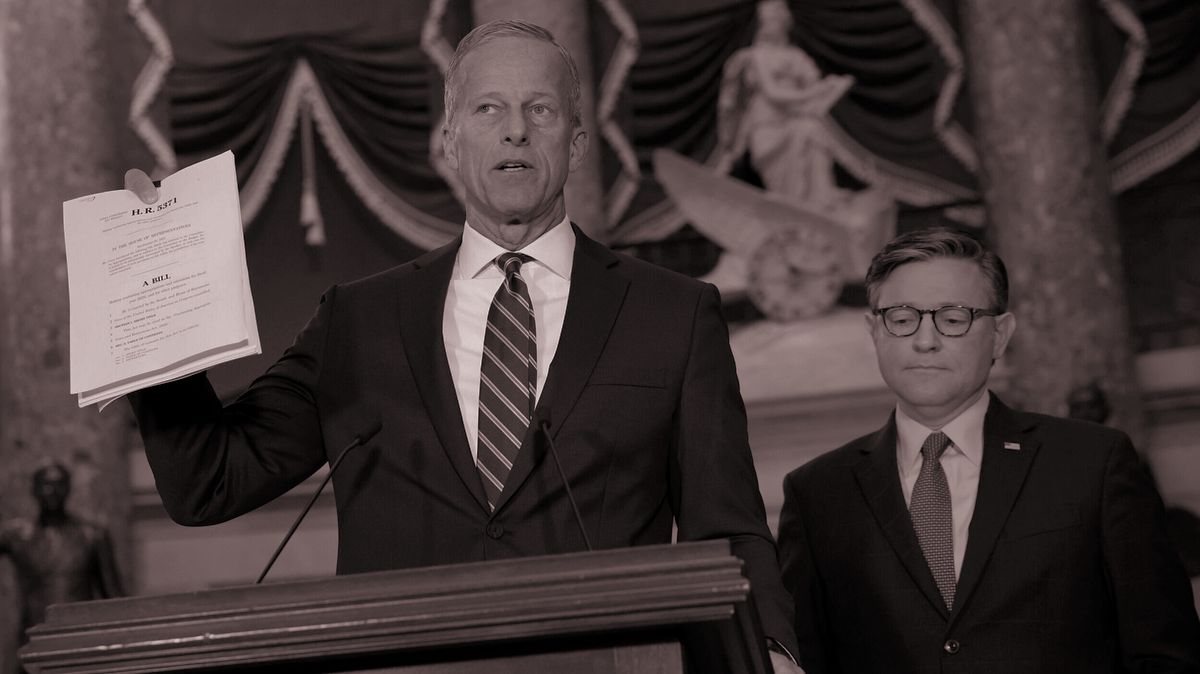
with Trump mostly AWOL on the issue, House Republicans increasingly frustrated they’re not in Washington, and Senate Majority Leader John Thune flipping on holding individual votes to force the Democrats’ hand.
But first… |
- An
unlikely shutdown sisterhood: Who says bipartisanship is dead? Last night, I dropped by the National Museum of Women in the Arts for the annual awards presented by Engage, a bipartisan nonprofit that promotes economic security for women. The ceremony was a stark rejoinder to the polarization that has gripped the country, and a necessary reminder, as Engage founder Rachel Pearson put it, that working across the aisle is more important than ever.
Reinforcing that
theme, Republican Sen. David McCormick of Pennsylvania gave Democratic Rep. Chrissy Houlahan the Democratic public service award, wrapped in a blue Tiffany box, for her work on paid family leave. In her speech, Houlahan called on McCormick, her fellow Pennsylvanian, to be the first Senate sponsor of her paid leave bill. Then Democratic Sen. Kirsten Gillibrand of New York gave Republican Sen. Deb Fischer of Nebraska the G.O.P.
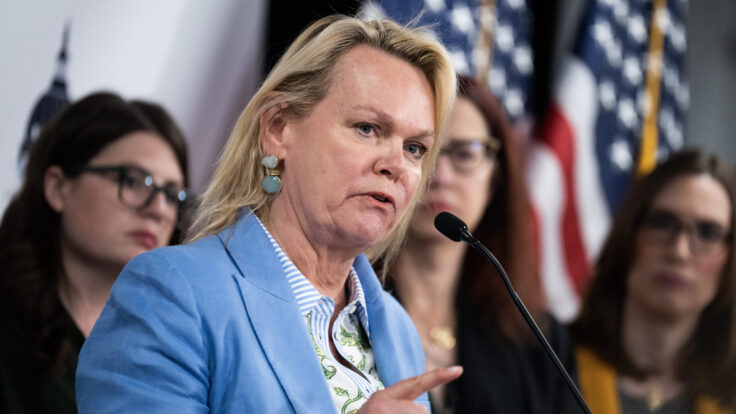
version of the award, for her work on paid leave tax credits. Amusingly, they both arrived dressed in pine green suits—Gillibrand’s was velvet—and noted that they are office neighbors and happen to have nearly identical dogs. Gillibrand said she and Fischer hope to be the first women chairs of the Senate Armed Services Committee. It was a lovely evening and a much needed moment of levity. - An ignominious House record: It’s now been 36 days
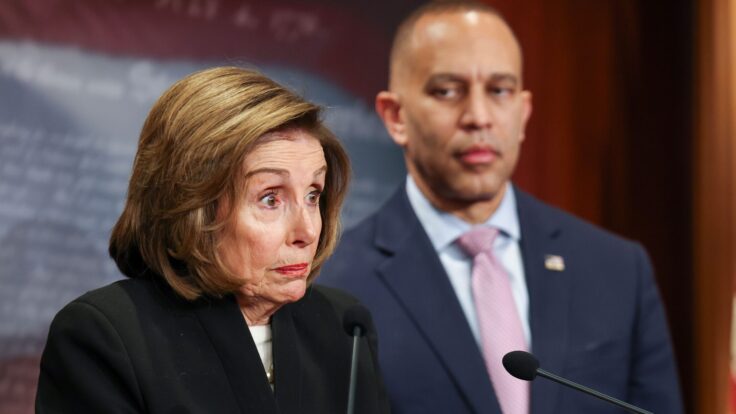
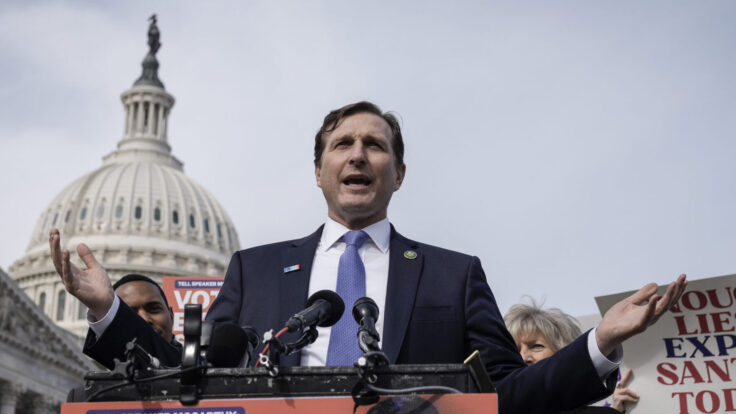
since Adelita Grijalva won a special election to replace her late father, former Rep. Raúl Grijalva of Arizona, and Speaker Mike Johnson is still refusing to swear her in—a record amount of time between a special election victory and a swearing in. Johnson blames the government shutdown, but that’s nonsense—he could easily swear her in during one of the multiple “pro forma” sessions in the House each week. Johnson’s reluctance
may have more to do with Grijalva’s promise to provide the deciding 218th signature on the discharge petition, by Reps. Thomas Massie and Ro Khanna, to require the Justice Department to release all of the information related to the Jeffrey Epstein case. Grijalva’s signature would toss the resolution to the House for a vote.
Less pointedly, Grijalva can’t do any of the work that a representative of about 800,000 constituents is
supposed to do, which includes providing people in her district assistance and resources during the government shutdown. She’s been posting about her experience on social media, but Johnson isn’t budging. - Signs of G.O.P. wavering: Tonight, in a small sign of Republican discontent with Trump’s policies, the Senate passed a measure to
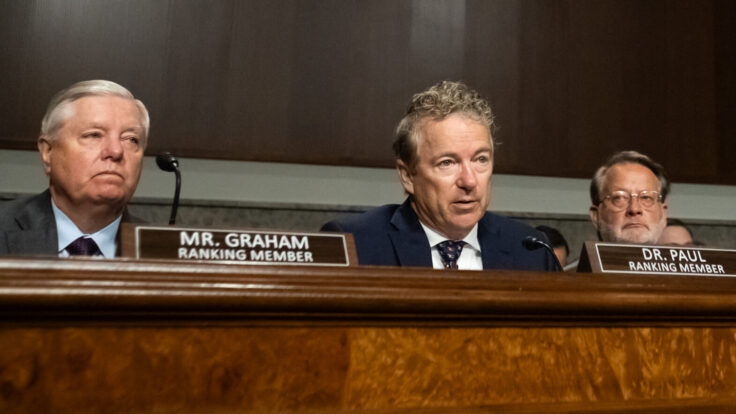
repeal the president’s tariffs on Canada. The vote, pushed by Democratic Sen. Tim Kaine and Republican Sen. Rand Paul, met a simple majority threshold with the support of four Republicans—Paul, Susan Collins, Mitch McConnell, and Lisa Murkowski. And yesterday, the Senate passed a similar measure targeting Trump’s tariffs on Brazil, with five Republicans voting in favor—the same four plus Sen. Thom
Tillis. That total was likely tempered after J.D. Vance asked Republican senators yesterday at a closed-door lunch to give the president more time on tariff negotiations, and Senate Majority Leader John Thune did not recommend voting for the bill.
The measures won’t reach the president’s desk, however, because Speaker Johnson inserted a provision in a House rule that prohibits the chamber from voting on tariff-related matters until next year. (If
you missed my story from Sunday about Johnson and Thune’s surrender to the administration, you can catch up here.)
|
|
|
News and notes from D.C. as the government shutdown enters a fifth week: a potential way
out, the Trump power void, Thune’s false “rifle shot” proposal to force incremental votes, bubbling questions about Schumer, and why some Democrats are eyeing November 21 as their date of maximum leverage. |
|
|
Four weeks have now passed since the U.S. government shut down, with Democrats demanding new Obamacare
subsidies and the White House seizing the opportunity to unilaterally eliminate congressionally funded programs and agencies. With the battle lines hardening, it seems increasingly inevitable that we’ll surpass the 35-day shutdown record of 2018-19, when Congress was at loggerheads over Trump’s border wall. Back then, of course, Trump
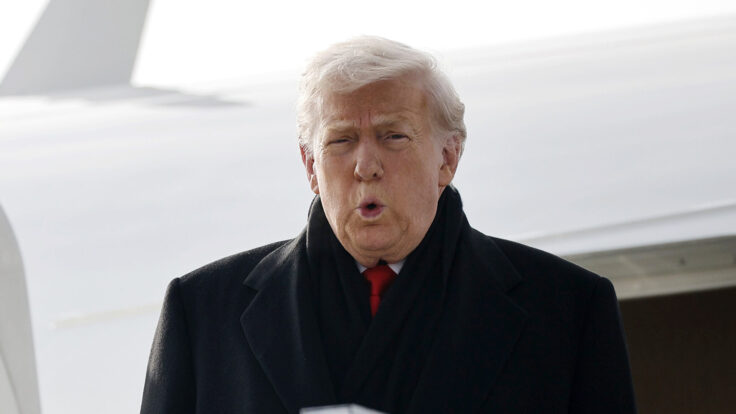
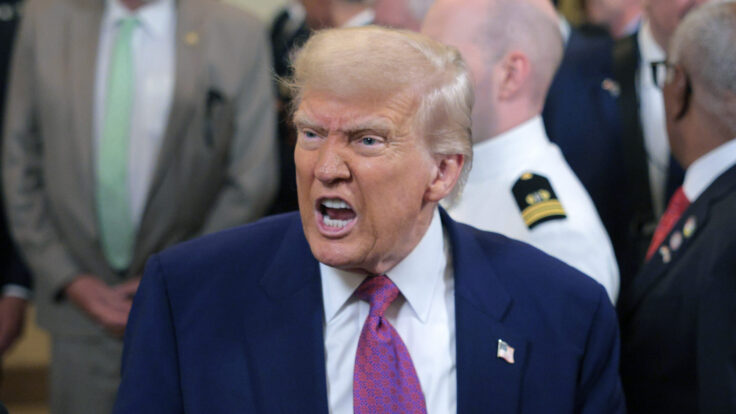
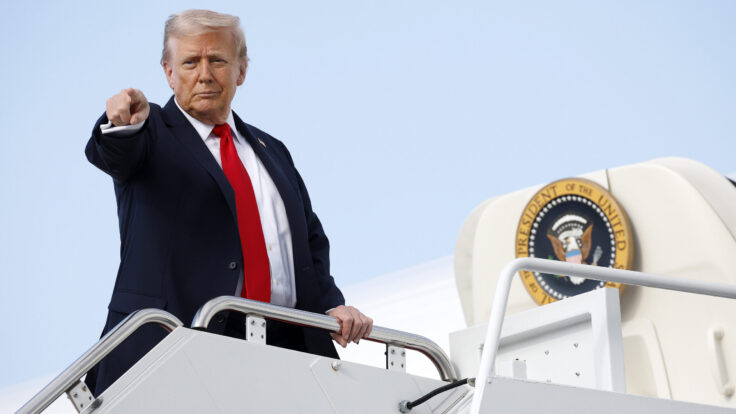
was fully engaged in negotiations between the two sides—it was his signature wall, after all. But this time around, he’s barely acknowledged the impasse. Instead, he’s letting Capitol Hill take the heat while he focuses on making the case for his Nobel Peace Prize (there’s always 2026…) and cutting trade deals in Asia.
However, there are some subtle indications that the political tundra is starting to thaw. A bipartisan group is making progress on an off-ramp,
participants in both camps tell me, that would ostensibly reopen the government while potentially addressing the status of Affordable Care Act subsidies (even if some experts have suggested it’s already too late to make any changes for the 2026 coverage year).
According to three Senate
sources familiar with the discussions, the talks revolve around a vote on the stalled stopgap spending bill that funds the government until November 21, followed by a vote on an Obamacare subsidy extension—either a clean extension, which Democrats want, and/or an extension with reforms, which Republicans are demanding. If that vote hasn’t happened by November 21, the Democrats could withhold their votes for another government funding bill that will almost certainly be necessary. (There is also
chatter about a much longer-term funding bill, but my sense is that Democrats don’t want to give up the leverage of a pre-Thanksgiving funding deadline. Plus, I’ve had many House Republicans tell me they won’t support a yearlong funding extension, so it’s hard to see how that would be on the table.)
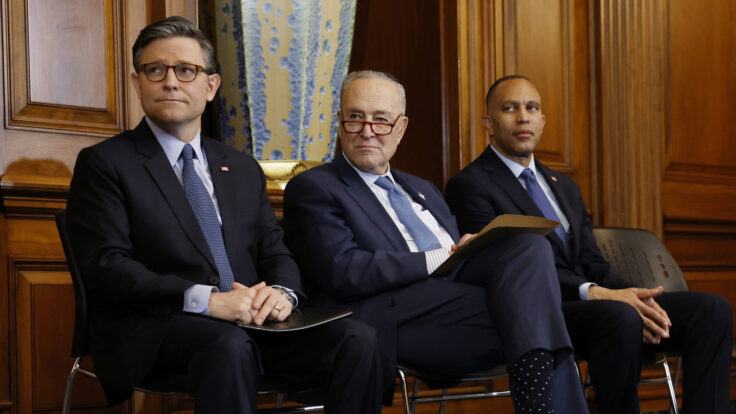
Moderate Democrats want Senate Majority Leader John Thune and Minority Leader Chuck Schumer to get more involved soon. (Thune indicated tonight that he will.)
But the real complexifier is Trump. Democrats don’t trust that any deal they cut with Republicans won’t be immediately violated by the president, who has already demonstrated little interest in respecting congressional spending authority, and some are arguing that they’ll need assurances from Trump as part of any truce.
But either way, Trump just doesn’t seem to care. At a luncheon last week with Senate Republicans at the White House, the president barely mentioned the shutdown in his
televised remarks. Nor did it take up much oxygen at J.D. Vance’s lunch with Republican senators on Capitol Hill yesterday, apart from the vice president thanking them for sticking together, according to Florida Sen. Rick Scott, who attended the lunch. Instead, they mostly talked about beef imports from Argentina. |
While Vance largely ignored the shutdown during the Tuesday luncheon, he did make clear the White House’s
opposition to any so-called “rifle shot” bills—a strategy Thune floated last week in the Washington Examiner, where the Senate could hold votes to incrementally fund specific programs or sectors, like Sen. Josh Hawley’s bill to cover SNAP benefits, or Sen. Ted Cruz’s bill to pay air traffic controllers salaries. Both bills would have been politically toxic for Democrats to reject.
Some Senate Republicans were confused that Thune ever suggested
the idea in the first place. Even before Vance lowered the boom, the White House had already informed some Senate Republicans that they were firmly opposed to the tactic. For one, the administration had already come out last week against using contingency funds to pay for food aid for more than 40 million Americans, even though Democrats insist the government is legally obligated to pay the benefit, even during a shutdown. Plus, Speaker Johnson remains firmly against any action that would
require him to bring back the House, which has essentially been in recess since September 19—11 days before the shutdown began—until the Senate passes a government funding bill. When asked this week if the House should vote on their own versions of rifle-shot bills, Johnson called it a “futile effort.”
Johnson hasn’t budged from his position that the House should not do any work until the government is open. Some Republicans, including California Rep. Kevin Kiley and
Georgia Rep. Marjorie Taylor Greene, have spoken out against his strategy. But the discontent runs much deeper. I’m told by a House Republican source that the list of G.O.P. members jonesing to come back is significantly larger, and that at least 20 House Republicans are planning to return to Washington next week regardless of what Johnson does. |
There’s also mounting pressure on the left. Senate Republicans have been predicting that Democrats will fold
since day one of the shutdown, and some saw the letter sent by federal union members on Monday calling for a short-term spending measure as a sign that Democrats could go wobbly. Then again, many of them assumed Democrats would cave right after the No Kings rallies in mid-October (a facile theory I consistently disputed). Democrats are likewise dismissing the notion that the union letter changed anything. Instead, they’re looking to November 1, when SNAP beneficiaries will not receive their
normal monthly stipend, and when A.C.A. plan prices are released for 2026—which will be much higher—both powerful levers with which to drag Republicans to the negotiation table.
As for Schumer, some Democrats are grousing that the Senate minority leader needs to clarify to his caucus what an A.C.A. off-ramp could look like, according to two Democratic sources. Does Schumer prefer a one-year extension? A measure that includes reforms to appeal to Republicans? In their closed-door lunch
yesterday, Senate Democrats didn’t talk about policy specifics—instead, they chatted about the state of play and “the different steps we might take,” according to one Democratic senator I spoke with. Alas, I’m told, leadership failed to articulate anything resembling a strategic direction for the caucus.
Schumer’s worst-case scenario would be a mutiny of moderate Democrats fed up with the shutdown and the showboating. A couple of Democratic aides tell me it’s too soon for that. But as
voters start to feel the pain—canceled flights, empty E.B.T. cards, doubled insurance premiums—the situation could become untenable quickly. |
|
|
Join Emmy Award-winning journalist Peter Hamby, along with the team of expert journalists at Puck, as they let you in on the
conversations insiders are having across the four corners of power in America: Wall Street, Washington, Silicon Valley, and Hollywood. Presented in partnership with Audacy, new episodes publish daily, Monday through Friday. |
|
|
Unique and privileged insight into the private conversations taking place inside boardrooms and corner offices up and down Wall
Street, relayed by best-selling author, journalist, and former M&A senior banker William D. Cohan. |
|
|
Need help? Review our
FAQ page or contact us for assistance. For brand partnerships, email ads@puck.news.
You received this email because you signed up to receive emails from Puck, or as part of your Puck account associated with {{customer.email}}. To stop receiving this newsletter and/or manage all your email preferences, click here.
|
Puck is published by Heat Media LLC. 107 Greenwich St., New York, NY 10006 |
|
|
|