|
Hello and welcome back to The Best & The Brightest, I’m Leigh Ann Caldwell. Happy Father’s Day to the dads, especially mine and my husband, Greg, who has put in a lot of hours to earn this day.
I’m glad that Saturday’s military parade is over and D.C. streets are navigable again. Perhaps the parade could be a boost to military recruitment, or create a sense of patriotism, and the parts I saw were tasteful. But when it’s tied to the birthday of a Constitution-challenging president who’s sending the military into American streets, the effect is obviously divisive. That’s part of the reason millions of Americans gathered at more than 2,000 anti-Trump protests across the country on the same day.
Today, I’m doing a policy deep dive, looking at the contradictions between the president’s stated priority of dominating artificial intelligence, and his one congressional priority, the Big Beautiful Bill—a backward-looking piece of legislation that doesn’t take into account the economy of the future.
But first…
|
- The Senate’s budget release: The most substantial part of Senate Republicans’ Big Beautiful Bill is expected to be released tomorrow. Among other reveals, we’ll find out where Republicans landed on renewable energy tax credits (which I talk about below); the state and local tax deduction (which Republican senators want to cut); the Trump tax credits (which they said were too expansive and expensive); and how the senators dealt with the third rail of Medicaid. Expect a new round of
posturing, even though it’s a short week because of Juneteenth. The House is out this week, so they might have a posturing disadvantage.
|
|
|
|
A MESSAGE FROM OUR SPONSOR
|
bp added $190+ billion to the US economy over the last three years. Like acquiring Archaea Energy, making us America’s largest renewable natural gas producer. With sites operating from coast to coast, it’s another big way bp is investing in America.
|
|
|
- Mourning Minnesota: The shocking political assassination of Minnesota state lawmaker Melissa Hortman and her husband, Mark, in their home, and the attempted assassination of State Senator John Hoffman and his wife, Yvette, cast a grim shadow over a day that President Trump wanted to be completely focused on his birthday and military parade, and on which protesters turned out in massive numbers—over 5 million, according to
organizers—for anti-Trump “No Kings” demonstrations across the U.S.In this polarized environment, and at a time when political violence is on the rise, this lead from Lisa Lerer, at The New York Times, stood out: “‘Horrible news,’ said Representative Steve Scalise, who was shot at a baseball game in 2017. ‘Paul and I are heartbroken,’ said former House Speaker Nancy Pelosi, whose husband was bludgeoned with a hammer in 2022. ‘My family and I know the horror of a targeted shooting all too well,’ said former Representative Gabby Giffords, who was shot in the head in 2011. Still more came from Gov. Josh Shapiro of Pennsylvania (arson, 2025), Gov. Gretchen Whitmer of Michigan (kidnapping plot, 2020) and President Trump (two assassination attempts, 2024).”
- Trump’s softening support: The president’s poll numbers continue to be mostly stagnant, another sign that his base is mostly standing by him and that the Democratic resistance is holding strong. In an NBC News/Survey Monkey poll out today, Trump’s approval clocked in at 45 percent, the same level it’s been at since early April, according to Nate Silver’s polling average. (Trump enjoyed higher approval ratings for the first month and a half of his presidency).But as NBC News noted, enthusiasm for Trump among his base is softening slightly. More specifically, Republicans were 5 percentage points less likely to say that they strongly supported the president when compared to the polling in April. Now, instead, those Republicans somewhat support him. Just 35 percent of independents approved of the president.
|
|
Now, on to the main event…
|
|
|
|
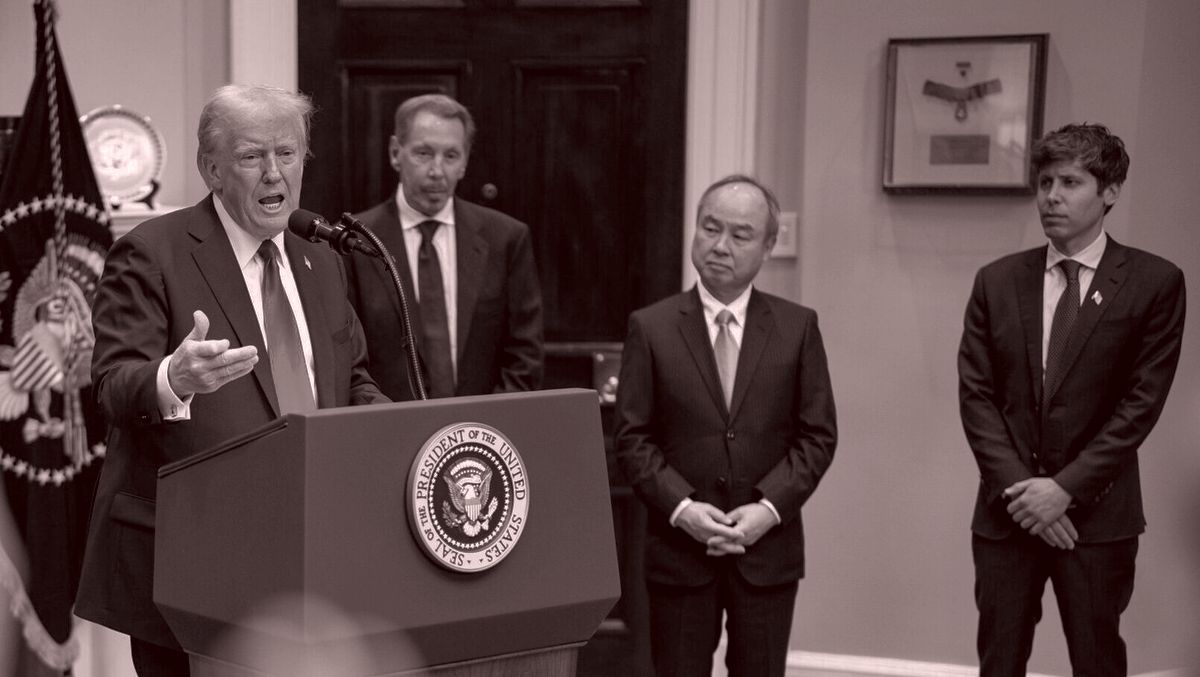
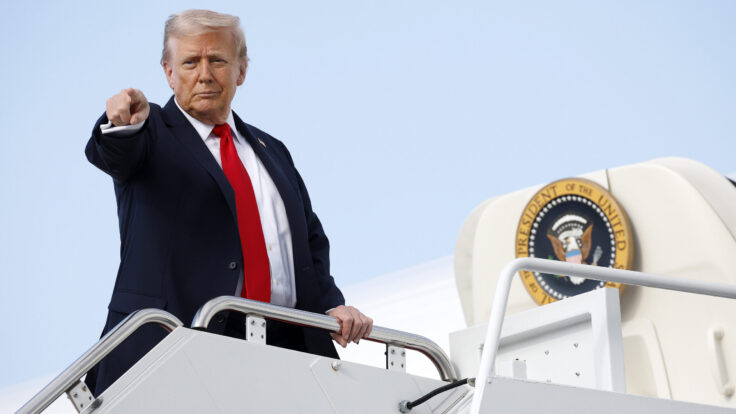
On his first full day in office, Trump convened tech leaders to launch an A.I. initiative to boost adoption and compete with China. But his one legislative agenda—the massive spending bill now with the Senate—leaves the U.S. profoundly vulnerable to A.I.’s social and economic disruptions.
|
|
|
|
The other day, during a conversation with one of the smartest Republican political operatives that I know, we both wondered aloud when artificial intelligence would become a truly dominant campaign issue. It could be as early as the 2026 midterms, we surmised, and certainly by 2028. Sure, we could both be completely wrong, and A.I. adoption will simply lead to endless economic, social, and cultural prosperity. But that’s probably not happening.
Inevitably, it seems, there will be strains on the power grid, impossible-to-predict impacts on education, and economic upheaval—not to mention all the unknown unknowns. Within a decade, we are told, many white-collar jobs may become as endangered as the blue-collar, manufacturing jobs that President Trump is trying to bring back. And yet, neither party is truly seizing on the issue. As the Republican political operative observed, that future voting bloc is still up for grabs.
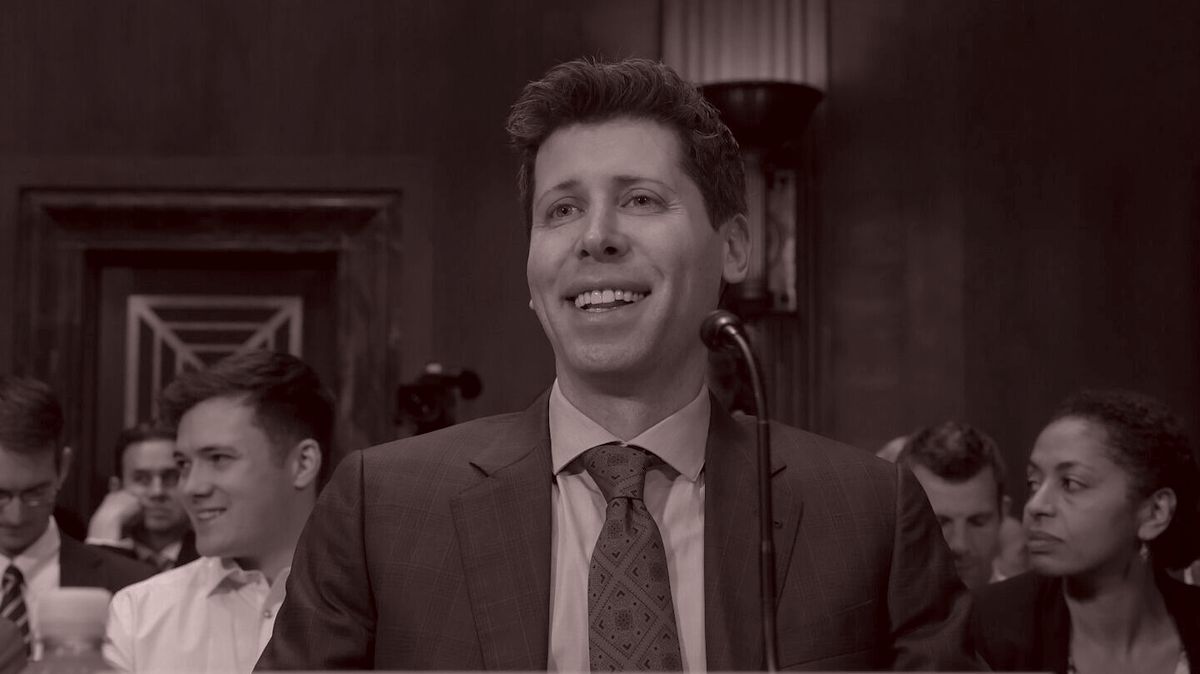
Trump does have a plan, of course, which starts, and ends, with dominating A.I. before China gets there first. He made clear how much of a priority it is when he gathered three top A.I. leaders—Larry Ellison, Sam Altman, and Masayoshi Son—at the White House on his first full day in office and announced that a handful of favored tech companies would invest $500 billion in the new Stargate Project—a private initiative to ensure that the U.S. beats China and adopts A.I. quickly. Last month, he took some of the tech executives who had donated to his inauguration along on his trip to the Middle East, after which the United Arab Emirates agreed to build a major A.I. campus with U.S.-produced chips. Trump has also taken some steps to stem the flow of advanced technologies, including computer chips, to China.
|
|
|
|
A MESSAGE FROM OUR SPONSOR
|
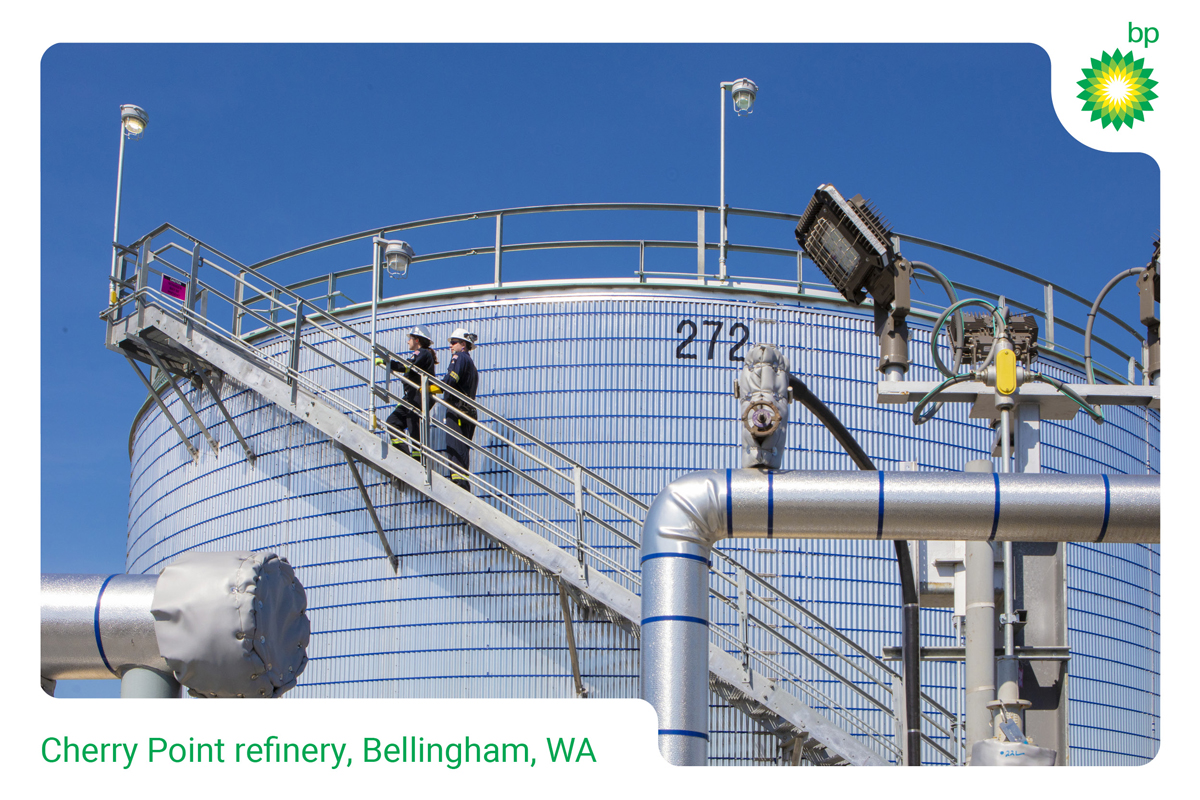
bp supports ~300,000 US jobs. Like the science, engineering & skilled labor jobs that produce energy products Americans rely on. At our refineries in Washington state, we make traditional fuel for jets and vehicles and also produce renewable diesel. See how else bp is investing in America.
|
|
|
Trump, who seems to reject the idea that A.I. needs guardrails, rescinded President Biden’s regulatory-focused executive orders and changed the name of the Commerce Department’s A.I. Safety Institute to the Center for A.I. Standards and Innovation. Likewise, Trump and Republicans are not creating a legislative environment to support the A.I. transition, nor preparing for any potential disruptions it may cause. The current version of the Big Beautiful Bill, for instance, dramatically slashes clean energy tax credits— frustrating industry leaders who need a mix of new energy sources to supply the power needed for more, and larger, data centers. Meanwhile, the administration has created a far more hostile environment for high-skilled immigrants by revoking technology visas and blocking foreign students from studying in the U.S.
The list of grievances articulated by Democrats, industry executives, and even some Republicans goes on: Trump’s budget proposal massively cuts critical funding for the National Science Foundation and the National Institute of Standards and Technology, agencies that have funded A.I. research, development, and infrastructure. He’s ended billions of dollars’ worth of research grants to universities. And the Big Beautiful Bill, in whatever form it eventually passes both the Senate and the House, will almost certainly weaken the social safety net that technologists like Altman believe will be even more important in a world where A.I. reduces demand for human employment.
|
The potential for significant workforce dislocations is particularly salient for populist lawmakers on both sides of the aisle, even if they have no immediate plan to prevent it. As many as 50 percent of entry-level white-collar jobs could be eliminated within five years, according to Anthropic C.E.O. Dario Amodei. And while Trump is focused on reshoring the blue-collar jobs that have been disappearing since the ’70s, he hasn’t prepared for or even acknowledged the potential job losses of the future. Instead of bolstering programs that would support workers through a technological transition, the BBB weakens the safety net, instituting stricter work requirements for Medicaid and food assistance.
“We’ve got to start by telling the truth” about A.I., Republican Senator Josh Hawley told me, arguing that U.S. citizens need “some basic protections,” including access to a job. Hawley also pointed to the alarming rise of increasingly sophisticated deepfakes, and said people should be given the right to sue a company if their personal data or likeness is used or replicated without their consent. “We’ve got to come up with a way to put people first in this thing,” he told me. “Right now, we have not done enough.”
Alas, Congress has never been particularly good at legislating for the future, particularly when it comes to technology. (Remember all those painfully out-of-touch and totally ineffectual hearings the House and Senate held on the dangers of social media?) And the Republican tax and spending bill, which constitutes much of Trump’s legislative vision for his term, is largely geared toward addressing the problems of past decades, rather than the seismic changes to come.
A small group of Senate Republicans, with the help of about a dozen House Republicans, are hoping to change that before the bill returns to the lower chamber. These lawmakers are particularly concerned about the high energy demands of A.I. services, and are pushing for the Senate to rewrite the BBB to extend at least some of the renewable and nuclear energy tax credits that the House version would phase out as early as next year. (The Senate will release its version of the renewable tax credits package on Monday.)
|
|
|
“We’re going to be short of energy,” warned Republican Sen. Mike Rounds, who led bipartisan forums on A.I. in the last Congress. While Republicans are streamlining the permitting process to make it easier to develop energy of all kinds, it’s not enough, even many Republicans admit. Energy usage will increase by more than 3 percent each year through 2040, according to McKinsey, and A.I. will be the cause of more than half of the increase in the U.S., per the International Energy Agency.
For once, Democrats think they’re on the right side of the renewable energy argument. Sen. Brian Schatz of Hawaii told me last week, during our Puck Power Breakfast event, that Democrats haven’t been able to win the climate messaging argument because it always involved voters having to sacrifice something to reduce their carbon footprint. Now, he worries, Republicans could worsen energy shortages with the possible elimination of the tax credits and hostility to renewable energy. “For us to be on the side of
enough-electricity-for-everybody is a new and important place to be,” Schatz said.
|
|
As the July 4 deadline looms for the Senate to pass the BBB, some A.I. advocates are looking to the appropriations process to save critical science funding. But Trump’s budget also runs counter to his A.I. goals. It would implement a massive 57 percent cut to the National Science Foundation—an agency that funded the 1960s research grants that led to the A.I. of today—and slash about half a billion dollars from the National Institute of Standards and Technology.
Pulling billions of dollars of research funding from American universities is another huge step backward. “The administration is trying to figure out how to reconcile competing goals of the United States winning in A.I. and getting rid of very large budget deficits,” explained Craig Albright, a top lobbyist for the Business Software Alliance. He noted, for instance, that some in Congress are pushing to permanently extend tax deductions for corporate research and development. But there’s no question that many of these initiatives—like pairing private sector tax relief with massive cuts to public funding—may be at cross purposes.
Meanwhile, in their tunnel-vision attempt to win the A.I. race, the administration pushed for a provision in the BBB that would prohibit states from regulating A.I. for 10 years, angering many Democrats and some Republicans. Rep. Marjorie Taylor Greene said she would have not voted for the bill if she knew that provision was in there (because she didn’t read the bill, which was released in the middle of the night shortly before the House voted on it). Sen. Hawley is opposed to it, as is Sen. Marsha Blackburn, a Tennessee Republican who has been one of the most forward-thinking lawmakers on technology, social media, and A.I. “We need to be able to [regulate A.I.] to protect an entire sector of our economy,” Blackburn told me. Next month, the White House is expected to release an A.I. action plan. We’ll see if it takes any of their concerns into account.
|
|
|
|
Join Emmy Award-winning journalist Peter Hamby, along with the team of expert journalists at Puck, as they let you in on the conversations insiders are having across the four corners of power in America: Wall Street, Washington, Silicon Valley, and Hollywood. Presented in partnership with Audacy, new episodes publish daily, Monday through Friday.
|
|
|
|
Unique and privileged insight into the private conversations taking place inside boardrooms and corner offices up and down Wall Street, relayed by best-selling author, journalist, and former M&A senior banker William D. Cohan.
|
|
|
Need help? Review our FAQ page or contact us for assistance. For brand partnerships, email ads@puck.news.
You received this email because you signed up to receive emails from Puck, or as part of your Puck account associated with . To stop receiving this newsletter and/or manage all your email preferences,
click here.
|
|
Puck is published by Heat Media LLC. 107 Greenwich St, New York, NY 10006
|
|
|
|