 |
|
Welcome back to Dry Powder.
|
|
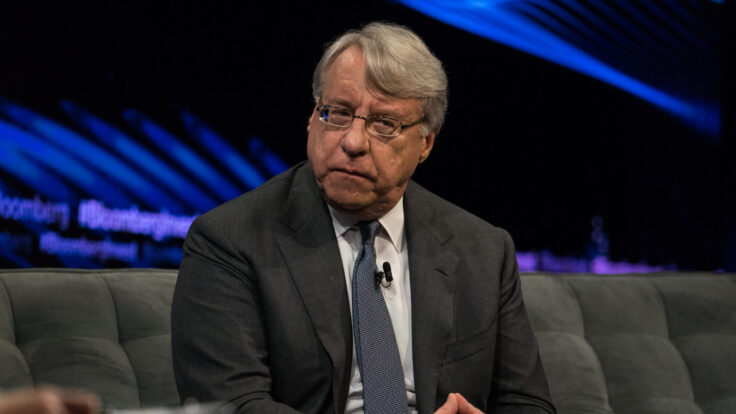
Happy Sunday. This week I had a conversation with Peter Schiff, the Wall Street maven who predicted the 2008 financial crisis, that left me deeply rattled. By phone from Puerto Rico, where he now spends his days, Schiff laid out the case for The Big One.
Bill
|
|
|
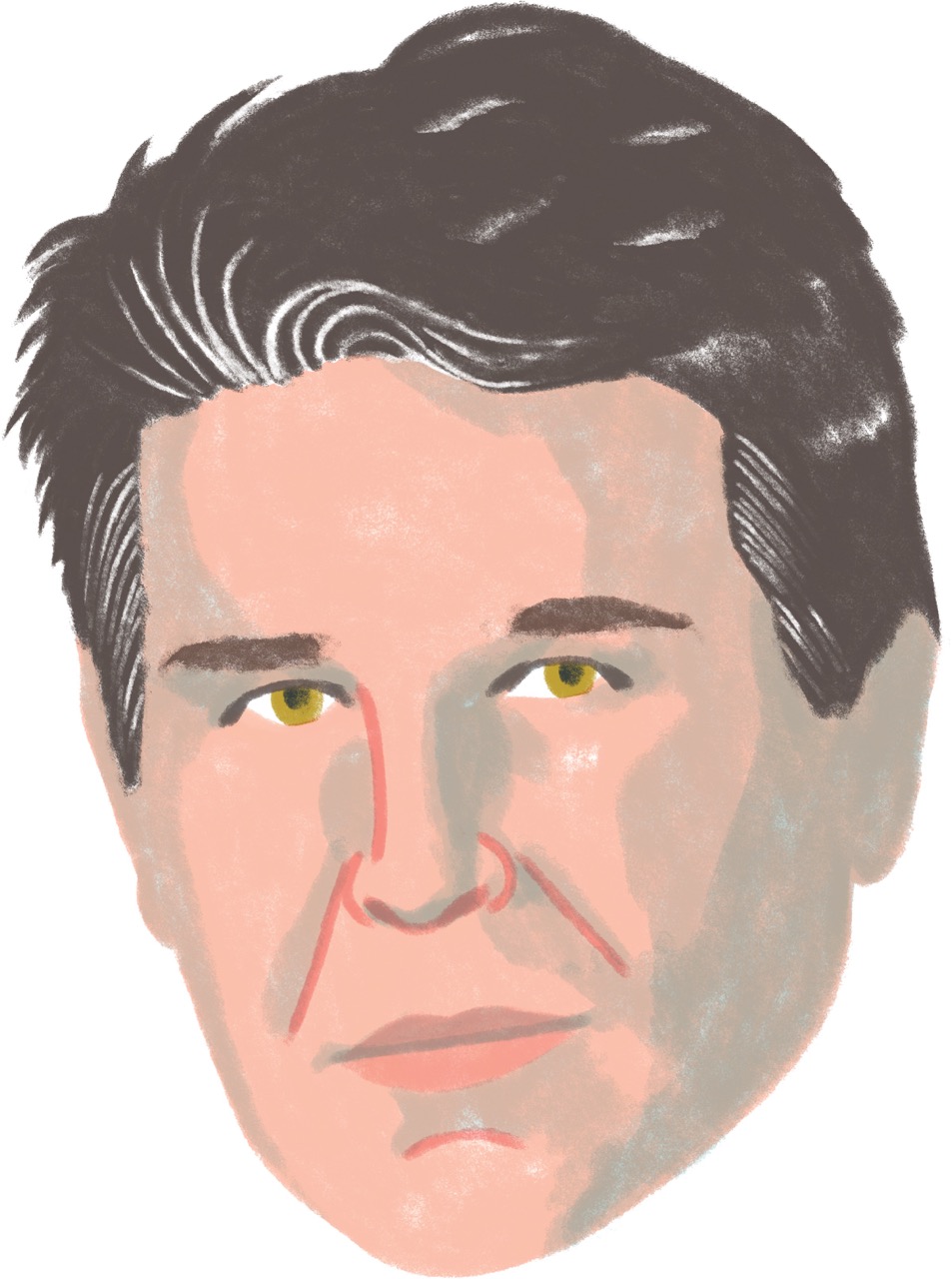
Peter Schiff, now 59, has been around Wall Street for a long time. After a stint as a broker at Shearson Lehman Brothers, a predecessor of the now-defunct bank that bore part of its name, he and a partner bought an inactive brokerage firm based in Westport, in the mid-90s, and renamed it Euro Pacific Capital. He later sold the company, which was renamed Alliance Global Partners, and took a role there as chief economist and global strategist. He is also a master of our new multimedia world: he blogs, he writes books, he has a podcast, a YouTube channel, a radio show, and he’s an effective tweeter with nearly 705,000 followers. (Peter, please tweet this out there.)
More notably, Schiff is among that small cohort who saw the trouble brewing in the years leading up to the 2008 financial crisis and yelled about it from the metaphorical mountain tops. “Guys like me, we’re just dismissed as ‘Gloom and Doomers,’” he told me by phone this week from Puerto Rico, where he hangs out these days. Needless to say, Schiff is very worried—very worried—about the coming financial crisis. “We’re still in complete denial of the problem,” he said.
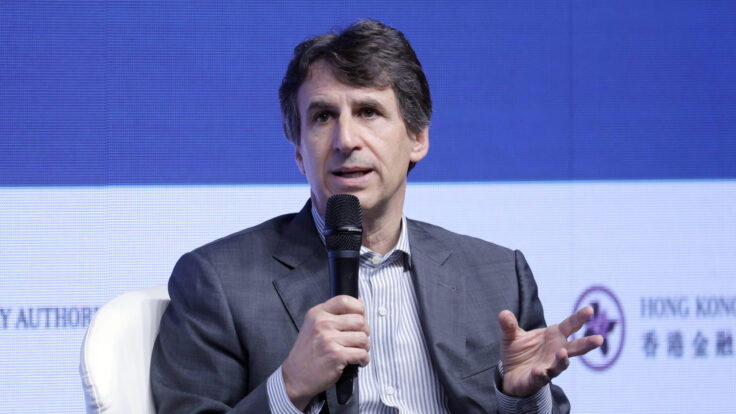
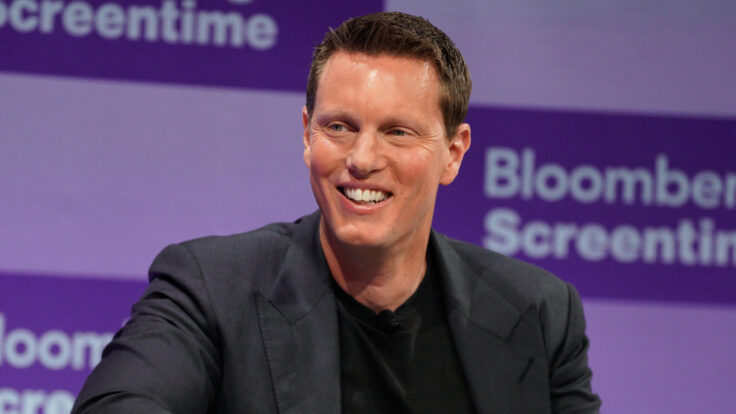
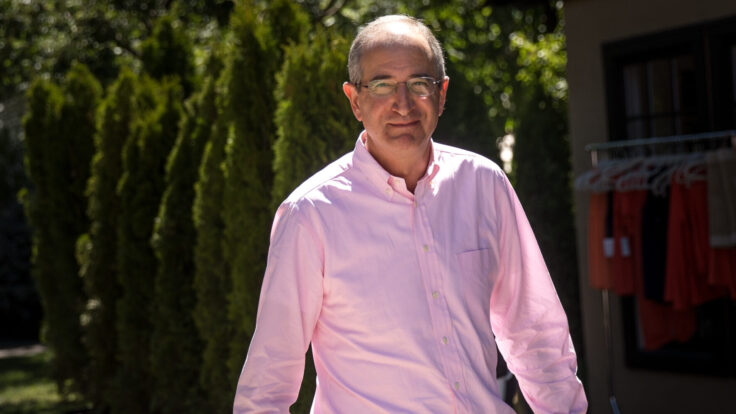
Over the years, I’ve interviewed my share of Gloom and Doomers. I spoke with Bill Ackman, the hedge fund manager, just as he was betting the markets would collapse as the extent of the pandemic became known (he was right), and again as the Federal Reserve decided to bail out the financial markets a month or so later (he was right about that, too). I’ve chatted often with Mark Spitznagel, the founder of Universa Investments, a hedge fund that offers other hedge funds and institutional investors a form of portfolio insurance at moments like these to protect against large losses. Both these men are hedge fund managers who get paid well to figure out how to profit from financial disruption.
That doesn’t seem to be Schiff’s game, for what it’s worth. He is a prognosticator, and his vision for the near future is grim. According to Schiff, there are several intertwining strands of D.N.A. that will likely lead to the big blow.
|
| “Are You Going to Shoot Yourself in the Head to Get Rid of Your Headache”? |
|
First there is the fact that the current version of the Consumer Price Index “does a very bad job” of measuring our actual inflation rate—it understates it by “several percentage points,” Schiff sais. If we used the same components of the C.P.I. as we did in 1980, he told me, the actual inflation rate would be running somewhere between 15 percent and 20 percent, not the current 8.5 percent.
Then, of course, there are the Fed’s multiple decisions during the past dozen years, some of which I documented earlier this week, like the moves to reduce short-term interest rates to near zero and to drive down long-term interest rates to their lowest levels in recorded human history. “The Fed needed to print money to prop up the bubbles, to prop up asset prices, to prop up the government’s finances,” Schiff told me. “There were a lot of people who were benefiting from the artificially low interest rates. And the only way to keep them artificially low was to pretend that there wasn’t enough inflation, so they could justify inflationary monetary policies.”
Mission accomplished, I suppose. The Fed’s decision to make money so cheap—through both its ZIRP (Zero Interest Rate Policy) and Q.E. (Quantitative Easing) policy—led to nearly everyone borrowing lots of money. “Individuals borrow to buy houses, to buy cars, to go to college, take vacations, remodel their homes” Schiff continued. “Corporations borrowed, in many cases, just to buy back stock because it was so cheap to borrow.” The government has also borrowed nearly $31 trillion since money was so cheap. The money helped facilitate budgets, the Covid recovery, and probably helped allow our government to generously aid Ukraine in its brave battle to defend itself against Russia’s invasion. “It’s all being borrowed,” he noted solemnly.
Schiff has been warning about the Fed’s cheap-money policies since they started in the wake of the 2008 financial crisis. “In the end,” he said, “it was going to be a disaster. That once they started Q.E. and got the economy hooked on cheap money, there would be no way to remove the drug without a massive hangover withdrawal.” He thinks the decision to double-down on Q.E. at the start of the Covid pandemic was particularly misguided—and that instead of increasing the money supply at that moment, the Fed should have reversed course and shrunk the money supply. “Production is going down,” he said, describing the situation at the time. “People aren’t working. We’re not producing goods. We’re not providing services. We need less money, not more money. But they didn’t want to let the economy have a deeper recession and so made the mistake of throwing more stimulus on the fire.”
The conundrum we’re left with now, Schiff argues, is that inflation has “exploded well above 2 percent”—the Fed’s stated (albeit artificially selected) inflation goal—and the Fed has “no ability to rein it in.” He said the Fed is “pretending” that it can fight inflation, “but they actually aren’t going to do it because they can’t.” He says high inflation is not a problem the Fed can solve. “They may have the tools,” Schiff told me, “but they’re not going to use them. It’s like if you have a headache, and your tool is a revolver, are you going to shoot yourself in the head to get rid of your headache?”
Indeed, he continued, “inflation is now so out of control” that the only way to “bring it back down” is for the Fed “to get aggressive,” like former Fed Chairman Paul Volcker did in the early 1980s. “We need real interest rates to be positive,” he said. By that, Schiff means that interest rates need to be sufficiently high that people who, say, live on a fixed income can maintain their purchasing power in the face of rapidly increasing prices. Using Schiff’s logic, and using the advertised inflation rate of 8.5 percent, the Fed needs to raise interest rates to 9.5 percent for real interest rates to be at 1 percent. If, however, we use the C.P.I. as it was formulated in 1980, inflation is actually much higher than 8.5 percent and therefore the Fed would need to raise interest rates to the kind of nosebleed levels where Volcker had interest rates in the early 1980s —upwards of 15 percent or more. “But here’s the problem,” Schiff told me, “we can’t.”
|
|
|
According to Schiff’s logic, if the Fed increased real interest rates to where they should be to combat the actual rate of inflation, the economy would fall off a cliff. With great certainty, he paints a very bleak picture. For instance, if mortgage rates were, say, around 10 to 12 percent, or about double where they are now, then “how is anybody going to buy a house at the current prices?” Real-estate prices would crash.
Or, if people stopped making their mortgage payments because they could no longer afford the higher interest rates, then the mortgage lenders would lose money and their businesses would likely end up in bankruptcy. And the corporations that borrowed all the money to buy back stock or to pay their private-equity overlords big dividends, or that cannot refinance their existing debt at anything like the low rates they’ve come to expect for the past 13 years, will default on that debt, and it’s a race to the bottom.
Schiff then serves up a series of predictions for the fallout: Real estate prices will crash. Stock prices will crash. There will be massive layoffs as companies grapple with rising debt costs. “What about consumers?” he continued. “They can’t borrow money anymore. Their credit cards are maxed out. They don’t have any more home equity. They can’t refinance their homes… People have to cut back. Food prices are way up. Gas prices are way up. There’s no money. So we have this massive recession, much worse than we had in 2008 because we have a bigger debt bubble.”
Then there is that nearly $31 trillion national debt. According to Schiff, about one-third of that debt, or $10 trillion, has to be refinanced each year. He says that if interest rates rise to 10 percent—where he thinks they should be, instead of the 1 percent where they are now—the annual additional cost to pay the interest on that debt will rise to $3 trillion annually, from $300 billion today, or an extra $2.7 trillion annually. In this scenario, the federal government would have a few, highly unpalatable options: It could cut entitlement benefits, such as Social Security and Medicare. It could cut government pensions. It could lay off government workers. It could raise taxes “massively” on the middle class. It could launch a national sales tax.
But he doesn’t think any of those things are likely to happen. “The most likely scenario would be default,” he said matter-of-factly, even though he doubts this will really happen, either. In this scenario, he thinks the U.S. Treasury would tell our largest foreign creditors—the Chinese, the Japanese—that “we’re defaulting, we don’t have the money.” The creditors could be told that all their Treasury debt was now 30-year debt, regardless of the actual maturity—meaning the debt would not be repaid for 30 years—and that instead of being paid an interest rate commensurate with a 30-year obligation, the interest rate would be very low, say 25 basis points. Such a move would destroy the value of their bond portfolio. “This would be catastrophic,” Schiff contends, and therefore “it’s not going to happen.”
His most likely scenario is that the Fed will raise interest rates sufficiently high to “hurt the stock market” and to “push the economy into a recession” but not high enough “to stop inflation.” He predicts inflation, in fact, will probably get worse, despite the rate hikes. “What we’re seeing now is the tip of the iceberg,” he told me. “Prices are going to be going up double-digits… inflation is going to keep getting worse.” He believes the Federal Reserve “doesn’t want to do” what it will take to bring inflation under control because of the potentially disastrous economic consequences that will result. He notes that at his press conference on May 4, after the Fed raised short-term interest rates 50 basis points, Jerome Powell, the Fed Chairman, said how much he admired Paul Volcker, not because he “raised rates” but because “he did what he thought was right.” Powell, Schiff said, only wants to “fight inflation, so long as he can do that without hurting the economy.”
Schiff confided that he is deeply worried about what lies ahead for the economy and for the American people. “We are completely screwed, right?” he said. “The Fed made this bed and Wall Street, academia and everybody just sat back and watched it happen.” He has become incredulous when people suggest to him that the financial problems today aren’t as bad as they were in the 1970s. “It is 1,000 times worse than the 1970s,” he told me, and then rattles off the reason why: real inflation is actually higher now than it was in the 1970s, if it were measured properly; we’re not in a position today to “put the fire out” like we were in the 1980s because back then we were a creditor nation and now we are a debtor nation; back then we had a big trade surplus, now we have a record trade deficit; today we have “a mountain of debt” that we didn’t have back then; andwe have a service sector economy that is “dependent on cheap money.”
We are, in short, far weaker economically now than we were the last time inflation was at these levels. “It’s unsolvable without a financial crisis on an order of magnitude bigger than 2008,” he concluded, pessimistically. “Except nobody gets a bailout. Imagine how much worse 2008 would have been with no TARP, no bailouts, nothing, no Q.E.—just let the market function. That’s what’s going to happen this time, except it’s a much bigger bubble.” Anyway, good luck enjoying the rest of your day.
|
|
|
|
| FOUR STORIES WE'RE TALKING ABOUT |
 |
| The Brady Conundrum |
| Is Tom Brady worth nearly $400 million as a broadcaster? The critics say no. |
| DYLAN BYERS |
|
 |
| Chapek's Hail Mary |
| Under Bob Chapek, Disney’s subscriber growth is holding up while Wall Street’s favorite metric—actual revenue—lags behind. |
| MATTHEW BELLONI |
|
 |
| D.C. Succession Drama |
| Investigating the early steps to replace Pelosi, Gillibrand’s possible 13-year itch, Bernie’s sulking, and the dish inside the West Wing. |
| TARA PALMERI |
|
 |
| Ellison's Ascendance |
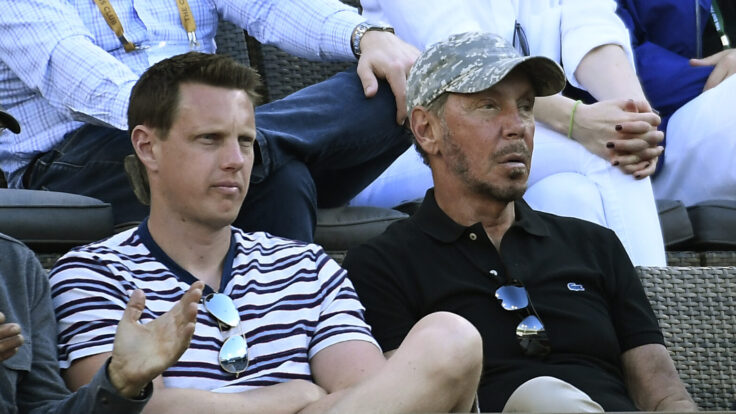
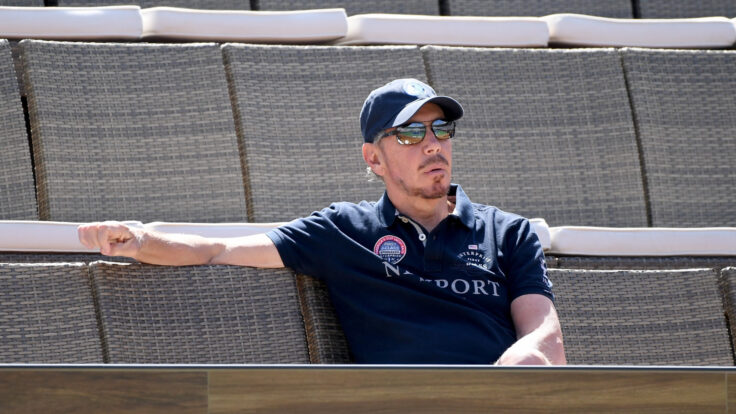
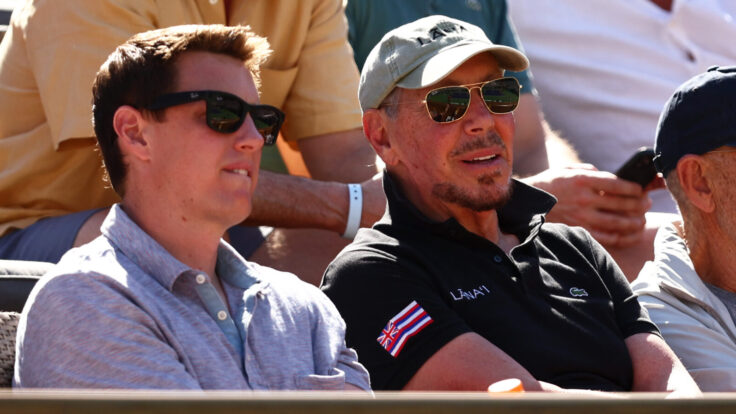
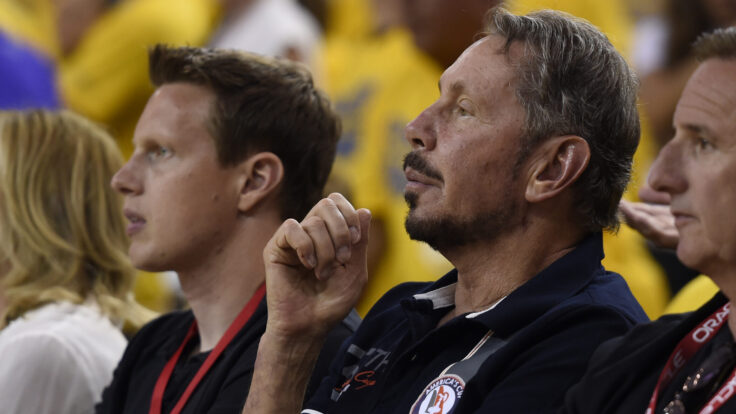
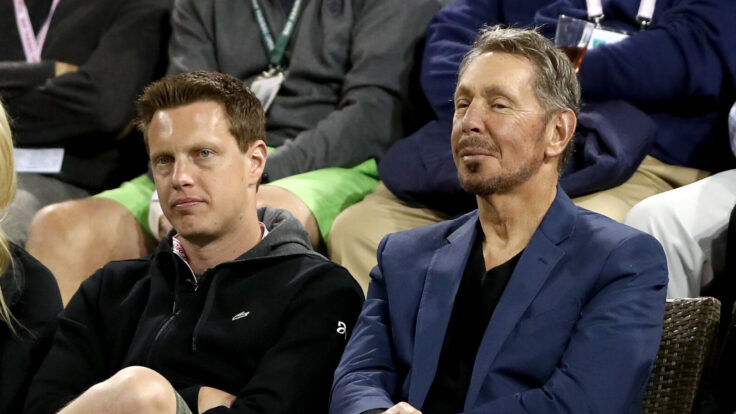
| In his twilight years, the private-island-dwelling former Democrat has become a force in G.O.P. political fundraising. |
| THEODORE SCHLEIFER |
|
|
|

|
|
|
You received this message because you signed up to receive emails from Puck
Was this email forwarded to you?
Sign up for Puck here
Sent to
{{customer.email}}
Unsubscribe
Interested in exploring our newsletter offerings?
Manage your preferences
Puck is published by Heat Media LLC
64 Bank Street
New York, NY 10014
For support, just reply to this e-mail
For brand partnerships, email ads@puck.news |
|
|