{{ 'now' | timezone: 'America/New_York' | date: '%b %d, %Y' }} |
|
|
|
Welcome back to Dry Powder. I’m Bill Cohan.
Long before the rest of Wall
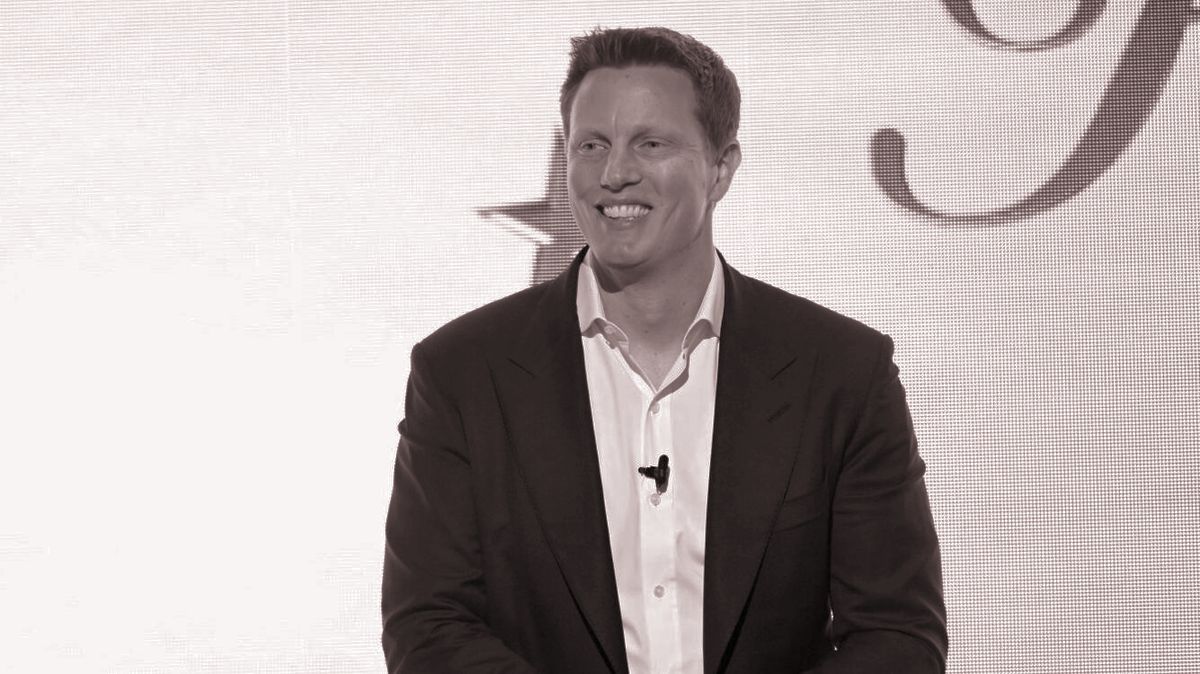
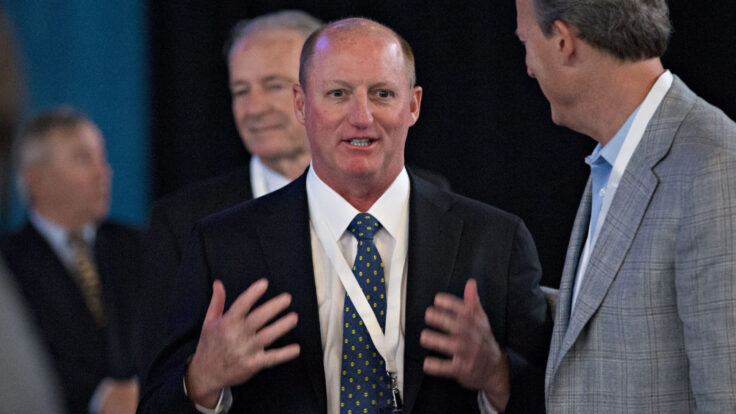
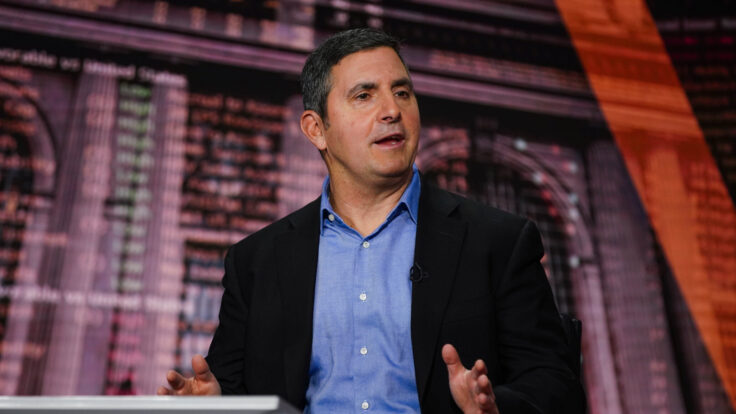
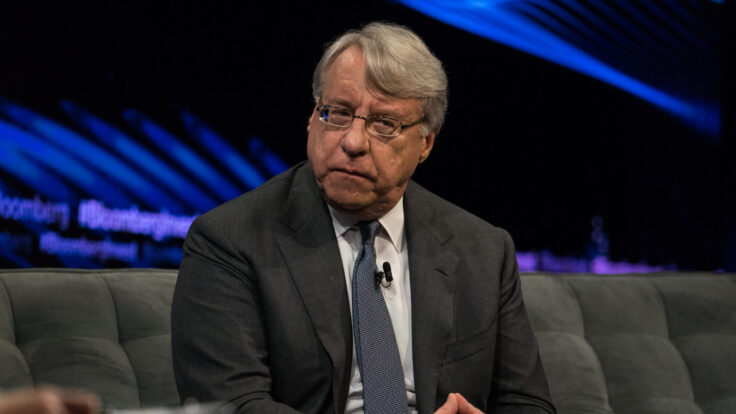
Street realized A.I. might vaporize huge swaths of the software industry, Scott Goodwin, the co-founder of Diameter Capital Partners, was warning investors that artificial intelligence would devastate many of the SaaS companies underpinning the private-credit boom. Speaking earlier this month at the Sohn Investment Conference, Scott addressed the recent private-credit panic in light of his earlier discernment, and talked about how Diameter reduced its own SaaS
exposure while others were doubling down. Below, I’ll unpack the highlight reel of Scott’s captivating monologue.
Also mentioned in this issue: Larry Ellison, David Zaslav, David Ellison, Jeffrey Kessler, Rob Bonta, Jeanne Christensen, Leon Black, Doug Wigdor, Jessica G.L. Clarke, Elon Musk, Warren
Buffett, and more…
But first… |
-
Inside ParaBros’ $49B debt blockbuster: Whatever reservations Hollywood may have about the Paramount Skydance–Warner Bros. Discovery merger, the $111 billion deal is cruising toward the finish line… and Wall Street is revving up to supply the financing. A grand total of 18 banks are gearing up to raise some $49 billion in debt from across three markets: investment-grade bonds, high-yield bonds, and institutional first-lien loans. The underwriters have not yet formally
marketed the debt—that process will start probably in June—but the incoming, unsolicited interest has been high, or so the banks want everyone to believe.
At the moment, it looks like $30 billion will find its way into the investment-grade bond market, about $7 billion will go to the first-lien loan market, and the remaining $12 billion to either the high-yield bond or second-lien loan market. Barring an unforeseen macroeconomic event, the underwriters appear very optimistic that the $49
billion of new debt will be a blockbuster.
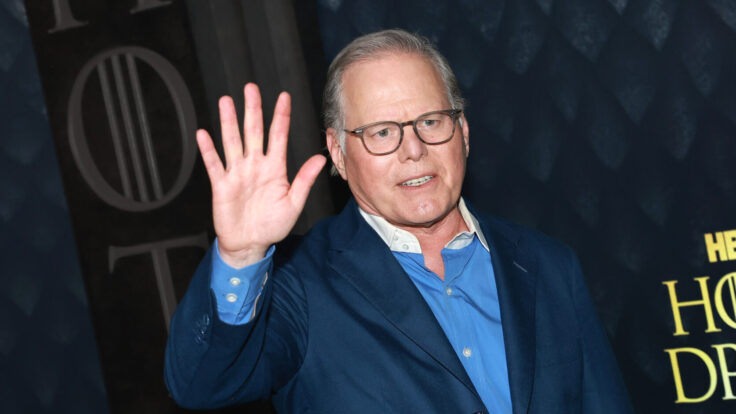
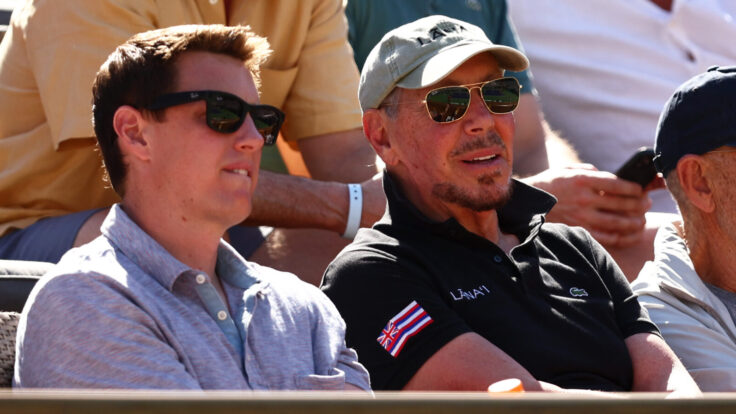
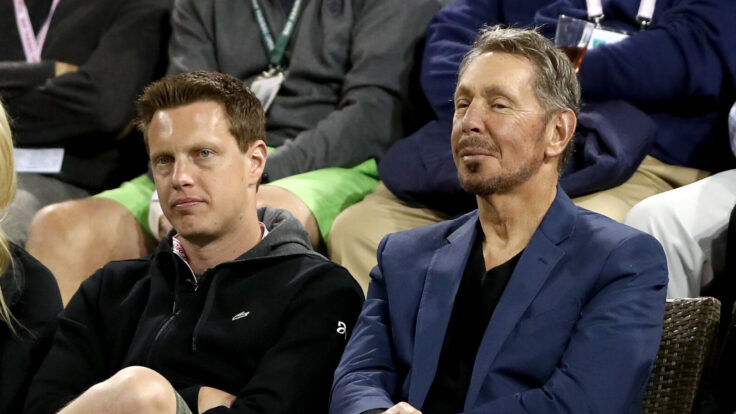
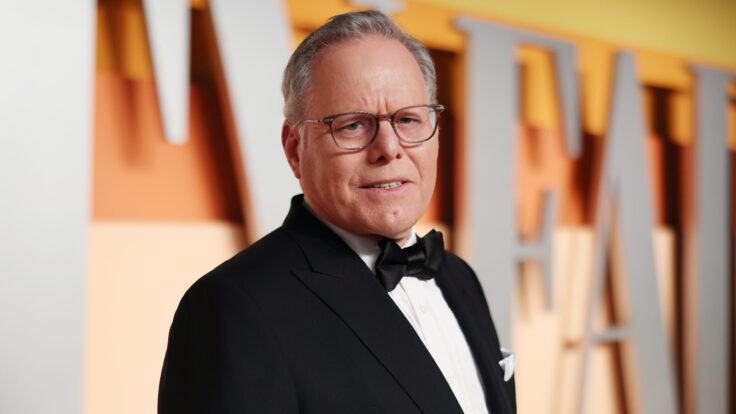
Of course, part of that enthusiasm derives from the fact that Larry Ellison—and, to a far lesser degree, RedBird Capital—has agreed to underwrite another $47 billion in new equity financing, no matter what. Yes, Larry will be trying to get several Middle East sovereign wealth fund partners to help, but he is nevertheless on the hook for all the equity—thanks to David Zaslav & Co.’s clever negotiation with PSKY earlier this year. What’s more, if solvency ever becomes an issue during the financing, Larry has agreed to inject even more equity. Originally, the merger required $57.5 billion in new debt financing before that figure was reduced to $49 billion. It’s almost enough to make investors overlook the fact that both S&P Global and Fitch have assigned the pro forma PSKY/WBD capital structure—which will emerge with a combined $79 billion in debt—a junk credit
rating.
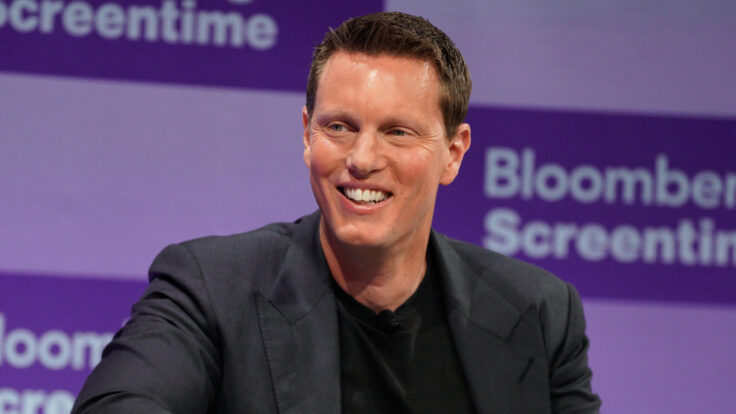
But the Ellisons seem to be working hard to appease the credit-rating agencies’ concerns about the nearly $80 billion of the combined companies’ debt. In a recent filing with the S.E.C., the Ellisons disclosed that Paramount “communicated” to various ratings agencies that it is the Ellisons’ and RedBird’s “plan and commitment” to “deliver below a net debt to adjusted EBITDA multiple of 3.75x by fiscal year 2028 and a net debt to adjusted EBITDA multiple of 3.0x by fiscal year
2029, and that they will take steps to deliver the deleveraging targets.” The Ellisons also made commitments for PSKY/WBD to achieve $1.8 billion of the $6 billion of expected “synergies” in the first year post-closing and $4.2 billion in the second. Noted, David! (Usual disclosure: Through a recent transaction, RedBird is a minority investor in Puck; Zaz became a de minimis investor through the same deal.) - Consent and coercion:
Meanwhile, the race is underway to clean up the WBD balance sheet—specifically, the refinancing of the outstanding $15 billion JPMorgan Chase bridge loan that WBD incurred last year as part of its brilliantly executed debt exchange offer. On May 19, that refinancing began in earnest, and it already appears to be a Wall Street blowout. JPMorgan increased the new longer-term loan facility to $9 billion from $5 billion, along with a €1 billion ($1.16 billion) Eurodollar tranche. Assuming that
$10.2 billion financing closes, it will become part of the ongoing PSKY/WBD capital structure. Meanwhile, the remaining $4.8 billion of the bridge loan will get refinanced, assuming the deal closes and the PSKY banks—led by Bank of America, Citigroup, and Apollo—are able to execute on their commitment to underwrite and syndicate a fresh $49 billion debt package.
At the same time, PSKY initiated a consent solicitation on May 20 to holders of 17 different WBD senior notes totaling some
$17.5 billion. The process could cost PSKY as much as $43.5 million in consent fees if all noteholders agree to a variety of changes that are pretty much a prerequisite for the $49 billion PSKY/WBD financing to proceed. For noteholders who gave their consent by Tuesday, their payments would be made on May 29.
But nothing is ever easy. On a May 20 call, the law firm Milbank was trying to organize the WBD noteholders into an ad hoc coalition aimed at extracting better terms from
PSKY on the consent solicitation. There appears to be a discrepancy between how PSKY is treating short-term WBD noteholders versus longer-term noteholders, and Milbank is trying to exploit the delta. The compressed timetable for consenting is, of course, coercive to some degree, and by organizing collectively, the WBD noteholders are attempting to gain some leverage where they don’t have much at the moment. Earlier today, WBD announced that it had received the “requisite consents” to adopt the
proposed amendments to pave the way for the PSKY acquisition financing, which will now begin in earnest early next month.
|
|
|
|
Claude, the AI without ads A space to think. Anthropic keeps conversations with Claude ad-free: no sponsored links, no advertisers shaping answers, no paid product placements you didn't ask for. When you bring your hardest problem to an AI, you shouldn't have to wonder who it's working for. Learn more |
|
|
|
-
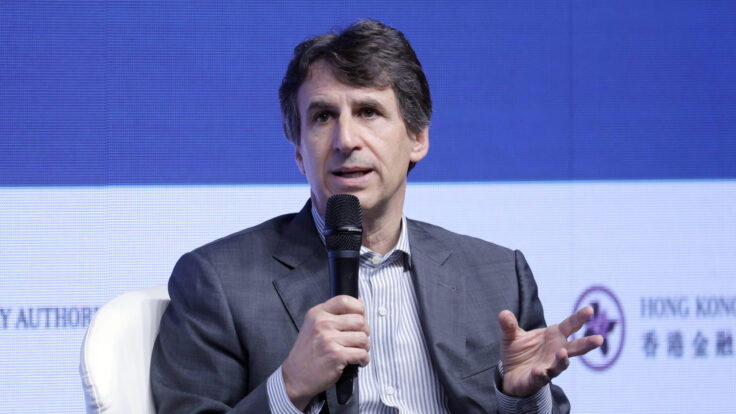
The Rob Bonta complexifier: It’s looking like nothing will stop the merger at this point. In fact, the PSKY crowd is now talking about closing around July 15, instead of late September, and has hired antitrust super-lawyer Jeffrey Kessler. If California Attorney General Rob Bonta hopes to block this thing, he’d better get a move on.
Bonta is trying. He has described the merger as having “red flags everywhere” and insisted it’s “not a done deal.”
Earlier this month, he and other state A.G.s served PSKY with subpoenas and civil investigative demands. He’s after internal PSKY and WBD documents, especially pertaining to how PSKY will achieve the projected $6 billion in cost savings that David Ellison has referenced. He is also seeking access to documents and depositions related to the merger in D.O.J. files, even though the agency approved the deal.
There are additional indications that Bonta may
seek a temporary restraining order from a judge, potentially blocking the deal from closing for a period of time. During a meeting last week with Hollywood executives, he reportedly said he had not made a “final decision” about whether to sue to block the deal, according to The New York Times. Regarding the Bonta rumblings, a spokesperson for PSKY said: “We have been cooperating with the state attorneys general in responding to their requests.” I think this is all sound and fury
signifying nothing, but we shall see soon enough. - And finally… the Leon-Wigdor fallout: Last Friday, Jeanne Christensen, the Wigdor partner who pursued billionaire Leon Black in two unsuccessful civil lawsuits (and a third on life support), retired from the firm where she’d been a partner with Doug Wigdor since 2014. As I’ve reported, on April 23, U.S. District Judge Jessica G.L.
Clarke handed Leon a major legal victory in the ongoing civil lawsuit brought by a Jane Doe who accused the Apollo co-founder of horrific conduct. Among the allegations, she claimed Black raped her when she was 16 years old and that Jeffrey Epstein and Ghislaine Maxwell trafficked her to him. Black has consistently denied the allegations. Although the case was in the early stages of discovery, Black had moved for “case-terminating sanctions” against
Christensen and her client, accusing them of “lies, fraud, and spoliated evidence.” In a May 20 letter, Leon’s attorneys again asked Judge Clarke to dismiss the case.
Judge Clarke didn’t go that far in her April ruling, but she did throw the book at Wigdor and Christensen, ordering them to pay Black’s “reasonable” legal fees—which could run into the tens of millions of dollars. The judge wrote that Christensen had “lied repeatedly to the Court and to opposing counsel.” Less than a month
later, Christensen retired. A coincidence? On LinkedIn, Doug Wigdor wrote that Christensen’s retirement “has long been planned.” Okay, Doug, whatever you say. (Wigdor did not respond to my request for additional comment.)
|
|
|
|
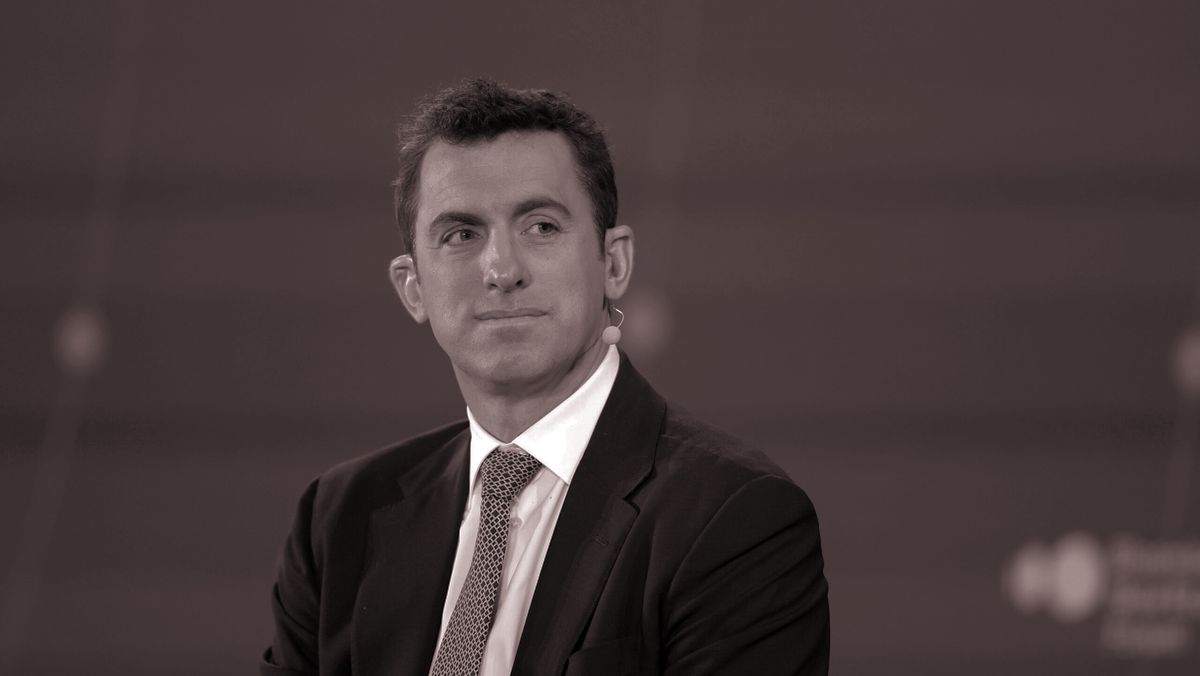
Long before Wall Street rushed for the exits, Diameter Capital co-founder Scott Goodwin
warned that A.I. would “ruthlessly eliminate” software companies. Now, amid a market correction, he’s buying the panic. |
|
|
|
At the start of his May 12 presentation at the Sohn Investment Conference, the annual finance ideafest held
at Lincoln Center, Scott Goodwin, the highly successful co-founder of the hedge fund Diameter Capital Partners, bluntly articulated the central riddle on Wall Street these days: “What the fuck is going on in private credit?”
It was a mostly rhetorical question, of course. Scott is among the most clever practitioners of buying debt at a discount and then capturing the profit when things turn around. To wit, Diameter loaded up the truck on the X/Twitter bank debt when it
was trading at a discount—when the big banks couldn’t syndicate the $13 billion of acquisition debt—and then cashed in last year when the debt was sold off at par (and beyond) after Elon Musk merged the company with xAI. Diameter also
made a killing on Warner Bros. Discovery bonds. The firm is now sitting atop some $30 billion in assets.
No surprise, then, that Scott and Diameter are on the prowl for opportunities in the private-credit market after a wave of retail redemption requests hit one private-credit fund after another in the past few months. And as anyone who has been
following along knows, the redemption requests at the likes of Blue Owl, Blackstone, Apollo, and KKR, among others, exceeded the fund thresholds—usually around 5 percent per quarter—generating panicky headlines that the next financial crisis was upon us. And when there’s blood in the water…
Goodwin said there were $14 billion in redemption requests in the private-credit fund world in the first quarter of 2026, $8 billion of which were unmet. But he does not think the problem in private
credit poses a systemic risk. “The media would like you to think this is a systemic problem. It is not,” he said. “The sky isn’t falling. It’s 5 percent of the private-credit market, it’s broadly distributed.” Private lending to SaaS companies, the proximate trigger for retail panic because A.I. is rendering many SaaS companies worth far less than was originally hoped, is “only one-third of that market,” Goodwin added. |
|
|
|
Claude, the AI without ads A space to think. Anthropic keeps conversations with Claude ad-free: no sponsored links, no advertisers shaping answers, no paid product placements you didn't ask for. When you bring your hardest problem to an AI, you shouldn't have to wonder who it's working for. Learn more |
|
|
|
While private credit is a $40 trillion market, Scott noted that the recent perceived problems have been
concentrated in a $2 trillion slice of direct-lending, leveraged finance deals. As alternative-asset managers started buying up private-credit managers—such as BlackRock’s $13 billion acquisition of HPS Capital last year or Brookfield’s purchase of OakTree—they had huge amounts of capital to deploy into ever-larger deals. And they were using that capital to help finance the bigger private equity deals in recent years. “That means SaaS in scale,” he said. “Many billion-plus deals.”
Along
the way, structural protections for creditors got weaker—maintenance covenants went away, PIK toggles increased, leverage went up, interest coverage went down. The race was on. “If you want to be in the private-credit club,” he said the thinking went back then, “you need to get really SaaSy. If you’re not getting SaaSy, you’re not going to grow. And why was SaaS such a focus for private equity? A lot of these things we already know: recurring revenue, sticky customers, operating leverage.” It
was an understandable bet, he said: SaaS multiples were expanding, and investors could make a lot of money buying low and selling high. But from a credit perspective, discipline broke down, with firms lending against recurring revenue, not EBITDA.
The music began to stop around Christmastime 2022. “We’re all sitting around the holiday table, and ChatGPT shows up,” he said. Soon thereafter, he consulted with some of Diameter’s smart limited partners who were founders of big firms in
Silicon Valley. “What does ChatGPT mean for credit?” Scott asked. “In par credit, you have to think about how you lose because you’re really trying to get your money back.” They told him, “We’re building A.I. companies to break the SaaS companies we built 15 years ago, so be careful.” |
Beginning in the second quarter of 2023, Goodwin started warning Diameter investors about the risks A.I.
posed to software companies—remarkably early, in retrospect. “We’ve spent a lot of time assessing A.I.’s impact on companies across the economy,” he wrote in an investor letter at the time. “We think for now it will help a lot of companies, before then ruthlessly eliminating them.”
In Diameter’s fourth-quarter 2024 letter, Goodwin again cautioned that “as A.I. improves, it could lead to a microcycle in software,” noting that “few sectors are more levered” and that “upwards of 30 percent
of senior private-credit loans are made to software companies.” These missives began to grow more dire. By the first quarter of 2025, he was warning that “A.I., as it scales, would come to threaten the SaaS software space” and that “the path to artificial general intelligence would not be linear.” Instead, he wrote to expect “years of fits-and-starts and lots of bankruptcies” and asserted that “the search for winners and losers has only just begun.”
By then, Diameter had largely sold out
of its SaaS loans and begun shorting publicly traded credit-oriented business development corporations, or BDCs. Many sources of private credit didn’t get the message and kept lending, concentrating much of their portfolios in SaaS companies. Big mistake. “Why would you ever have all your eggs in one basket, like many of the private-credit guys did?” Scott said at the conference. “It’s almost criminal portfolio construction.”
Goodwin now sees three opportunities as a result of
the recent panic. First, he scooped up publicly traded BDCs focused on private credit, which he said “have traded down around 30 percent from their highs last year.” He emphasized that Diameter selectively targeted firms less exposed to SaaS lending. “We like that opportunity at the right price, not all BDCs, but some,” he said.
Second, he sees significant potential in “secondary” market private-credit funds, where investors desperate for liquidity will sell their stakes at a discount.
Scott estimates there could be between $150 billion and $200 billion worth of secondary positions in these credit-oriented funds that will start hitting the market in the next few years. He’s ready to pounce, but only after carefully analyzing the individual credits in the portfolios—he won’t buy a portfolio of loans. “We think it’s about knowing your credits and cherry-picking the right names,” he said. Diameter has already made 15 trades in the past two months in both distressed BDCs and in
buying distressed loans in the secondary market.
Finally, Diameter is considering buying new loans, at par, because the spreads have recently widened out between 50 and 75 basis points, improving the risk-reward dynamic. “Some of the largest players are not re-upping to existing loans because they’re capital-constrained,” Scott explained. “That’s going to create a shrinking market and a better opportunity set.” He then listed his three takeaways from the recent mini-crisis in private
credit: “portfolio construction first above everything in par credit, whether it’s public or private”; second, “this is not a systemic issue”; and third, “know the names” before buying anything, either at a discount or at par. (As always, this is not investment advice.)
All of which once again shows how one man’s ceiling is another man’s floor, and there are always people figuring out ways to profit from the misery of others. Or, as Warren Buffett famously wrote in a
Berkshire Hathaway investors letter back in 1986, “Be greedy only when others are fearful.” In the same letter, by the way, he also wrote, “Be fearful when others are greedy.” |
|
|
|
Puck sports correspondent John Ourand and a rotating cast of industry insiders take you inside the executive suites and owners
boxes where the decisions that shape the entire sports business are made. You’ll hear interviews with players, network execs, and everyone in between. The Varsity is an extension of John’s private email for Puck by the same name. New episodes publish every Wednesday and Sunday. |
|
|
|
Puck’s daily political newsletter from Washington on what’s really happening in this town, from the White House to the Pentagon
to Capitol Hill, K Street, and the campaign trail. |
|
|
|
Need help? Review our
FAQ page or contact us for assistance. For brand partnerships, email ads@puck.news.
You received this email because you signed up to receive emails from Puck, or as part of your Puck account associated with {{customer.email}}. To stop receiving this newsletter and/or manage all your email preferences, click here. |
Puck is published by Heat Media LLC. 107 Greenwich St., New York, NY 10006 |
|
|
|
|