 |
 |
| Welcome back to The Best & The Brightest, I’m Peter Hamby. In tonight’s edition, notes on a bizarre Virginia political sex scandal that perfectly encapsulates both the strange state of our current politics and also the power of the Dobbs ruling on abortion to crowd out practically everything else—a dynamic that won’t just determine the outcome of the Virginia state house elections, but possibly control of Congress and the White House, too.
But first, an update on the Capitol with Abby Livingston… |
|
|
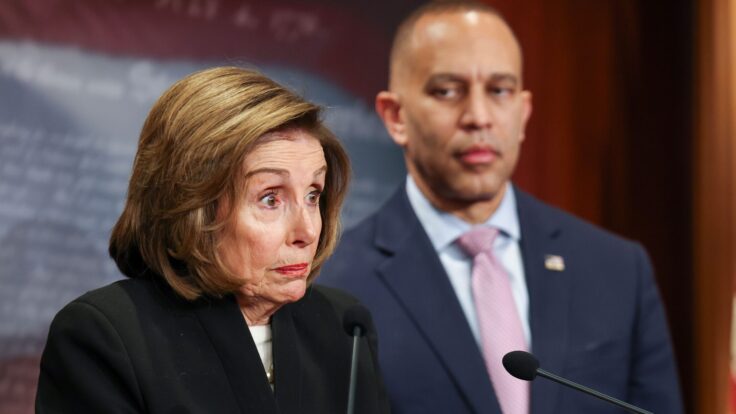
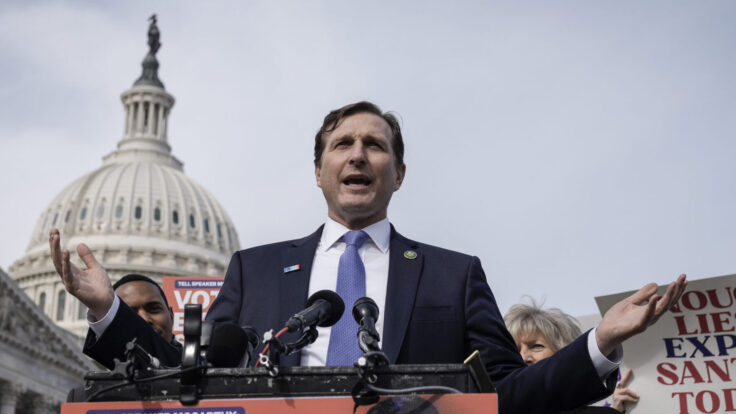
| The Capitol Hill crowd exploded this weekend in the wake of Senator Bob Menendez’s (latest) federal indictment for allegedly accepting hundreds of thousands of dollars in bribery payments, among other extravagant gifts, in what’s being described as a sprawling corruption scheme.“There’s still a bunch of dust in the air,” a Democratic Congressional aide told me Monday afternoon. “This explosion just happened, and everything is flying all over.”Menendez maintains his innocence and says he isn’t going anywhere, but the ground has started to shift in recent days, following Senator John Fetterman’s call for him to resign. The ramifications of what may be the collapse of the state’s most powerful federal official lit up phone lines up and down the Jersey Shore all weekend, with pols and party bosses preparing for dominos to fall and a bonanza of horse trading ahead for the Garden State’s powerful Democratic machine. These are the key things to watch going forward: |
- Local politics matters: The political class is obsessed with soliciting reactions from President Biden, Senate leadership, and the other Jersey senator, Cory Booker. But Menendez appears defiant and intent on running for reelection next year. And so the real power in this circumstance rests with the 21 Democratic county chairs. So far, ten have called for Menendez to resign, per The New Jersey Globe’s running tally.These county chairs control which candidates receive preferential treatment on the primary ballots, and it’s nearly impossible to win a Democratic primary in the state without these endorsements, even for an incumbent like Menendez. He’s also lost support across the Congressional delegation, including from key member Donald Norcross, whose brother, George Norcross, was once the South Jersey political boss. While George has publicly stepped back from his political involvement, Jersey sources tell me he still wields enormous power.
Still, Menendez has long been regarded as the most powerful New Jersey federal official. Look no further than the election of his son, Rob Menendez, to Congress. In New Jersey, Congressional seats tend to only open up once in a generation. The younger Menendez secured the seat in a completely uncompetitive Democratic primary in 2022.
- Menendez is a survivor, but this time is different: Corruption is endemic in New Jersey politics, with frequent raids and arrests of politicians. That’s in part due to lax conflict of interest laws for local pols. But indictments of federal officials are comparatively rare. What makes the Menendez indictment so remarkable is that it’s known in New Jersey that federal officials cannot get away with what’s tolerated at the local level. Already, this drama is drawing comparisons to Abscam, the scandal that led to the convictions of several U.S. House members and a senator and inspired the movie American Hustle.
- It could be trouble for House Democrats: New Jersey Democrats successfully cleaned up their redistricting maps last cycle to bolster three Democratic members of the 2018 class who flipped Republican seats: Josh Gottheimer, Andy Kim and Mikie Sherrill. All three have called for Menendez’s resignation, and each of their names are currently being thrown around as potential Senate challengers (Kim has already declared his intention to primary Mendenez) and ’25 gubernatorial candidates. The entire trio won re-election in 2022 by double digit margins, but potential vacancies in these seats could be an annoyance for House Democrats who could have to spend in the expensive New York City or Philadelphia media markets to reinforce a Democrat in an open-seat race.
|
 |
| Political Porn on a Whole New Level |
| The weird, kinky case of Susanna Gibson—the nurse who filmed herself having sex with her husband while running for the Virginia state legislature—signals how far our political sex scandals have evolved, especially on the left, and especially in consequential elections. |
|
|
|
| Last week, I popped over to Richmond to visit my parents for a few days, and in between spoonfuls of my dad’s shrimp and grits, I asked them what the word around town was about the wildest political sex scandal I can remember. Not just in Virginia, but anywhere. My dad’s response pretty much summed it up: “People really don’t know how to talk about it.”You can say that again. This is the tale of the exhibitionist Democratic state house candidate, Susanna Gibson, who, along with her horny husband, repeatedly live-streamed their sexual escapades on a camming website called Chaturbate, sometimes for tips. The story has left the commonwealth’s Democrats tongue-tied and embarrassed. The press doesn’t really know how to handle the story either, partly because of the deep kink involved, but also because the person at the center of the scandal is not a predatory conservative man, but a young female progressive, usually the hero figure in stories about politics and sex these days. Meanwhile, Republicans in Virginia are thrilled to talk about it, because it plays to their advantage… but only off the record, thanks.
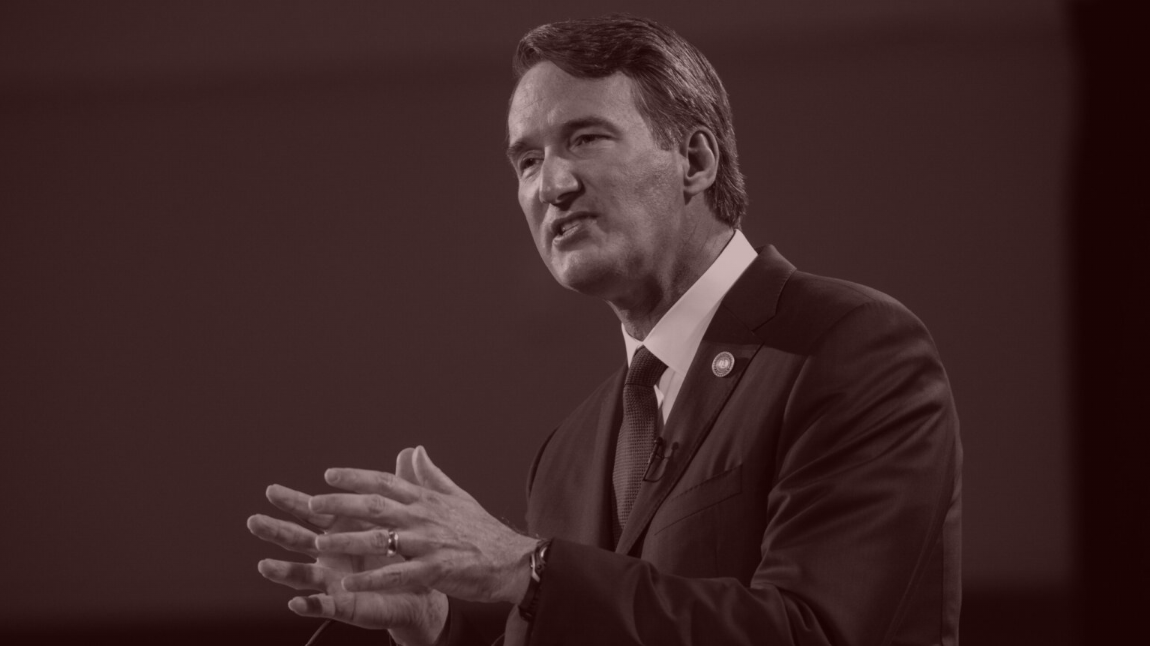
Normally, a provincial sex scandal like this one would follow a predictable national trajectory: sorrowful public apologies from the candidate involved, Twitter jokes for a few days, maybe a titillating Daily Mail story (with pictures of course). And then it would fade from the national interest. But not this one! After all, control of the Virginia legislature is at stake in November. Both chambers are up for grabs, and just one or two seats could determine whether Virginia Gov. Glenn Youngkin will have full, unchecked control—power that the Republican plans to use to enact a 15-week abortion ban, and that Youngkin might use to launch a last-minute Anyone-But-Trump dark horse presidential campaign. The whole spectacle is a test case for whether abortion rights, post-Dobbs, are still enough of a motivating factor for Democrats to turn out like they did in last year’s midterms—or if Republicans have found a sweet spot on the abortion issue heading into 2024. |
| A MESSAGE FROM OUR SPONSOR |
|
 |
| Your health insurance company and their pharmacy benefit manager (PBM) can steer you toward pharmacies that make them more money. How is that possible? Because they own the pharmacy, too. No one should stand between you and your medicine.
See what else PBM middlemen are up to. |
|
|
|
|
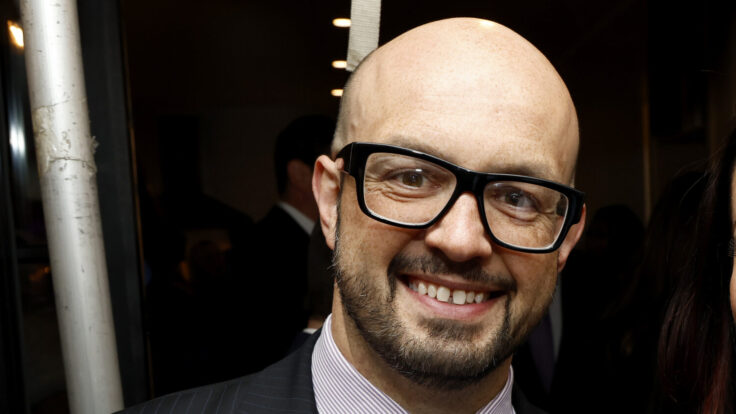
| Puck is a family-friendly publication, but here’s the basic outline of the Gibson story. The 40-year old is the Democratic nominee in a newly drawn House of Delegates district encompassing the outer suburbs of Richmond, a perfect example of the exurban battlegrounds that now decide elections around the country. She has a profile straight out of Democratic central casting: a young female outsider, a mother of two, a nurse practitioner running to protect abortion rights from MAGA extremists. Her Republican opponent is a boring white-haired white guy, a small business owner named Dave Owen. Gibson, though, was narrowly favored to win and had endorsements from some of Virginia’s most important Democrats: Sen. Tim Kaine, Rep. Abigail Spanberger, and former Gov. Ralph Northam.But all that changed when The Washington Post broke the story of Gibson’s sex videos a few weeks ago. This was the headline: “Va. Dem. House candidate performed sex online with husband for tips.” Click! Someone out there had seen Gibson’s videos, either live on Chaturbate, or on another site that archived the videos, and tipped off someone in the Virginia G.O.P. universe. Those clips—and all of her bedroom dirty talk—were compiled into a Republican research document that was then circulated to reporters. Based on gossip around Richmond, a few news organizations passed on the story until the Post actually did what a newsroom is supposed to do, which is cover a genuine news story, however difficult the politics.
Gibson reacted with the kind of partisan audacity we’ve come to expect in the Trump era. She refused to drop out, and attacked Republicans for “invading her privacy” with dirty tricks, even though she was the one who live-streamed herself more than a dozen times having sex with her husband for money. She hinted, too, that the story was akin to revenge porn—a legitimate scourge. An actual victim of revenge porn—former Rep. Katie Hill, who resigned from Congress after a vindictive ex leaked her nudes—came to Gibson’s defense, writing an op-ed for the Post. Hill said that “women’s bodies should not be a matter of public interest” and said Gibson was only creating “intimate” content for a select group of people.
Not really. Gibson made the choice to turn the camera on herself and put the video into the public domain—literally for the public interest. She had sex with her husband on camera for thousands of anonymous followers. Nor were these old videos dredged up from her pre-politics past. She went live on Chaturbate with her husband while she was a declared candidate for office, as recently as last fall.
It needs to be said, of course, that Gibson’s kinks have no bearing on her ability to legislate. In the digital era, people’s sexual interests are constantly evolving and pushing boundaries. This won’t be the last time we see a politician—man or woman—pixelated and naked. But the reason this story is so difficult for Virginia Democrats is that Gibson did this to herself. The behavior calls into question her political judgment, and, like it or not, her ability to win in a swing district in the most consequential election of the year.
The filing deadline to get on the ballot has passed, so Democrats are stuck with their nominee. The party’s power brokers have slowly backed away, holding their breath that they can make it to November. Asked about the story by reporters, Kaine said he’d actually only met Gibson once. Spanberger removed a photo of her with Gibson from her Twitter account. Sen. Mark Warner—who has been so involved in the Virginia races that he pressed the White House to invest more in the state—has so far pretended not to know anything about the Gibson story (sure, man).
The press is also unsure what to do. Several new organizations have covered the story, but often in a way that paints Gibson as a victim. The New York Times headlined it this way: “State House candidate in Virginia Condemns Leak Of Sex Tapes.” One Democrat quoted by the Richmond Times-Dispatch claimed that a double-standard was at work—that this wouldn’t be a story if a male candidate were involved. That also strains credulity. If a Republican candidate was caught live-streaming sex acts, it would be on the A-block of The Rachel Maddow Show and shotgun-blasted all over social media by MeidasTouch. The double standard here actually goes the other way. |
|
|
|
|
| The Gibson story is a compelling example of how people who work in politics and media talk about gender and sex these days. We are numb to salacious scandals—but we also choose to either exploit them or ignore them depending on our political priors.This story is also fascinating for another reason, though: Despite the obvious drag on her campaign, Gibson can still win. The reason? Abortion. Her messaging is aligned with pretty much every other Democratic candidate for House and Senate on the ballot in Virginia right now: That she will fight to stop Youngkin and Republicans from rolling back abortion rights in the commonwealth. After the Supreme Court gutted Roe v. Wade last year in the Dobbs case, the rallying effect for Democrats was enough to carry them to victory in competitive races around the country, overcoming public concerns about inflation and doubts about Joe Biden’s presidency. The impact was so powerful that even Donald Trump—his eye on the general election—is accusing his Republican primary opponents of being too extreme on the abortion issue. Democrats in Virginia are confident that the fight for abortion rights—bundled into a larger message that Republicans are crusading to restrict personal freedoms—will be enough to capture both chambers of the legislature in November.
After Dobbs, every state in the South enacted some form of abortion restrictions. Virginia is the lone holdout. In Florida, Gov. Ron DeSantis signed a ban on abortions after only six weeks. In North Carolina, the Democratic governor was forced to sign a 12-week abortion ban after his veto was overridden by a Republican supermajority in Raleigh. In Virginia, Youngkin—who is marginally popular, with an approval rating over 50 percent—is betting that a 15-week abortion ban with exceptions for rape and incest is a winning campaign message. Democrats don’t like admitting it, but a 15-week ban actually polls pretty well among voters. Majorities of Americans disapproved of the Dobbs decision, and big majorities also support abortion protections in the first trimester. After that is where things get murkier.
Banning abortion after 15 weeks, with some protections for rape and incest, is closer to a 50-50 split. One mailer I obtained in Virginia, from Republican delegate candidate Ian Lovejoy, sums up the palatable G.O.P. message: Lovejoy, the piece reads, “supports Governor Youngkin’s commonsense bill to protect life at 15 weeks, when a baby can begin to feel pain while preserving exceptions for cases of rape, incest, and the life of the mother.” But not every Republican ad is that subtle or poll-tested. Other G.O.P. campaign spots are accusing Democrats, misleadingly, of being extremists who want abortion to be legal in all cases up to the moment of birth (which almost never happens). This is the two-track election formula for Virginia Republicans in a purple state: They have to turn out their anti-abortion base by villainizing Democrats, while also persuading suburbanites that they aren’t right-wing social crusaders.
Both sides are confident they have the upper hand on the issue. Gibson has taken a hit in her district, according to polling I’ve seen, but Democrats still believe her race is winnable, simply because Democrats are probably going to vote Democrat no matter what. She’s not scaling back her campaign, and she’s still on the air running ads promising to stop Youngkin and fight for reproductive rights. For Democrats, that message is consistent across districts: If Republicans gain control of both the Senate and the House of Delegates, Youngkin will not only enact an “abortion ban”—they don’t really mention the 15-week thing—but also come for your birth control, ban your books, and basically become DeSantis-on-the-James.
Outside progressive groups are making major investments in the state. Planned Parenthood Action Fund is on track to spend $1.5 million in Virginia, more than double what it spent in the commonwealth in 2019, the last off-year legislative election. They’ve also signed up twice as many volunteers as they did in 2021 during the gubernatorial race—one good indicator that Democratic enthusiasm is higher than it was before Dobbs. The Democratic Legislative Campaign Committee, which became flush with cash after the Dobbs ruling last year, is also spending millions in Virginia.
Democrats argue, too, that the national environment is working in their favor. While most of the national media conversation this year has focused on a handful of stories—Biden’s unpopularity, dysfunction in Congress, Trump and the Republican presidential race—less attention has gone to the fact that Democrats are actually on a winning streak. Yes, they defied conventional wisdom—and Biden’s poll numbers—in 2022. But this year, Dems are also on a hot streak. They have overperformed in 24 of 30 special elections around the country, many of them G.O.P.-leaning, running mostly on abortion rights and framing Republican opponents as MAGA extremists. That’s literally the playbook Democrats in Virginia are deploying right now, fueled by the bet that their voters are as fired up today as they were after the Dobbs ruling last year.
So, if a freaky sex scandal got your attention, it’s worth tuning in for more. You might not care about a bunch of down-ballot races in a state you don’t live in, but Virginia is still an important political battleground—and it’s a petri dish for how candidates will ultimately talk about abortion rights in 2024. |
|
|
|
| FOUR STORIES WE’RE TALKING ABOUT |
 |
| The I.P.O.-looza |
| Plus, Iger’s $60B gamble and Murdoch’s legacy. |
| WILLIAM D. COHAN |
|
 |
|
 |
| Lachlan’s Dowry |
| Lachlan is the last Murdoch standing. What now? |
| DYLAN BYERS |
|
 |
|
|
|
 |
 |
|
|
| Need help? Review our FAQs
page or contact
us for assistance. For brand partnerships, email ads@puck.news. |
| You received this email because you signed up to receive emails from Puck, or as part of your Puck account associated with . To stop receiving this newsletter and/or manage all your email preferences, click here. |
| Puck is published by Heat Media LLC. 227 W 17th St New York, NY 10011. |
|
|
|