 |

|
|
Welcome back to The Best & The Brightest. I’m Tara Palmeri.
I’m reporting to you from windy Palm Beach, where I was amused to learn from a local socialite that Trump is revamping the whole aesthetic. Lilly Pulitzer is selling leather pants in their store here, shocking locals, who wear Lilly’s bright floral patterns as a uniform when they’re not sporting a St. John knit. Now, the sidewalks of Worth Avenue are lined with women in the kinds of loud, low-cut dresses typically worn by Donald Trump Jr.’s ex-fiancée Kimberly Guilfoyle and Lara Trump. I’m told Palm Beach plastic surgeons are getting requests for the “Mar-a-Lago look” (puffy injected lips, buccal fat removal for defined cheek bones, and filler, filler, filler… plus eyelash and hair extensions). It’s a lot.
Guilfoyle, herself, will soon be packing her steamer trunks for Greece, where she’s been appointed by her former-future-father-in-law to serve as U.S. ambassador. Meanwhile, the town is abuzz over her ex’s new romance with socialite Bettina Anderson, though it’s not particularly surprising that Junior would wind up with a woman considered the town’s most eligible bachelorette. Incidentally, another new feature of Trump’s Palm Beach is paparazzi stationed about town from a Trump-aligned tabloid, the Daily Mail.
But the more serious implications of Trump’s return to power are the subject of tonight’s issue, which features my conversation with Paul Rieckhoff, a former Army lieutenant turned veterans advocate, who knows Pete Hegseth personally. He lays out how Hegseth’s agenda would affect the Pentagon—and by extension, the security of the United States—among many other things.
Programming note: Earlier this week, Puck’s ace media reporter Dylan Byers joined my podcast, Somebody’s Gotta Win, to talk about the chill in the industry following Donald Trump’s reelection—and he shares some sage advice on how to cover this second administration.
But first…
|
|
|
| While Donald Trump is riding high, ringing the bell at the New York Stock Exchange and relishing his Time Person of the Year cover, Senate Republicans are having decidedly less fun dodging questions about his cabinet nominees—especially since one colleague in particular is facing a three-pronged attack for voicing basic concerns over the nomination of Pete Hegseth to lead the Department of Defense.
Iowa Senator Joni Ernst, a combat veteran and sexual assault survivor, has said she’ll need more information before she can vote to confirm Hegseth, who faces accusations that he’s committed sexual assault and has a history of abusing alcohol. (He has denied both allegations.) Meanwhile, Ernst now faces a significant pressure campaign from Mike Davis, Trump’s legal pitbull, who threatened to hire private investigators to dig up dirt on her; from Charlie Kirk, who intimated she could be primaried; from Heritage Action, which is spending $1 million on ads in the backyards of the nine G.O.P. senators, including Ernst, who might possibly block some of Trump’s nominations; and from negative press in right-wing outlets such as The Federalist and Breitbart—including a vague primary threat in the form of a Breitbart op-ed from Iowa Attorney General Brenna Bird. |
|
A MESSAGE FROM INSTAGRAM
|

|
|
Instagram Teen Accounts: automatic protections for teens
Parents want safer online experiences for their teens. That's why Instagram is introducing Teen Accounts, with automatic protections for who can contact teens and the content they can see.
A key factor: Only parents can approve safety setting changes for teens under 16.
Learn More
|
|
|
| This kind of arm-twisting is unprecedented for a cabinet nominee. It seems to be working, at least in part: Ernst has come out strongly in favor of one of Trump’s other troubled nominees, Kash Patel, whom Trump has tapped to lead the F.B.I. And it’s made other members wary about voicing their opinions before F.B.I. background checks have been completed and the actual confirmation process begins. “It’s not your incentive to come out publicly and to invite holy hell on yourself,” said a Senate source. “That was Joni’s misstep. It’s perfectly fine to have issues with these people. Have the meeting, look at the background check, have the hearing, go through the process, see how they respond, and make a decision. Push it off until closer to confirmation.”
So far, the “core four” Republicans who could potentially tank Trump’s more controversial nominations—Sens. Susan Collins, Lisa Murkowski, Mitch McConnell, and Jon Curtis—have kept their cards close to the vest. But the chill over the Senate suggests that, notwithstanding certain nominees’ persistent problems, they’re not going down anytime soon. If Senate majority leader John Thune signals to Trump that these four members are preparing to say nay, it’s possible that Trump will call their bluff by asking for a vote.
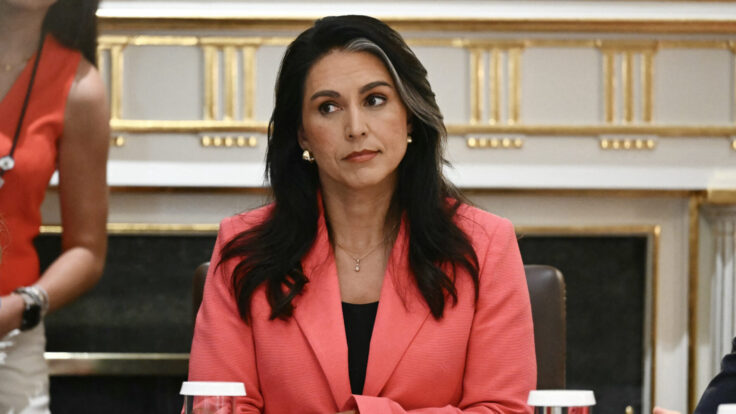
More than four defections, however, would change the calculus considerably—particularly if someone like Tom Cotton, the top Republican on the Senate Intelligence Committee, were to signal that he has problems with Tulsi Gabbard, Trump’s pick for D.N.I. The same applies to Senator Jim Risch, the ranking Republican on the Foreign Relations Committee, though he’s stated that he’s comfortable with all of the nominees. There’s also the matter of background checks—any nominee who doesn’t pass would certainly be more likely to get a no vote. But members are also starting to accept that nominees like Robert F. Kennedy Jr. might be the new normal. “It’s sort of like okay, let’s take on seed oil,” the Senate source quipped.
Still, Trump apparently believes that it’s up to the nominees to earn their confirmations, and he doesn’t think the failure of any one of them would diminish his own political capital. He’s even happy to rescind nominations and offer them to other candidates with better chances of getting confirmed, if it comes to that. Hegseth certainly didn’t help his own case by failing to come clean with Trump about his alleged past activities ahead of time.
And now, a little more on Hegseth… |
 |
| Red Pete |
| A no-holds-barred conversation with Paul Rieckhoff, a fellow Iraq War vet turned activist, about the political atom bomb effect of placing Pete Hegseth at the Pentagon. |
|
|
|
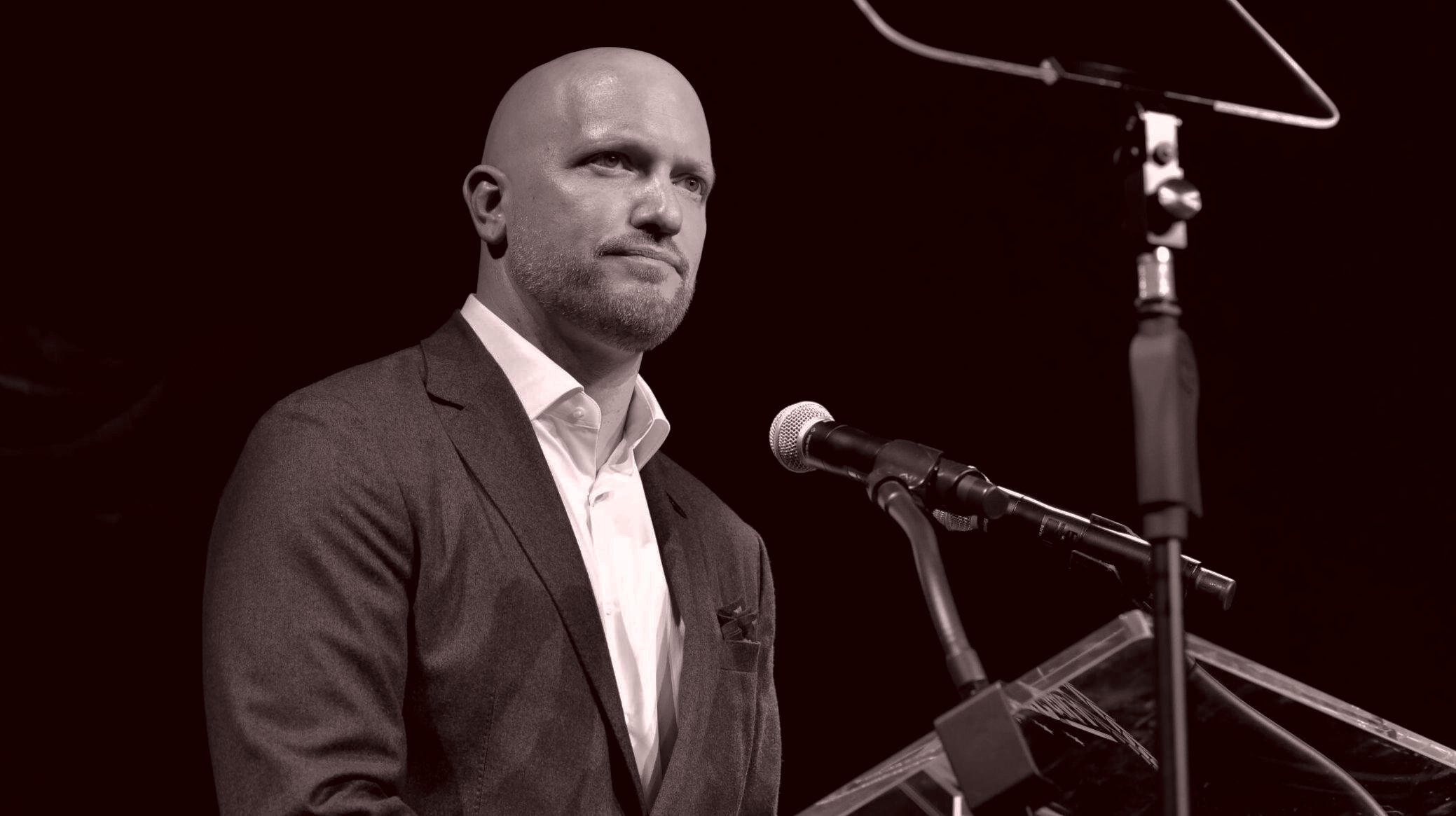
| Paul Rieckhoff, the former Army lieutenant turned veterans advocate, knows Pete Hegseth personally. Both men served in Iraq, and both have led veterans groups. From there, of course, the differences are manifold. Rieckhoff founded a nonpartisan group called Iraq and Afghanistan Veterans of America, and is a frequent contributor on MSNBC and CNN; Hegseth, the longtime Fox News host whom Donald Trump has nominated for secretary of defense, ran two veterans groups that were overtly conservative.
Not surprisingly, when I invited Rieckhoff on my podcast, Somebody’s Gotta Win, he didn’t hold back his disdain for Hegseth’s qualifications to lead the $850 billion Department of Defense and its 2.7 million service members and civilians. In short, Rieckhoff told me, Hegseth’s appeal for Republicans isn’t his management experience—which is minimal—but rather his right-wing ideology, formidable communication skills, and talent for generating media soundbites. Alas, Rieckhoff argued, the Pentagon should be the least political arm of the executive branch—a challenging reality given that it’s perhaps the institution that has come under the most intense pressure from Trump to conform to his will. “If Trump’s able to get [Hegseth] through there,” he told me, “then the other dominoes will be much easier at V.A., Justice, and other places.”
The following conversation has been edited and condensed for clarity. |
|
|
| Tara Palmeri: It doesn’t seem like Pete Hegseth has a lot of qualifying experience besides being a veteran, himself. And some of the latest reports say that he ran his two nonprofit advocacy groups into debt. Is the impression that he mismanaged these two groups?
Paul Rieckhoff: I wasn’t able to look under the hood, but I think it’s important to view them in the prism of political groups, because it shapes who he is. The first group, Vets for Freedom, was singularly focused on keeping troops in Iraq. And the second group, Concerned Veterans for America, was also a very political and partisan group that was focused on privatizing the V.A. and was funded by the Koch brothers almost exclusively. So I think what we’re seeing with Pete is this manifestation of a highly effective, highly political media figure.
In many ways, he’s kind of built for this moment, because he’s able to tangle with the press and he’s able to fight on behalf of Trump and his agenda. But I believe he is the most overtly political, the most politically extreme, and most unqualified person we’ve ever had for secretary of defense in the history of the position. I think that’s why you’ve seen so much bipartisan pushback from everybody except Trump loyalists, who are excited to have him unleash his culture war on the Pentagon. |
|
A MESSAGE FROM INSTAGRAM
|

|
|
Instagram Teen Accounts: a protected experience for teens, guided by parents
Instagram Teen Accounts are designed to address parents’ biggest concerns, providing automatic protections for who can contact their teens and the content they can see.
The impact: Built-in limits give parents more peace of mind when it comes to protecting their teens.
Learn More
|
|
|
| But one of Hegseth’s groups had a different position than Trump, who didn’t want to have troops in Iraq.
This is kind of like Hegseth 4.0—there are multiple generations. Pete used to be much more moderate. He used to be in opposition to a lot of things that Trump stands for. But what you’ve seen of Pete is the evolution of a highly effective model for a culture warrior for Donald Trump, who claims he’s going to end all the wars in 24 hours. Pete is very dynamic in the media, he’s very effective as a communicator, he’s very persuasive as almost a caricature of veterans, and he looks good on TV. He can tangle with Democrats and he can fight forward, and I think that’s why he’s been able to pull his nomination off the ropes in the last couple of days. We’ll see if he survives.
I think that’s ultimately going to come down to the moderates in the Senate. In addition to everything else, Pete is advocating for some pretty extreme positions, like banning women from combat roles. So he has to sit across from somebody like Joni Ernst—an Army combat veteran and sexual assault survivor—and say, I don’t think you’re equal to me, and I want to remove women from combat roles. I think that’s why, ultimately, this is going to be a true test of the Trump machine.
And their tactics are pretty dirty. They’re threatening to hire private investigators and dig up dirt on people and vowing a smear campaign against senators who don’t vote in their favor. Trump has also called for the chairman of the Joint Chiefs of Staff to be fired. How do people in the military feel about that? Do they agree with this?
Trump wants to implement a loyalty test. It’s already underway, where you’ve got extremists now vetting senior leaders in the Pentagon for loyalty to Trump and his agenda, rather than loyalty to the Constitution. I think this is really a key turning point for America, especially for our national security and defense and for the 2.7 million people who serve under the secretary of defense. And this is the second element, now that Gaetz is out of the way, for this extreme agenda, for a culture war on the Pentagon that wants to roll back rights for women, roll back rights for trans people, create loyalty tests, and pardon war criminals, and do a lot of extreme stuff in a way that I think is contrary to what the Pentagon is supposed to stand for.
The secretary of defense is supposed to be your least political nominee. This is a key breaking point for our democracy. And if Hegseth goes through, it clears the way for Tulsi Gabbard, who I think is also a very extreme, overtly political, and a potentially compromised nominee. This is going to be a true test, not just of the Senate, but also of the press. |
|
|
| It’s been documented that Hegseth lied to his ex-wives, his mother, and maybe even Trump. Is there a feeling that Hegseth could be compromised because of his lies?
I would think so. Common sense would say any of these people could be compromised because of any number of issues. But I think, more importantly, what we’re seeing with Trump is him trying to flood the zone. He’s trying to overwhelm the Senate. He’s trying to overwhelm the press. He’s trying to overwhelm the public. Christmas and the holiday season are coming, so people want to check out—and that gives them time to really execute this intimidation campaign for which Pete Hegseth is going to be the lead flag bearer.
Kamala Harris said, “We’re not going back,” and Pete Hegseth is literally the person who will drag back everything inside the largest federal agency with the largest budget in America. And if Trump’s able to get him through there, then the other dominoes will be much easier at V.A., Justice, and other places. So if I were running Trump’s strategy, I would focus on the Pentagon first, because that’s the place that stopped him last time. |
|
|
| How do you think this will impact the morale within the Department of Defense?
It basically calcifies a certain ideology. For instance, if you’re a right-wing MAGA guy and you like Christian nationalism and don’t believe women should be equal, then the Army’s hiring, and the Navy would love to have you. If you’re trans or a woman, I don’t know how you can honestly look at this person and feel confident about their leadership. What will happen is you’ll see women not wanting to serve in the military. And for sure no Democrats are going to want to serve in the military. It’ll start to look like the Army of the Confederacy. It’ll look a lot more like the Army of 1824 than 2024. And in the meantime, the tumult and politicization will be extremely damaging, especially to the professional corps of officers who are supposed to be beyond politics.
There’s a lot of general distrust regarding the military industrial complex. Do you think that any of Pete Hegseth’s disruption will do any good for the institution?
Maybe, but at what expense? Removing corruption and tackling the expansion of contractors are important issues, and I think, for the most part, bipartisan. But using that to cloak the more extreme political and social issues is really the game. The language Hegseth uses is intentional; it’s populist and effective. He’s a masterful communicator, the likes of which we’ve probably never seen. He may be the least qualified in terms of ability to manage it, but he may be the most qualified in terms of his communications dynamism, because he is built for the moment, for Fox News, for social media, for the podcasts, and all the other places. So it’s a really effective move to put in place a very radical person, and it’s complemented by a radical nominee for secretary of veterans affairs as well—Doug Collins, who’s a military veteran, but also a chaplain who’s been anti-women and anti-LGBTQ—and they are going to be a one-two punch for executing the MAGA agenda on the two biggest agencies in the federal government.
We can’t afford to have our military politicized. Everything is politicized nowadays, but the military is supposed to be insulated. It’s supposed to be a place where people put the flag above any party. The breaking point was when Trump asked General [Mark] Milley [then-chairman of the Joint Chiefs of Staff] to deploy troops in Washington, D.C., and he said no. If Trump doesn’t have a chairman of the joint chiefs and secretary of defense who stands up to him, and he wants to federalize the National Guard to remove migrant kids from cities, he can do it. So what he’s really doing is removing the most important, effective, and powerful resistance that he could possibly have. You don’t want our country divided around our military, and you don’t want our military partisan-ized, and that’s what’s in danger here. |
|
|
|
| FOUR STORIES WE’RE TALKING ABOUT |
 |
|
 |
|
 |
| Hakeem on Trump |
| The future of bipartisanship under the new administration. |
| JOHN HEILEMANN |
|
 |
|
|
|

|
 |
|
|
|
Need help? Review our FAQs
page or contact
us for assistance. For brand partnerships, email ads@puck.news.
|
|
You received this email because you signed up to receive emails from Puck, or as part of your Puck account associated with . To stop receiving this newsletter and/or manage all your email preferences, click here.
|
|
Puck is published by Heat Media LLC. 227 W 17th St New York, NY 10011.
|
|
|
|