{{ 'now' | timezone: 'America/New_York' | date: '%b %d, %Y' }} |
|
|
|
Hello and welcome back to The Best & The Brightest. I’m
Leigh Ann Caldwell. I hope you are enjoying this Memorial Day weekend, even with all this miserable weather.
Today, I take a look at the dismal Republican midterm outlook as Donald Trump continues to focus on vanity projects, revenge campaigns, overseas incursions, and his brokerage account. “It’s all avoidable,” one Republican senator told me. Plus, my colleague Ian
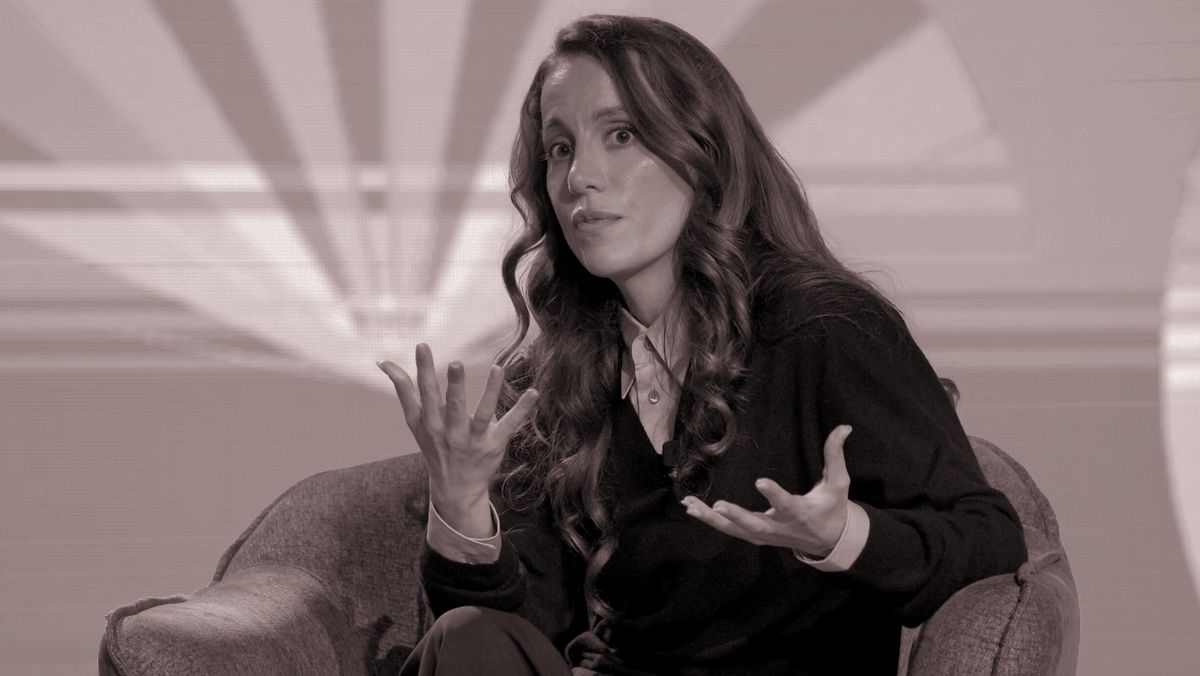
Krietzberg ponders what happened to Trump’s A.I. executive order, which was expected to land last week but never did.
Also mentioned in this issue: Ken Paxton, John Cornyn, James Talarico, Bill Cassidy, Thomas Massie, Chip Roy, Brian Fitzpatrick, Kamala Harris, Peter Hamby, Todd Blanche,
John Thune, Marianna Sotomayor, Richard Hudson, and more… |
|
|
|
UnitedHealth Group is expanding access to doula support to make maternity care
easier to access and navigate. Over 7 million people across the country could qualify for the doula support offering by 2027. Learn more. |
|
|
|

| Ian Krietzberg
|
|
- The
E.O. is coming?: President Trump’s hotly anticipated executive order on A.I. and cybersecurity, which was expected Thursday, has been delayed, with the president telling reporters that he “didn’t like certain aspects of it.” Several people familiar with the matter said it would have required some federal agencies to increase their scrutiny of certain frontier A.I. systems. But in his comments, Trump alluded to worries that the U.S. could fall behind in the A.I. race with
China if the order went ahead as is. “We’re leading China, we’re leading everybody, and I don’t want anything that’s going to get in the way of that lead,” he said. This is a common Silicon Valley talking point. Based on his remarks, it’s probably a safe assumption that mandatory model safety testing is off the table.
It’s otherwise unclear what form the order will take, when or if it comes. It was expected to establish a voluntary 90-day federal review period for “covered”
models before their release, which tech companies had been fighting to shorten to 14 days—the clearest sign yet that Claude Mythos had scared the White House into getting real about A.I. risk. The White House, one source told me, “is worried about a major cyber incident.” And the N.S.A., which would oversee the vetting process, “has the people, expertise, and
funding to get this done with the labs.” But, as the delay demonstrates, the Oval Office has been deeply divided over the proper regulatory response to the Mythos moment.
|
|
|
|
Trump has spent his second term largely getting what he wants from Congress as
he’s launched wars, imposed tariffs, and accumulated crypto wealth with little scrutiny. But last week, he encountered more resistance from his party on the Hill than at any point since his second swearing-in. |
|
|
|
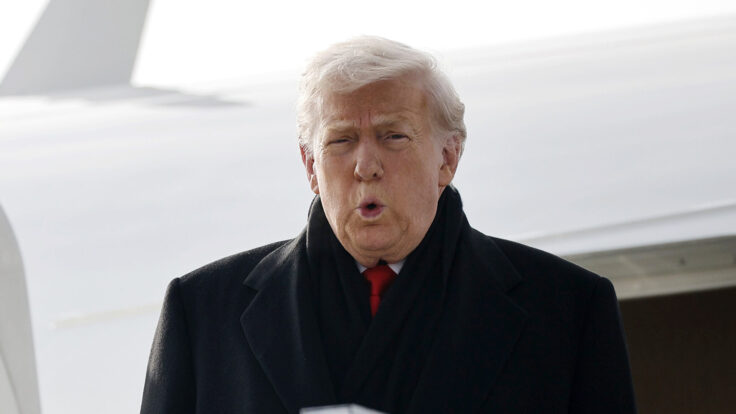
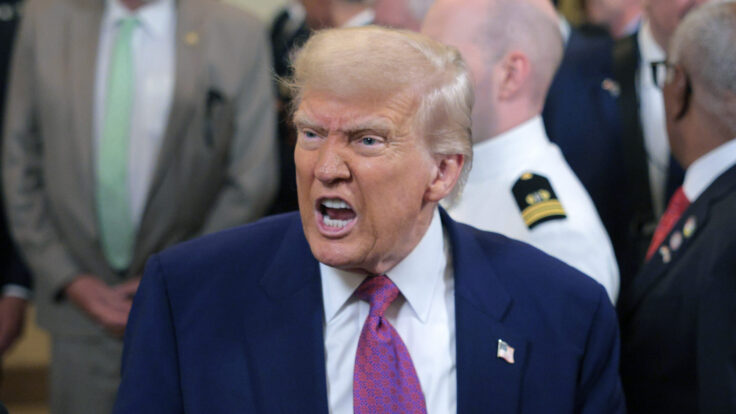
Donald Trump is behaving as though he’s sitting on top of the political
world. In reality, he may be presiding over his own undoing. For a president who insists he doesn’t want to face impeachment or investigations under a Democratic-controlled Congress, Trump has alarmed Capitol Hill Republicans with his increasingly brazen conduct—demanding $1 billion for a ballroom, trading the stocks of companies whose fate he controls, ransoming a $1.8 billion slush fund for his supporters, pardoning his family for any tax crimes—none of which is playing well with voters when
the price of gas is nearing $5 a gallon. They’re perplexed, angry, and, in some cases, resigned to the conclusion that Trump cares more about himself than the midterms. When I asked one House Republican what the president was doing to help the party win in November, the member sighed. “I don’t think he’s trying to.”
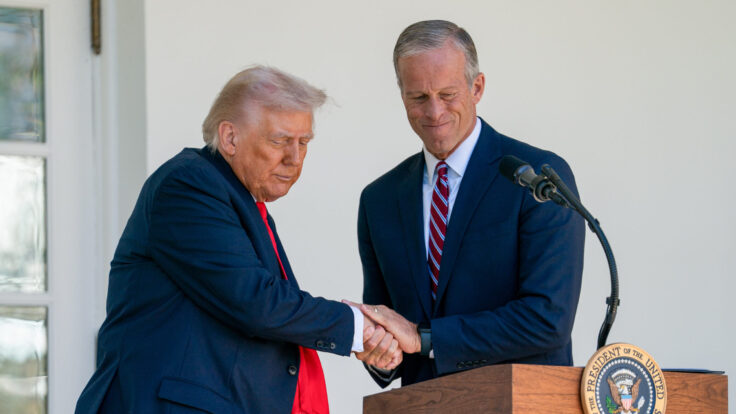
Trump’s endorsement this week of state Attorney General Ken Paxton over Sen. John Cornyn in the Texas Senate race only deepened the
anxiety. It’s not just that Senate Republicans liked Cornyn—a reliable, affable colleague who has raised hundreds of millions for the party. They also believed he stood a far better chance of holding the seat for the G.O.P. given his incumbency, appeal to disaffected Trump voters, and polling that shows him outperforming Paxton against Democrat James Talarico in the general election. But Trump, furious that Senate Republicans would not devote funds to his gilded
ballroom, supported Paxton—a revenge endorsement that effectively sealed Cornyn’s defeat in Tuesday’s runoff. The move angered Republicans not only because Cornyn did everything he could to stay on Trump’s good side, but also because it was a colossal and unforced political error.
Republicans still believe Texas is winnable. But, by their estimate, defending the seat will require at least $200 million—money that otherwise would have gone toward protecting vulnerable Republican-held seats
in Maine, Ohio, and especially North Carolina, which the Cook Political Report now rates as Lean Democrat. Meanwhile, Republicans are fretting that Trump’s weak polling has expanded the Senate battlefield to states that the party once considered secure, including Iowa, Nebraska, and Alaska. Some have even begun worrying about Montana, now that Sen. Steve Daines has announced his retirement. |
|
|
|
Health care can be confusing. UnitedHealth Group is making it simpler with Avery,
a new generative AI companion. Avery helps patients understand coverage, schedule appointments, estimate costs and more. Learn more |
|
|
|
Defending seven states will not be cheap—and that’s not even counting the fortunes that
Republicans will need to spend to compete to pick up swing states like Georgia, New Hampshire, and Michigan. “MAGA Inc. is going to have to step up and spend in Texas,” one G.O.P. political operative told me, referring to the Trump super PAC that has $350 million in the bank. “Trump made his choice, now he needs to pay for it.” But Republicans remain skeptical that he will actually spend the money. That, after all, might entail spending money to help someone else. “MAGA Inc. is committed to
retaining and building the G.O.P. majorities in the House and Senate. We don’t disclose our battle plans through the press,” MAGA Inc. spokesperson Alex Pfeiffer told me in a statement. |
Alas, rather than working to expand the party’s ranks, Trump has largely used his influence over
the Republican base to exile dissenters. Nearly every Republican who voted to impeach or convict him in his first term has either left office or announced plans to do so—or, as in the case of Sen. Bill Cassidy, been defeated by a Trump-backed primary challenger. The president fought especially hard to ensure Rep. Thomas Massie, the libertarian crusader who forced the release of the Epstein files, lost his primary last week. His team is now also
targeting Rep. Chip Roy—who is not an election denier and backed Ron DeSantis in 2024—in the Texas attorney general contest.
The White House has intimidated Republicans in ways both subtle and overt. According to one chief of staff who attends the weekly House Republican chiefs meeting, the entire White House Office of Legislative Affairs team appears regularly on the Hill, distributing talking points and making clear that their bosses are
expected to fall in line. This week, Trump issued a thinly veiled threat against Rep. Brian Fitzpatrick, one of just three Republicans representing districts that Kamala Harris won, saying to a reporter, “He likes voting against Trump. You know what happens with that? Doesn’t work out well.”
These kinds of pressure tactics have been working reasonably well for the president so far. He has largely extracted what he wanted from Congress, including tacit
permission to wage war on Iran, broad authority to impose tariffs, a nod to rescind congressionally appropriated funds, and the unchecked dismissal of inspectors general from multiple federal agencies. Republicans, in turn, have mostly abdicated their oversight responsibilities as Trump has embarked on his second-term campaign of self-enrichment and self-protection.
New financial disclosure
documents, first reported by The New York Times, show that Trump made more than 3,600 individual stock trades during the first three months of this year, including in companies with regular business before the government; separately, he and his family
have generated at least $2 billion through crypto ventures. Last October, Trump pardoned Binance founder Changpeng Zhao after he helped get the president’s crypto company, World Liberty, off the ground. In April, Bijan Tehrani, an Australian billionaire who co-founded Stake, the largest crypto-backed online casino in the world, gave
$1 million to MAGA Inc. As The New York Times reported today, the Trump administration has dropped almost all regulatory action and enforcement against crypto companies. Among the biggest
beneficiaries were the Winklevoss twins, who have contributed to Trump’s ballroom and invested with the president’s sons. “It’s wild what’s happening, and they’re doing it with impunity,” one Republican strategist told me. (The White House has repeatedly said the president does not violate conflict-of-interest laws and thinks only of what’s best for the American people.)
After promising to personally fund the White House ballroom, Trump solicited $400 million in
donations—many undisclosed, some from companies whose stocks he traded—before demanding Congress provide an additional $1 billion for security. He’s embarked on expensive pet projects like the reflecting pool, the East Potomac golf course, the Arc de Trump, and the ballroom, remaking federal Washington, D.C., in his image with little oversight amid a permission structure that he
created by stacking approval agencies with his allies. When CBS News’s Ed O’Keefe asked Trump in the Oval Office this week who the arch is for, he said, “Me.” |
|
|
|
Last week alone, Trump announced a $1.776 billion slush fund for individuals he
determines were wronged by the federal government—a category expected to include January 6 rioters—while his Justice Department simultaneously granted immunity to him and his family from any past or future I.R.S. investigation into their taxes. |
The
G.O.P. Mini-Resistance
|
But this past week may prove to be a turning point, as Republicans face down an angry electorate
that blames Trump for launching an unpopular war and focusing on personal projects while failing to lower costs. Trump’s approval ratings now rank among the lowest of any second-term president, hovering in the mid-30s. As my colleague Peter Hamby reported this week, a new Puck-Echelon poll found that 64 percent of Americans think the economy is getting
worse. Meanwhile, G.O.P. lawmakers who won’t be around next year—including Sens. Cassidy, Tillis, and, perhaps soon, Cornyn—are newly unshackled to vote their conscience.
It’s not a coincidence that Trump encountered more resistance from his party last week than at any point during his second term. Senate Republicans dropped a provision from an immigration enforcement bill that would have provided $1 billion in Secret Service funds tied to Trump’s ballroom. (One member told me that during
a classified House briefing last week, the Secret Service could not explain how the requested $1 billion would actually be spent.) They unloaded on Acting Attorney General Todd Blanche during a closed-door meeting about the D.O.J. slush fund (Fitzpatrick went so far as to introduce legislation prohibiting the use of taxpayer dollars for that purpose). And three Senate Republicans voted to advance an Iran war powers resolution, while House leadership had to withdraw a similar
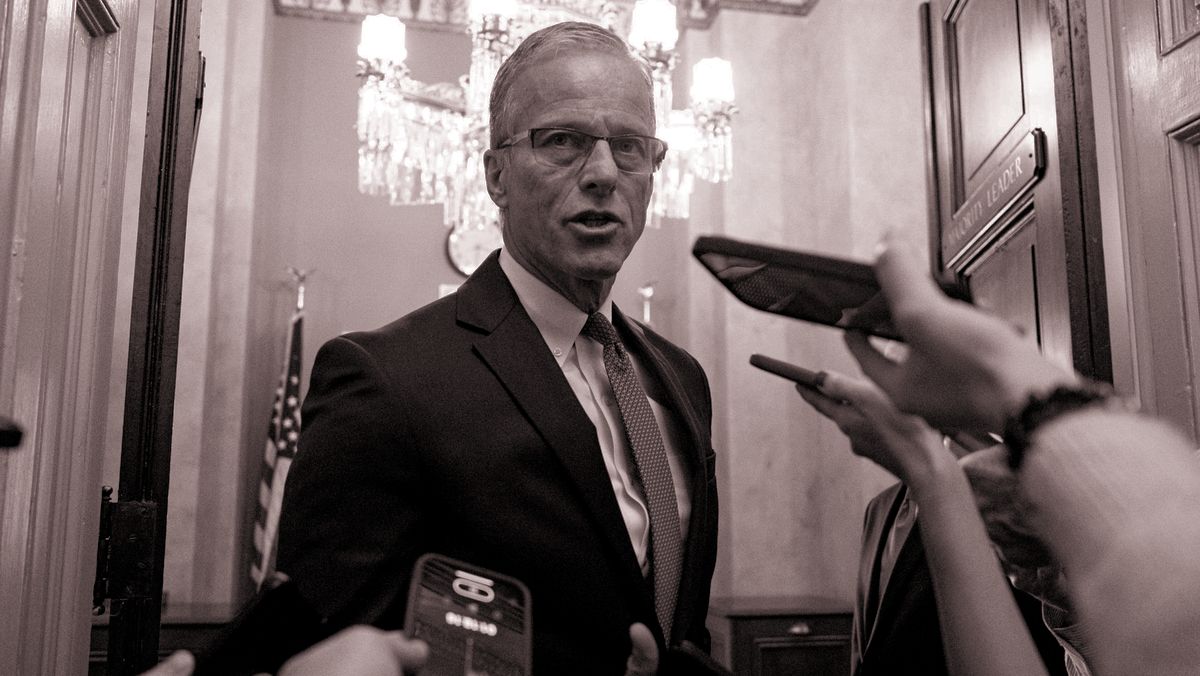
resolution after concluding it was likely to pass. “It’s hard to divorce anything that happens here from what’s happening in the political atmosphere around us,” Senate Majority Leader John Thune told reporters last week.
Conservatives have begun acknowledging the backlash. One senior aide to a conservative House Republican told me that their office
has received calls from constituents asking whether Trump truly said he doesn’t consider Americans’ financial situation when making decisions about the war in Iran. Even lawmakers in safe Republican districts have grown pessimistic. “I’m pretty confident we’re going to lose the House,” one member told my colleague Marianna Sotomayor. “I don’t know how we win our voters back—with or without Trump.” That pessimism persists despite Republicans going into Election Day with at least
a 10-seat advantage, due to redistricting and the Supreme Court’s decision to weaken the Voting Rights Act.
Still, House Republican leadership continues to stay the course, trapped by the dilemma of modern Republican politics—distancing themselves from Trump risks alienating his base, while standing too close to him risks losing the independent voters who will decide the closest races. And yet, National Republican Congressional Committee chair Richard Hudson still
believes that mobilizing Trump’s turnout machine outweighs every other consideration. “Our biggest challenge is going to be turnout,” he told me. “Midterms are tougher on Republicans. Having him engaged to help turn out some of those voters is going to be critical for us.”
True. But many Republicans just wish he’d focus on gas prices. “It’s all avoidable,” one Republican senator told me. |
|
|
|
Need help? Review our FAQ page or contact us for assistance. For brand partnerships, email ads@puck.news. You received this email because you
signed up to receive emails from Puck, or as part of your Puck account associated with {{customer.email}}. To stop receiving this newsletter and/or manage all your email preferences, click here. |
Puck is published by Heat Media LLC. 107 Greenwich St., New York, NY 10006 |
|
|
|
|