 |
 |
|
Welcome back to The Stratosphere. I’m Teddy Schleifer.
|
|
Tonight, a look at the absurd fascination of the Democratic donor establishment with someone born in 1999. If you work in politics and you haven’t tried to meet with Rory Gates, hurry up and join the back of the line. It’ll only grow longer by the time you finish this email.
As always, reply to this with tips—or other folks to write about.
Teddy
|
 |
| Barbarians at the Gates |
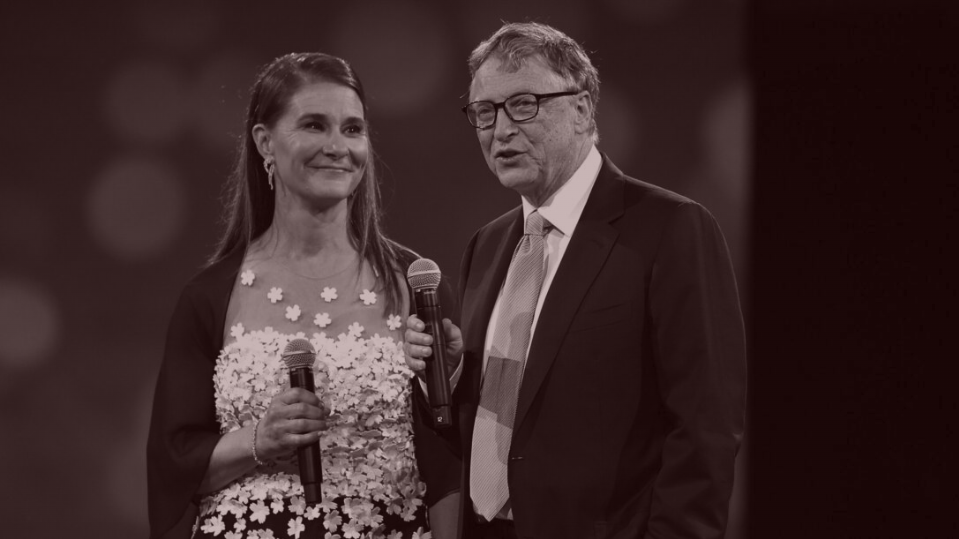
| The hottest commodity in the world of megadonors is the spotlight-averse, socially awkward 24-year-old scion of Bill and Melinda—an overnight sensation among Democratic donor-hustlers desperate for the next big thing. |
|
|
|
| It’s rare that the heir to one of the world’s most spectacular fortunes should also be a 24-year-old Capitol Hill staffer, laboring in the bowels of some dreary congressional office building. Alas, for Rory Gates, anonymity was never an option. From the moment he arrived in Washington to begin his doctorate, in 2022, the bookish son of Bill and Melinda Gates has been a rich target for Democratic social-climbers, influence-peddlers, and all variety of money chasers who view him not only as a next-generation megadonor and Washington player, but also as their next potential payday.
The widespread fascination with someone born in 1999 speaks to the sorry state of Democratic megadonor-dom in 2024. There are virtually no new major givers to progressive causes, at least relative to 2020 or 2016. Sure, there are hundreds of millions of dollars flowing into the Biden campaign and Democratic causes this cycle. But the top of the fundraising pyramid has been eroding over the last few years, sending ripples of concern (and even some layoffs) through the progressive movement. That’s why, whenever I ask sources who’s hot in donor circles, there is only one answer: Have you met Rory?
Nor surprisingly, perhaps, Rory has quickly acquired a mystique that far surpasses both his accomplishments and ostensible interests, according to the dozen-plus people I talked with for this piece. Everyone who sees his surname takes the meeting, of course. “He appeared on our scene like a creature no one was trying to scare off,” said one person who has sought to cultivate him. But on the cocktail party circuit, there is a creeping sense of disillusionment with Rory—a belief that he has wasted too many people’s time; is cautious to the point of being scared of his own shadow; and that the boy prince’s study of the world of money-in-politics has been little more than an academic chin-stroking mission masquerading as a master plan. Democrats I spoke to struggled to identify what he has actually funded. I’ve learned of a couple mid-six-figure contributions, and he’s expressed a desire to fund a select few major, legacy-defining causes rather than spraying and praying.
But he has a long runway, and is in no rush. Gates is barely out of school and working his first real job, as a congressional analyst—hardly the profile of a Democratic donor-savior. If party operatives are expecting him to single-handedly rescue each of their pet causes, they might want to wait a few years. Still, it’s impossible for Democrats not to fixate on the money Rory can access—his father has promised to give away “virtually all” of his wealth to the family foundation—and how to keep him close. Big-money operatives hover around up-and-coming donors like vultures; some want the official business of serving as that person’s advisor, while others just want to be a friend with informal access. And Rory, if he inherits even a sliver of the fortune from his parents, could be their biggest meal ticket yet. |
|
A MESSAGE FROM OUR SPONSOR
|
 |
| We’ve entered an era of unprecedented upheaval in media and communications, one with new rules, new players, and new ways of engaging people. It requires a mindset shift — both from agencies and clients — away from tactics and channels and toward repeatable strategies to attract, engage, and retain audiences.
Orchestra was born in the midst of this information upheaval. Created through the combination of BerlinRosen, Brightmode, Derris, Glen Echo Group, Inkhouse, M18, Message Lab, and Onward, we were designed from Day 1 to help clients thrive in this new, more complex environment.
A new kind of communications company, guided by a philosophy about what it takes to succeed in an ever-changing media world: Learn more about Orchestra’s new approach to strategic communications.
|
|
|
|
|
| Uncovering even basic information about the heirs to billion-dollar fortunes can be a Sisyphean task: Family-office handlers expend substantial resources to scrub information from the internet, in part due to legitimate security and kidnapping concerns. Reporters generally avoid writing about minors. Even identifying where they work or go to school can be perceived by allies as invasive.
But the growing power of billionaire scions, from David and Megan Ellison in Hollywood to Rory and Reed Jobs in the overlapping world of politics and tech, is a legitimate topic of conversation—and one that will only metastasize as the children of the ’90s internet billionaires come into their own as cultural tastemakers, philanthropists, and bona fide political forces. The volume of intergenerational wealth that will be transferred over the coming decades is likely to be unprecedented in world history.
All three Gates kids—including daughters Phoebe and Jennifer—are fully aware of that legacy, according to people who know them, and cognizant that their last name, in particular, is a philanthropic brand. But where Bill and Melinda, until recently, famously swore off politics as a distraction to their work of saving lives around the globe, the kids sharply disagree. Phoebe, who is about to graduate from Stanford, has a giving “allowance” that enables her to make gifts that far outstrip those of a typical college senior. She has her own advisors in Melinda’s office to help her make decisions (primarily Josh Lozman), and has made max-out disclosed political contributions to female Democratic governors, including as Laura Kelly and Gretchen Whitmer, both of whom were also backed by her mom. A few weeks ago, I’m told, Phoebe’s team had a private meeting with the C.E.O. of Planned Parenthood, Alexis McGill Johnson. It is hard to imagine any other 21-year-old donor’s squad getting that audience.
Phoebe, who has 400,000 followers on Instagram and 250,000 on TikTok, apparently has designs on being a fashion influencer, à la her friend Eve Jobs. Like her older sister, Jennifer, a doctor, Phoebe is far more comfortable than Rory in the public eye: She spoke at the Gates Foundation’s high-profile Goalkeepers event last year, has recently become a fixture in The Daily Mail (she recently dated a McCartney grandkid), and regularly talks about abortion rights and political advocacy with women’s media. “I see this election coming up as you have one candidate who respects our rights, and you have another who’s taking them away,” she said in an interview last month.
Rory, who has been described to me as almost terrified of attention, is Phoebe’s polar opposite. Indeed, I have rarely encountered anyone more circumspect about the media. People around Rory protect him as if he were still a child—but he’s an academically accomplished adult with political ambitions who can certainly handle some scrutiny. (Several people said he presents as much younger than his age.) At times, he has been extraordinarily cautious about his security. This feels like a good place to note that Rory declined an interview request, and both Bill and Melinda’s teams chose not to help with this story. Several other sources declined interview requests after hearing from Rory’s team that they weren’t supposed to talk to me. His Instagram, unlike Phoebe’s and Jennifer’s, is private. |
|
|
| Gates, despite his aversion to the spotlight, has been interested in the hurly-burly of politics for several years. Before graduating from the University of Chicago in 2022, where he received a B.A. and a masters, Gates interned both with Washington Governor Jay Inslee’s presidential campaign and at Democratic tech firms Hawkfish, founded by Mike Bloomberg, and HaystaqDNA. This past December, he completed his masters work at the Institute of World Politics, a graduate program in D.C., where he specialized in international relations. (He is finishing his doctoral dissertation while he works on the Hill.) In recent conversations, he has described a new academic fascination with the power of propaganda, including how it is used by white nationalists.
After he graduated from college, Gates began a listening tour, seeking out Democratic family friends for advice and to build connections. If you didn’t meet with Rory Gates in the 12-month period from mid-2022 to mid-2023, that says something about you and not something about him. In these conversations, Rory asked everyone in the world of Democratic tech: What is the one thing I could do to most help the party? In late 2022, Rory attended a meeting of the Democracy Alliance, where, of course, his presence was much-scrutinized by the chattering class.
These tech geeks were equally elated when he decided to fly to Atlanta for a meeting on the sidelines of a political technology conference attended by some major donors in January 2023. That meeting was probably the peak of the Rory hype. There, he expressed some interest in backing a new project assembled by the Democratic Data Exchange called MIG. Gates has financially supported some work done by DDX, I’m told. |
|
|
| After briefly expressing an interest in investing in the Democratic data giant TargetSmart last year, Rory went deep into diligence on an attempt to buy a progressive tech startup called Deck, as I reported at the time. But Deck was owned by Sam Bankman-Fried, and the startup got caught up in FTX-related bankruptcy proceedings. Rory decided that attaching himself even loosely to the S.B.F. dumpster fire was too toxic for his brand. The company eventually went under. (Like S.B.F., Gates is hardly a dogmatic liberal: He cut a max-out check to Nikki Haley in early 2023, well before it was fashionable at Cafe Milano, and I hear has backed some work at the heterodox Niskanen Center.)
Around this time in his bildungsroman, Rory was advised on Democratic affairs by Sheila Gulati, a venture capitalist and a friend of the Gates family—several people referred to her as his “chaperone”—who had zero experience in politics. But in the middle of last year, around the time of the Deck talks, Rory switched things up and enlisted donor-advisor Seth London to help him more formally understand the world of political engagement. Hiring London, to me, signaled a more serious interest in how the game of politics is played, and that he was going to spend enough to justify the cost of retaining a professional.
Rory, befitting his status as Silicon Valley royalty, has collected high-powered mentors out of a concern, particularly from his family but also from some sympathetic Democrats, that he is at risk of being swindled by grifters. Hillary Clinton, who is friends with the Gates family, spent some time with him in the early days. Another person who is said to have offered guidance is Ron Conway, the ubiquitous Bay Area political impresario who is close with Bill. Conway’s celebrated aide-de-camp, Mike Yang, has made some key connections for Rory across the Democratic ecosystem. Rory has also expressed interest in taking advice from other next-gen donors, and he has consulted one a decade or two his senior on how to present to the world: Alex Soros.
Rory remains as concerned about publicity as ever—he has flatly told some people he is uninterested in disclosed giving—but his interests have broadened since his initial tunnel-vision on technology. One area of interest appears to be Texas: Rory has told people that he sees the state as strategically important to the left, and has funded programs there and research into what would be needed to transform the state’s political valence. Another area of interest is the power of media, both owned and paid, to persuade voters: At one point, I’m told, Rory spent some face time with senior Democratic leaders to pitch them on what he saw as a better way to measure the effectiveness of television ads. I hear he’s been financing a bunch of pilot research projects to test propositions like that.
Rory’s fans say that he displays an uncommon humility—he’s an introvert, and is loath to speak his mind at a dinner party, even with policy wonks. But he has a voracious appetite for intel: He likes to ask political and nonprofit operatives for the research papers that underlie their assertions. He’s most curious about policy, leading some to think that, at the end of all of this, he’ll throw away the artifice of being a megadonor and just go work at a think tank, himself, or just create his own. “He has the ability to use the resources he has—or will have—to learn more about things that he’s curious about,” said one person who has talked with him. |
|
|
| I had to laugh when I heard that Rory, rather than launch his own shingle, had instead taken a job last year as a congressional analyst for the committee researching the two-decade conflict in Afghanistan. “We have a brilliant cadre of young analysts performing research on the Afghanistan war for the commission including Rory,” said Matt Gobush, a spokesman for the committee. (Of course, Gobush knew what I was calling about before I even named Rory as the topic of my inquiry. The handlers are everywhere.)
Obviously, Rory didn’t have to take a low-ranking job on the Hill. Allies argue it’s very revealing that he chose to do this while working on his PhD and his political giving, a statement that he’s interested in the nitty-gritty of policymaking above all else and not coasting on his privilege. In private conversations, Rory has been prone to describe his political work as in service of his interest in foreign policy; maybe, he has told people, he could build a tool so powerful that an entity like the C.I.A. or the State Department would need to hire him to operate it. After all, he has told others that he was interested in a job in the Biden administration.
And indeed, gradually, over the last few months, the kid has been popping up more and more, just like any other aspiring, over-educated mover-and-shaker in the nation’s capital. He has been SPOTTED in Washington on three occasions by Playbook, hosted an A.I.-related event thrown by Tammy Haddad and a book party for David Petraeus at the British ambassador’s residence. Last October, in a sign of his activity and influence, Rory scored an invite to a White House state dinner honoring the prime minister of Australia, bringing as a guest the son of the president of the Illinois State Senate. The other week, he went to a dinner thrown by Steve Clemons, and I’ve heard that he’s comfortable giving contacts his number when he’s out. Perhaps he wouldn’t be the first young person seduced to Washington with high-minded goals only to never, ever leave. |
|
|
|
| FOUR STORIES WE’RE TALKING ABOUT |
 |
|
 |
|
 |
| Biden’s Meme Army |
| Chatting with Sasha Issenberg about the disinformation wars. |
| PETER HAMBY |
|
 |
|
|
|
|
|
 |
|
|
|
Need help? Review our FAQs
page or contact
us for assistance. For brand partnerships, email ads@puck.news.
|
|
You received this email because you signed up to receive emails from Puck, or as part of your Puck account associated with . To stop receiving this newsletter and/or manage all your email preferences, click here.
|
|
Puck is published by Heat Media LLC. 227 W 17th St New York, NY 10011.
|
|
|
|