{{ 'now' | timezone: 'America/New_York' | date: '%b %d, %Y' }} |
|
|
|

| Jon Kelly
|
|
Good morning,
Welcome back to The Backstory, your weekend review of the very best of Puck.
It
was another remarkable week: Matt Belloni broke the news of Bob Iger’s legal offensive against his biographer; Eriq Gardner previewed the looming Blake Lively–Justin Baldoni trial supernova; Scott Mendelson dissected the family-friendly box office boom; Julia Alexander stress tested the Dems’ Hasan Piker media lesson; Dylan Byers
evaluated Politico’s star envy; Ian Krietzberg surveyed Silicon Valley’s Iran exposure; John Ourand scooped ESPN’s next round of layoffs; Lauren Sherman offered a talmudic reading of the Armani succession sweepstakes; Rachel Strugatz presaged the John Demsey era at Gap Beauty; Sarah Shapiro chronicled Banana Republic in mid-life; Malique Morris considered
Farfetch’s economic survivalism; and Marion Maneker ran the numbers on the art market’s Lean In era.
Meanwhile, down in D.C., Julia Ioffe scrutinized Pete Hegseth’s personnel purge; Peter Hamby perused the Democrats’ YouTube playbook; Abby Livingston questioned Trump’s Newsom bailout; Leigh Ann Caldwell decoded the crypto lobby’s
2026 hedge; and John Heilemann discussed the perils of federal overreach with Minneapolis Mayor Jacob Frey.
Check out these stories, and others, via the links below. And stick around for the backstory on how it all came together. |
|
|
|
Al data centers shouldn't raise your bills. Anthropic will cover electricity price increases from its data centers and invest in grid optimization tools, helping keep prices lower for ratepayers. Learn more |
|
|
|

| FASHION
|
|
Lauren Sherman
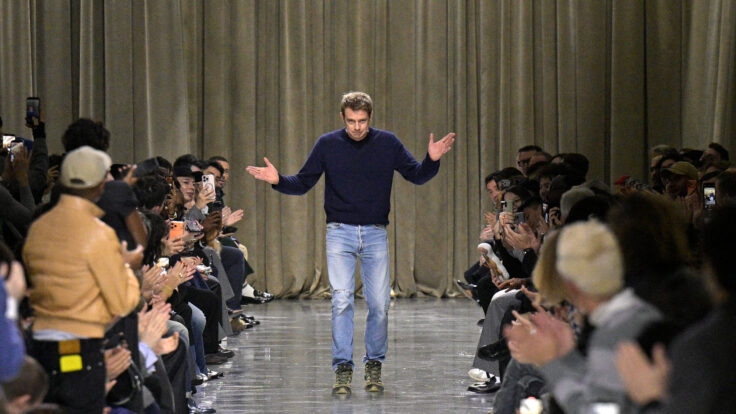
examines Stefano Cantino’s forthcoming challenge at Dolce & Gabbana and gathers fresh dish on the post-Armani succession drama.
and…
Rachel Strugatz
assesses the merits of Gap Beauty’s summer relaunch.
meanwhile…
Malique Morris probes Farfetch’s Coupang-led resurrection, while Sarah Shapiro
diagnoses Banana Republic’s identity crisis. |
|
|
|

| ART MARKET
|
|
Marion Maneker
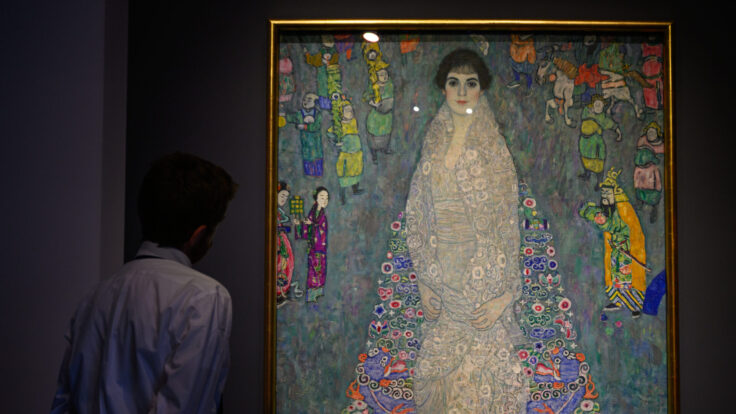
tours seven gallery shows worth the spring pilgrimage, previews Philadelphia's A Nation of Artists double bill, and
combs through exclusive data on the art market’s narrowing gender gap. |
|
|
|

| HOLLYWOOD
|
|
Matt Belloni
breaks the news that Bob Iger has sicced Gawker killer and Trump buddy Charles Harder on his unauthorized biographer.
and…
Eriq Gardner details the latest shoes to
drop in the Blake Lively–Justin Baldoni bloodbath.
meanwhile…
Scott Mendelson ponders the longevity prospects of the family-friendly resurgence at the box office. |
|
|
|

| A.I.
|
|
Ian Krietzberg
spotlights how the Silicon Valley broligarchy left itself vulnerable to Trump’s war in Iran. |
|
|
|

| AIR MAIL
|
|
Michael Gross
digs into the Manhattan co-op resurgence.
and…
Valeriya Safronova charts the trajectory from Andy Cohen’s couch to Riker’s. |
|
|
|

| MEDIA
|
|
Dylan Byers
uncovers Mathias Döpfner’s new vision for Politico.
and…
Julia Alexander reveals the hidden contours of the Hasan Piker debate. |
|
|
|

| SPORTS
|
|
John Ourand
explains the twist in ESPN’s looming cut-down day. |
|
|
|

| WASHINGTON
|
|
Julia Ioffe
investigates Hegseth’s proxy war inside the Pentagon.
and…
Peter Hamby parses the Democrats’ plan to win the midterms on YouTube and
Twitch.
meanwhile…
Abby Livingston explores how Trump accidentally rescued California Democrats while Leigh Ann Caldwell reports on the crypto lobby’s quiet midterm hedge. |
|
|
|

| PODCASTS
|
|
Dylan and Julia Alexander interrogate the TBPN deal with OpenAI’s Chris
Lehane on The Grill Room.
and…
Ourand and Kentucky legend Jamal Mashburn chew over the N.I.L.-ified state of college basketball on The Varsity.
and…
Lauren
chats with new Playboy editor-in-chief Phill Picardi about the PG-13 relaunch on Fashion People.
and…
John Heilemann and Minneapolis Mayor Jacob Frey confront the ICE crisis on Impolitic.
and…
Matt and labor expert Jonathan Handel unpack the WGA’s new deal on The Town.
and…
Peter and Ourand discuss whether D’Amaro will spin off ESPN
on The Powers That Be. |
As a reminder, you can update your profile at any time to get more stories like these directly in your
inbox. Click here to customize your email settings. |
Armani in the High Castle
|
I don’t need to tell you that the interplay of power with personality can often have outsize
business consequences—a theme invoked frequently at Puck. To cite the most obvious and ubiquitous example, David Ellison’s recent consummation of deals for both Paramount and Warner Bros. Discovery, to the tune of a combined ~$120 billion, owes uniquely to the dotage of his octogenarian father, a software magnate who is worth around a fifth of a trillion bucks depending on the day, and to both of their friendly relationships with Donald
Trump.
Indeed, this is a packed genre. Shortly after NFL commissioner Roger Goodell signaled that he was going to squeeze his media partners, including Rupert Murdoch’s Fox, into forking over another billion or so apiece for annual distribution rights, the Journal started questioning the validity of the league’s antitrust exemption. Of course, Rupert, another Trump friend, owns that media joint, too. A week later, the Journal
landed the exclusive that the Justice Department would be opening an investigation. |
|
|
|
Al data centers shouldn't raise your bills.
Anthropic will cover electricity price increases from its data centers and invest in grid optimization tools, helping keep prices lower for ratepayers.
Learn more |
|
|
|
These are bipartisan pastimes. As my partner Matt Belloni recently reported in the excellent
Bob Iger vs. the Bob Iger Book, the family-friendly Walt Disney Company recently hired the Gawker-killing Trump guardian angel Charles Harder for extra legal muscle—yet another reminder that egos often preside somewhere behind the numbers on the P&L. And I won’t bore you with the correlation between id and outcome regarding our
current “excursion” in Iran, although my partner Julia Ioffe neatly connects the dots in a pair of recent stories, The Day After TACO Tuesday and Hegseth’s Pentagon Purge.
But the most fascinating
intermingling of economics and personage may be playing out thousands of miles away, in Milan, where the Armani board of directors is engaging in a Succession-like game of corporate intrigue. Last September, the 91-year-old designer and entrepreneur Giorgio Armani passed away, leaving behind a singular set of requests for his namesake company.
Armani, who was childless and controlled his privately held business, insisted in his will that 15 percent of the company be sold off
next year, followed by a subsequent sale of 30-55 percent within the following three-to-five-year period. Even more notable was his preference that this two-step process favor LVMH, the global behemoth; current partners EssilorLuxottica and L’Oréal; or a company of “similar standing” as possible acquirers. Like all truly great designers, Armani knew what he wanted.
Armani’s board is composed, among others, of some family members and Leo Dell’Orco, his longtime partner and
chairman of his foundation—loyalists and indebted custodians all. But their path to ensuring that Armani’s business enjoys the afterlife prescribed by its late founder will be rife with complexifiers in an industry changing before our very eyes. Armani may be among the most important fashion houses of the past half-century, but fashion is undergoing an upheaval similar to the cable industry: All but the mightiest brands are getting smaller as the Chinese consumer reorients, multibrand retail
fades, and tastes inevitably change. LVMH’s stock price is off around 40 percent from the Big Luxury post-pandemic peak of 2023—a trend mirrored by its smaller competitors Kering and Richemont. The Estée Lauder Companies has had its own executive shake-ups and stock oscillations, and its board is now exploring whether to deploy its dry powder on Spanish fragrance company Puig, in the wake of L’Oréal acquiring Kering’s beauty business in a $4.6 billion deal.
Anyway, the fashion industry may
love Armani, but who will pay up for it, and within the confines of the founder’s wishes? If you only have time to read one piece this weekend, I’d turn your attention to my partner Lauren Sherman’s excellent story A Farewell to Armani. “Even for L’Oréal or Luxottica—or a firm of equal standing—it’s not a simple
decision” to acquire Armani, Lauren noted. “Armani is not a very profitable business, and fashion is an increasingly unstable industry. While the brand is relatively unspoiled, it’s also staid. There’s been an organic uptick in interest in vintage Armani, and ready-to-wear sales have increased in recent years in important markets in the U.S., but it hasn’t been a go-to brand for decades. Why shop Armani when there’s The Row or Loro Piana—or Akris or Tom Ford?”
I’m certainly not qualified
to answer that question, but this succession drama is a reminder that industries change fast, and that many financial decisions are character-driven. It’s one of the abiding leitmotifs of our time, and a near constant here at Puck. |
|
|
|
Need help? Review our
FAQ page or contact us for assistance. For brand partnerships, email ads@puck.news.
You received this email because you signed up to receive emails from Puck, or as part of your Puck account associated with {{customer.email}}. To stop receiving this newsletter and/or manage all your email preferences, click here. |
Puck is published by Heat Media LLC. 107 Greenwich St., New York, NY 10006 |
|
|
|
|