 |
 |
|
Welcome back to Dry Powder, I’m Bill Cohan.
|
|
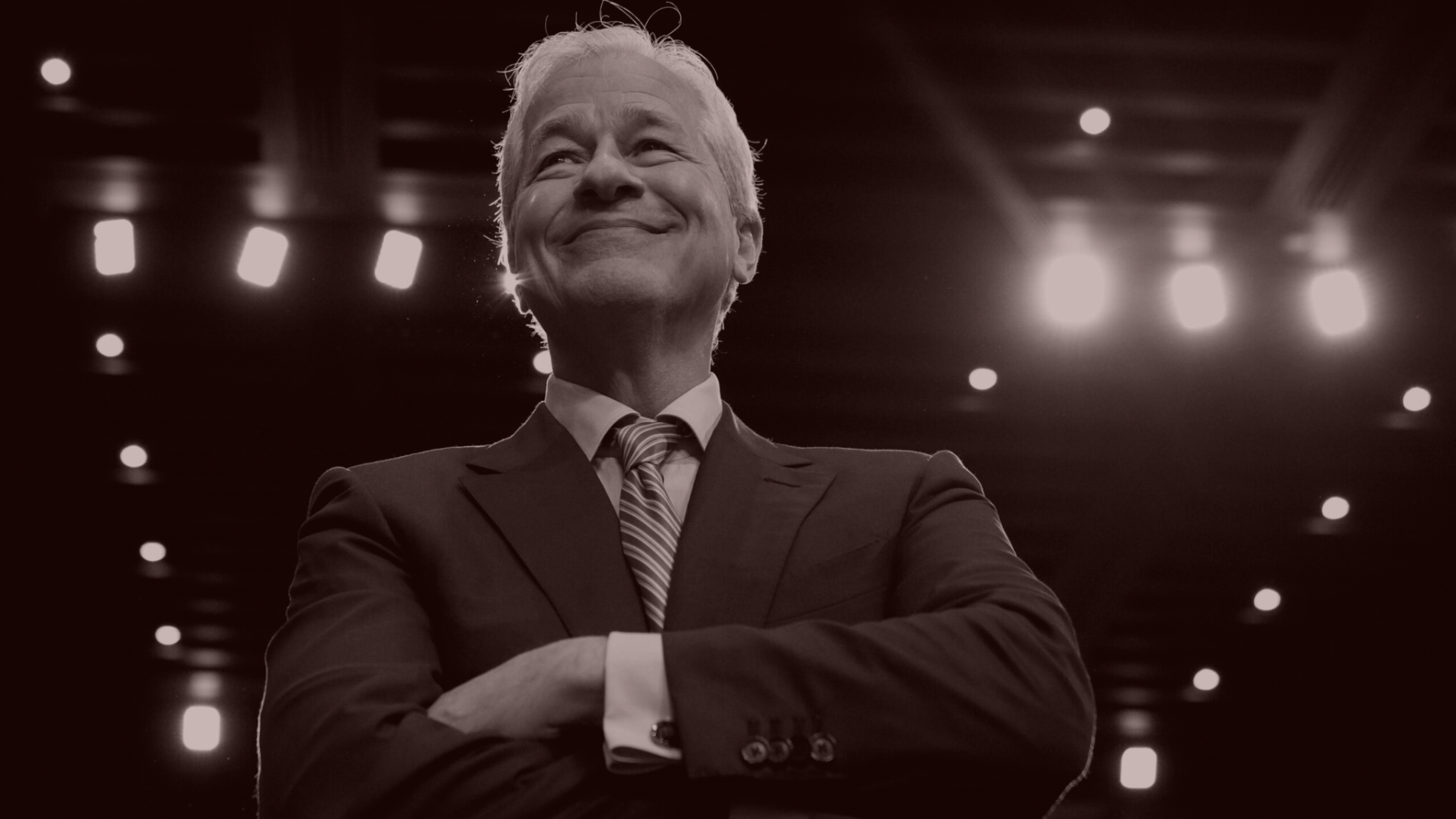
Certain corners of Twitter have been aflutter with “Jamie Dimon for President” chatter. So what to make of it? Today, my thoughts on whether the august C.E.O. ends up in the Oval, notes on the fallen SPAC kings’ day in court, and the true players behind Salesforce’s first quarter turnaround.
But first…
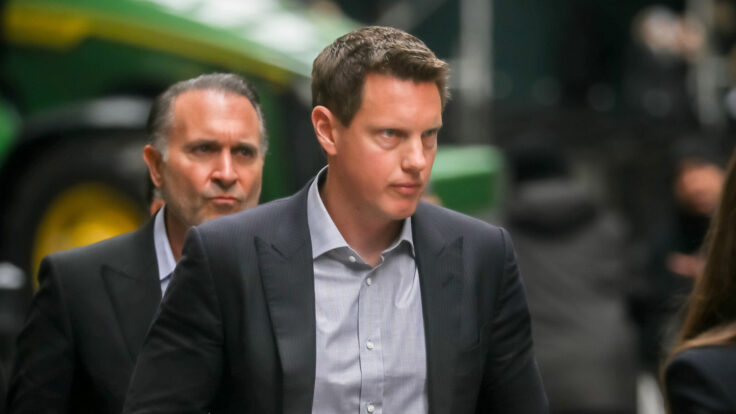
- S.B.F. & The Met: Hang out long enough in the FTX (and affiliates) bankruptcy docket and you’re bound to find something amusing. For instance, a nugget filed Friday afternoon, June 2, will allow the Metropolitan Museum of Art to return two donations to the bankrupt FTX estate totaling $550,000. The museum is repaying the two donations it received from West Realm Shires Services Inc., the parent company of several FTX subsidiaries, in 2022 (one for $300,000, another for $250,000).
Sam Bankman-Fried had little interest in art or museums and once told Axios, back in October 2021, that “Visual aesthetics are not something I understand. Paintings in general, artwork, I don’t get it.” And yet, he still managed to donate more than half a million dollars a few months later to the Met. Go figure. In exchange for returning the money, the Met will get a “stipulation” from the debtors and the two parties will exchange “unconditional, irrevocable and mutual releases from any and all claims, counterclaims, demands, liabilities, suits, debts, costs, expenses,” etcetera. In other words, the Met will return the money to the FTX debtors and is now off the hook.
Ken Weine, the Met’s chief communications officer, said in an email that the “short version” of the story is that “under the circumstances,” the Met “returned the funds.” He declined to elaborate further. That certainly is the short version of events, no doubt about that.
|
|
|
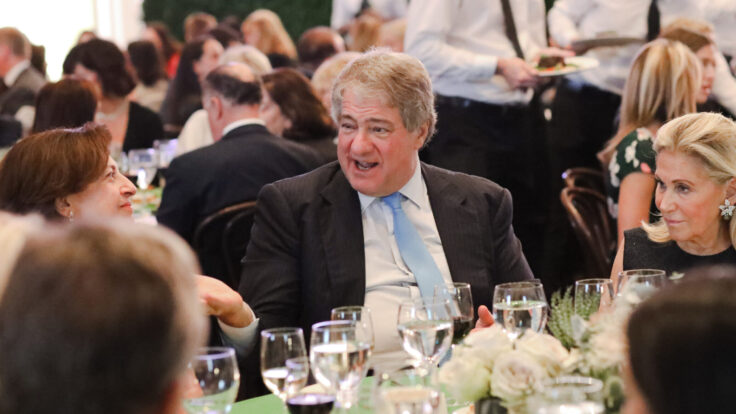
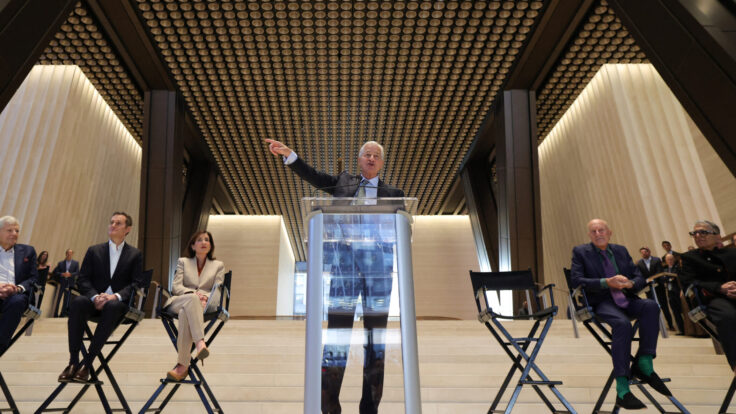
| To be honest, I am not sure what is motivating all this “Jamie Dimon for President” chatter outside of an unsolicited tweet from Bill Ackman and some recent playfully enigmatic commentary from Dimon, himself, about his interest in spending his third act in politics. It seems highly unlikely, to say the least, that Jamie would actually want to run for president: eating corn dogs, running around the country playing the retail game, and giving up his perch as the country’s most important banker. Ackman was certainly right that “we need an exemplary business, financial, and global leader to manage through what is likely to be a critically important decade for our country in determining our destiny.” But let’s take a step back from the edge of hysteria here and be realistic for a moment.
Jamie Dimon is a white, 67-year-old Wall Street C.E.O. On paper, and to voters who have never heard of him, he’d almost be like a Manchurian candidate put forth by the Republicans—a Mitt Romney to the power of Mitt Romney. This is such an absurd longshot that it is simply not going to happen. It’s not even worth contemplating.
Now, as I’ve suggested before, would Jamie like to be appointed Treasury Secretary? Absolutely. He basically said as much the other day on Bloomberg TV: “I love my country, and maybe one day I’ll serve my country in one capacity or another.” And his recent trip to China and Taiwan proves that he has at least some inclination for, and enjoyment of, the political arena. I’ve got to believe that if Biden came a-calling and offered Jamie the chance to replace Janet Yellen, now that the debt ceiling drama has come to end, he would leap at it. And he would probably be a damn good Treasury Secretary, too. We might also be very glad to have him in that slot, during the inevitable next financial crisis, just as we were lucky to have Hank Paulson as Treasury Secretary in 2008. When there’s a crisis on Wall Street, it is always good to have someone in Washington who actually understands the industry and has the relationships.
But this is actually something of a longshot. Dimon more or less said at the recent investor day that he was sticking around at the top of JPM until 2026, when his $50 million retention bonus will vest. While $50 million is $50 million and while Jamie, who is worth around $1.7 billion these days, does not need the money, I’ve got to think the real reason Dimon stays comes down to another kind of politics. I can only imagine the uproar from the progressive wing of the Democratic party if Biden chose Dimon to replace Yellen. It would be deafening. And although a Dimon nomination would likely get approved by the Senate, would the politically savvy Biden waste his political capital on fighting for Dimon? I don’t think so.
Unless we are in the midst of some major financial conflagration, I suspect Biden would be much more likely to choose Gina Raimondo, the Commerce Secretary to replace Yellen. All of which is to say that if I were a betting man, I believe it’s far more likely that Jamie Dimon will be in the corner office of his spanking new headquarters building at 270 Park Avenue in January 2025 than that he will be in Washington—in any capacity. |
|
|
|
|
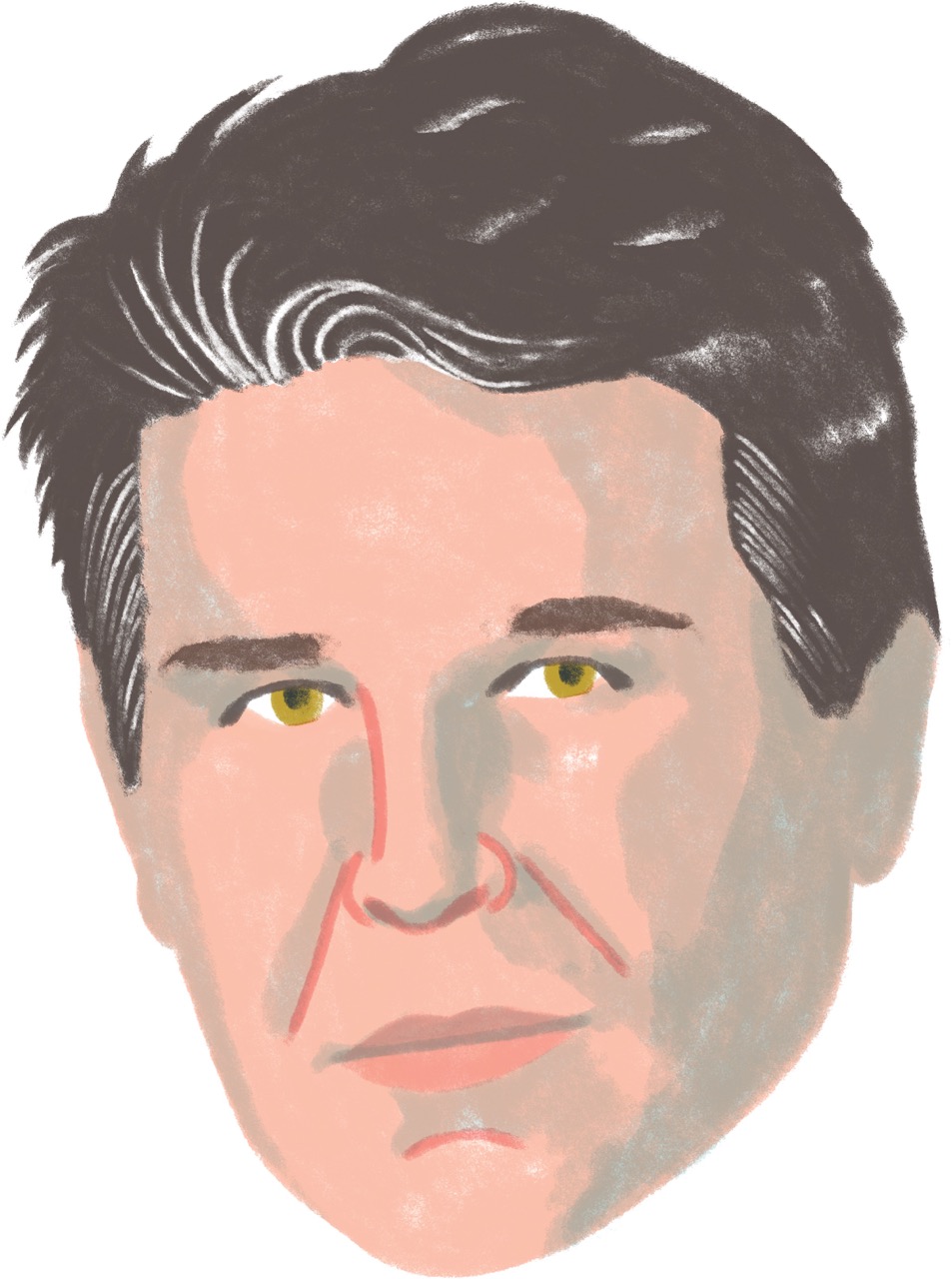
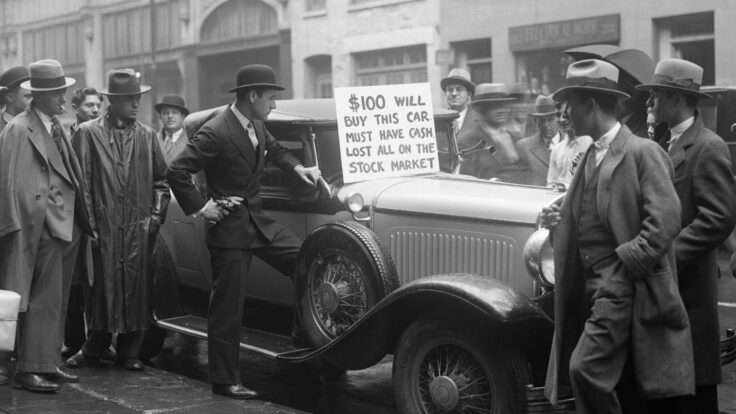
| Loyal Dry Powder readers and listeners of The Powers That Be podcast know that I’ve long been suspicious of the SPAC trend. More than suspicious. And now we finally seem to have reached the end state of the era as SPAC kings like Chamath Palihapitiya are (finally) being taken to court. According to Bloomberg, there are now dozens of investor lawsuits on the docket after more than 100 companies that merged with a SPAC in recent years have seen their shares plummet more than 90 percent.
On the one hand, part of me thinks that anyone stupid enough, or greedy enough, to put their money into a SPAC in 2020 or 2021, after it was more than obvious that SPACs were nothing more than the latest Wall Street-engineered boondoggle, deserves to lose their money (this is not investment advice). And especially so for SPAC “sponsors,” the men and women who organized the SPACs and who essentially got 20 percent of the equity of the SPAC for free, and then could swap that free equity into equity of the company the SPAC merged with, if it was even lucky enough to find a merger partner. There were also plenty of fees to wet lots of whistles, too.
As I am sure the lawsuits are arguing, the incentives in SPAC world were all wrong. They were designed—and somehow approved by the S.E.C. to boot—to reward the SPAC sponsors for getting through the I.P.O. process and then to find a private company to merge with, allowing the private company to go public through the merger. It was all just so much fluff and Wall Street financial engineering at its worst (or best, depending on how you look at it).
Yes, in fairness, the SPAC sponsors had to pay the underwriting, legal and accounting fees related to the I.P.O.—in the many millions of dollars, for sure. And it was not without risks: If the two-year clock expired (or more with the allowed extensions) without a merger being consummated, the sponsors would have to eat the underwriting costs. That’s what happened to my friends Gary Cohn and Cliff Robbins, who together raised $828 million for their SPAC and then announced a $9.3 billion merger with Allwyn, a European lottery operator, in January 2022. (The SPAC boom was still a thing.) Then, nine months later, in September 2022, the merger was called off. Cohn and Robbins ended up eating the $28 million, or so, of underwriting costs themselves since there was no merger partner around to absorb those costs. It was no doubt an expensive lesson for them, in the realities of SPACs. But they’ll be just fine. (I saw Gary the other night at a Manhattan hot spot and he looked and sounded as happy as ever, so this observation is based on my reporting.)
But for other sponsors, like Chamath, or Richard Branson, or Bill Foley, who owns the Las Vegas Golden Knights (now in the Stanley Cup playoffs), or Michael Klein, who got their SPAC deals done, between their free 20 percent equity and the absorbed underwriting costs, SPACs were a bonanza. At that point, everything else was all upside; it didn’t even really matter (to them anyway) how the stock ended up trading in the market over the long haul. Chamath, for instance, pulled some $315 million out of Virgin Galactic in March 2021 and then quit the Virgin Galactic board. (One of Chamath’s SPACs had merged with Virgin Galactic in 2019.) For his part, Branson sold some $1.4 billion worth of Virgin Galactic stock before it collapsed. It is now down 93 percent from its all-time high, in June 2021.
Who got left holding the bag on the Virgin Galactic SPAC voyage? It wasn’t Chamath Palihapitiya, I can promise you that. |
|
|
|
|
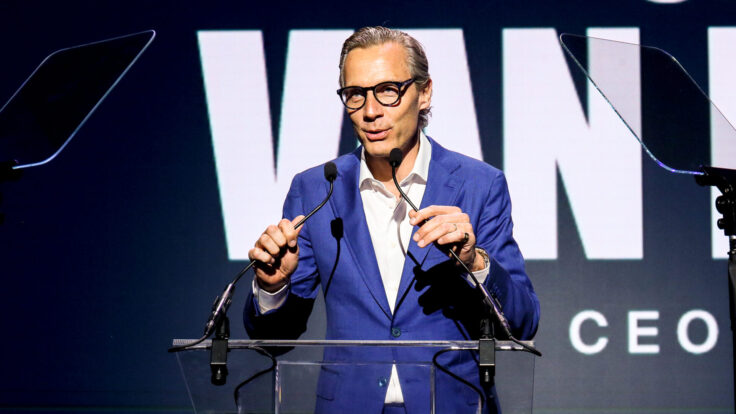
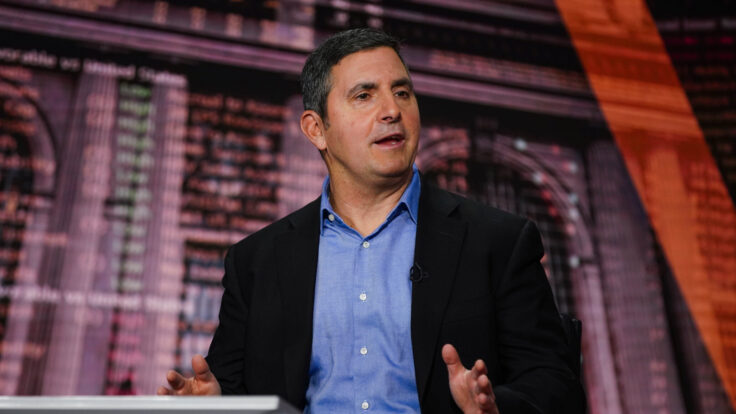
| With all due apologies to, and respect for, Marc Benioff, I really don’t think Salesforce’s turnaround in its first quarter 2024 results had much, if anything, to do with “Ohana culture,” as Benioff said on the earnings call, but rather a lot more to do with good, old-fashioned cost-cutting and a focus on a return to profitability.
Who knows which one of the several hedge funds that piled into Salesforce in recent months put the serious screws to Benioff about the company’s profitability. But it doesn’t really matter. What matters to them is that Benioff seems to have gotten the message and taken it to heart. He was fairly screaming it from the proverbial mountaintops during the company’s recent earnings call. He referred first to the previous earnings call, in March, and how Salesforce had “radically accelerated” its “transformation to profitable growth” without mentioning the invisible hands of the activist hedge funds that had piled into Salesforce, such as Elliott Management and Third Point.
“We shared with you how we hit the hyperspace button across the key areas of our transformation,” Benioff said. “Our progress over the last five months, well, it’s very impressive, and I cannot be more grateful to our entire team.” He hailed Salesforce’s “non-GAAP”—which is of little use or meaning—operating margin for the quarter of 27.6 percent, which would be impressive if it were GAAP, but non-GAAP, whatev. “Incredible,” Benioff said.
It should not require a whole passel of activist investors for a C.E.O. to do what he should have done all along. But, oftentimes, that is exactly what it takes, apparently. “The real lesson is that Salesforce has been managed lazily for years,” Martin Peers wrote in The Information. Of course, that’s not a fact that Benioff appears ready to admit, at least not yet, if it’s even true. He said on the conference call that he had been asked “numerous times” by investors and customers “how we’re able to make so much progress so fast and deliver these incredible numbers.” No mention of the fact that some of the most aggressive activist investors on the planet have piled into the Salesforce equity got him to see the light.
“It’s very simple,” Benioff said. “It’s our Ohana culture. It’s our superpower.” No, it’s not Marc. It’s the fact that you were forced by the hedge funds to focus on profitability for the first time, probably, in years.
Whatever it is—Ohana, superpower, or good old-fashioned cost-cutting—Elliott Management, for one, has got to be pretty happy. Since Elliott’s multi-billion dollar investment in Salesforce became public, the stock is up 40 percent. That has got to be gratifying for my friend Jesse Cohn, who led Elliott’s assault on Salesforce. Jesse has had little to say publicly about Salesforce since March 27, when Elliott dropped its proxy fight to put directors on the Salesforce board. “I have great respect for Marc and his team, and I have become deeply impressed by their strong ongoing commitment to profitable growth, responsible capital return and an ambitious shareholder value creation plan,” he said then. “We look forward to continuing our productive relationship with Marc and the Salesforce team as they accelerate the Company’s transformation.” What more needs to be said at this point? Another victory for the activists. |
|
|
| FOUR STORIES WE'RE TALKING ABOUT |
|
|
|
|
|
 |
|
|
|
Need help? Review our FAQs
page or contact
us for assistance. For brand partnerships, email ads@puck.news.
|
|
|
|
Puck is published by Heat Media LLC. 227 W 17th St New York, NY 10011.
|
|
|
|
|