Welcome back to Dry Powder. I’m William Cohan. I trust your New Year’s holiday
was less aggravating than that of the bankers around the Paramount–Netflix hostile bidding war for Warner Bros. Discovery. When last we spoke, I proffered predictions from some of those close to the deal, and no doubt we’ll be back in the thick of it any moment now—the most exciting deal of 2025 has immediately become the most exciting deal of 2026. It will
be fascinating to see if anything tops it.
Today, for some fun to kick off the year, I’ve got some unsolicited suggestions on how Warren Buffett’s chosen successor, Greg Abel, should deploy the staggering $358 billion in cash on Berkshire Hathaway’s balance sheet.
Mentioned in this issue: Warren Buffett, Greg Abel, Patrick Gerschel, André Meyer, Felix
Rohatyn, Michel David-Weill, Cary Reich, Mike Bloomberg, David Solomon, Ron Perelman, Sandy Weill, and more…
But first… |
-
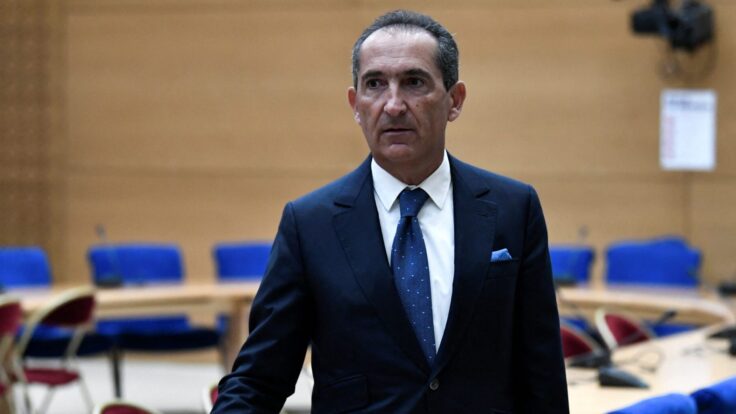
R.I.P. to a Lazard maverick: I want to briefly remember Patrick Gerschel, the former Lazard partner who died at the end of December, age 79, since I won’t be able to attend the shiva for him. Patrick was “associated” with Lazard, as they liked to say, from 1969 to 1982, years before I arrived at the firm in 1989. But his presence was firmly embedded in the bank’s lore, if somewhat obscurely by the time I got there. Patrick, after all, was the grandson
of André Meyer, the titanic Lazard senior partner who ran the firm for decades. He used to roam the corridors of the firm, starting at age 5, and worked summers at Lazard all through his years at Cornell.
Meyer was known around Lazard as “Zeus,” which made Patrick the “Son of God.” But that familial relationship caused Patrick all sorts of problems. Felix Rohatyn, the legendary Lazard senior partner, and Michel David-Weill, the scion of
the firm’s founding family, resented him and did virtually everything they could to ensure that he had no real future at the firm. He was first hired to write research memos on potential M&A targets, but he didn’t like the work, because nobody seemed to have any use for what he wrote—as Felix told him, “People who write memos drive Chevrolets.” Nevertheless, in 1971, at age 25, Patrick became one of the youngest partners in the history of the firm. He was one of the few who was a partner at both
the New York and Paris firms, until Michel kicked him out of the Paris firm when he took it over after his own father’s death in 1975.
Thanks to André, Patrick was one of the highest-paid partners at Lazard for a time, with around a 4.5 percent stake in its annual pretax profits and one of its largest capital accounts—some three times that of Felix. “At first, Patrick was just a nuisance,” one former Lazard banker told the late journalist Cary Reich for his seminal 1983
book about Meyer, The Financier. “But then he became a pain in the neck. André kept pushing him into the middle of conversations with business people about their problems, and Patrick wasn’t capable of handling it. The clients rejected the premise that Patrick was a proper lead man for their business.”
During my interviews with Patrick for my 2007 book about Lazard, The Last Tycoons, he told me his career at the firm ended the day he entered it. “There are two things
that work in an investment bank, ability and legitimacy,” he said. “Felix believes—and believed—that I was incompetent. That destroyed ability. And when André Meyer refused to put me in the saddle, that destroyed legitimacy. Game over. ‘Bien vaincre,’ as they say in French.”
Felix tried to ship Patrick to open a Lazard office in Texas. André thought he should move to San Francisco. Patrick refused both assignments and, in 1978, was demoted to limited partner, meaning he could no
longer attend partner meetings or step foot on the partners’ floor. Four years later, Michel fired him. Patrick had to sue Lazard to get his capital out of the firm; Michel did not want to return it to him. (Patrick also unsuccessfully sued his late mother’s $100 million estate over his inheritance in a Manhattan court. But that’s another story…) Eventually, Patrick opened his own investment firm, on Madison Avenue, where he defiantly displayed the framed letter from Michel firing him from
Lazard.
|
|
|
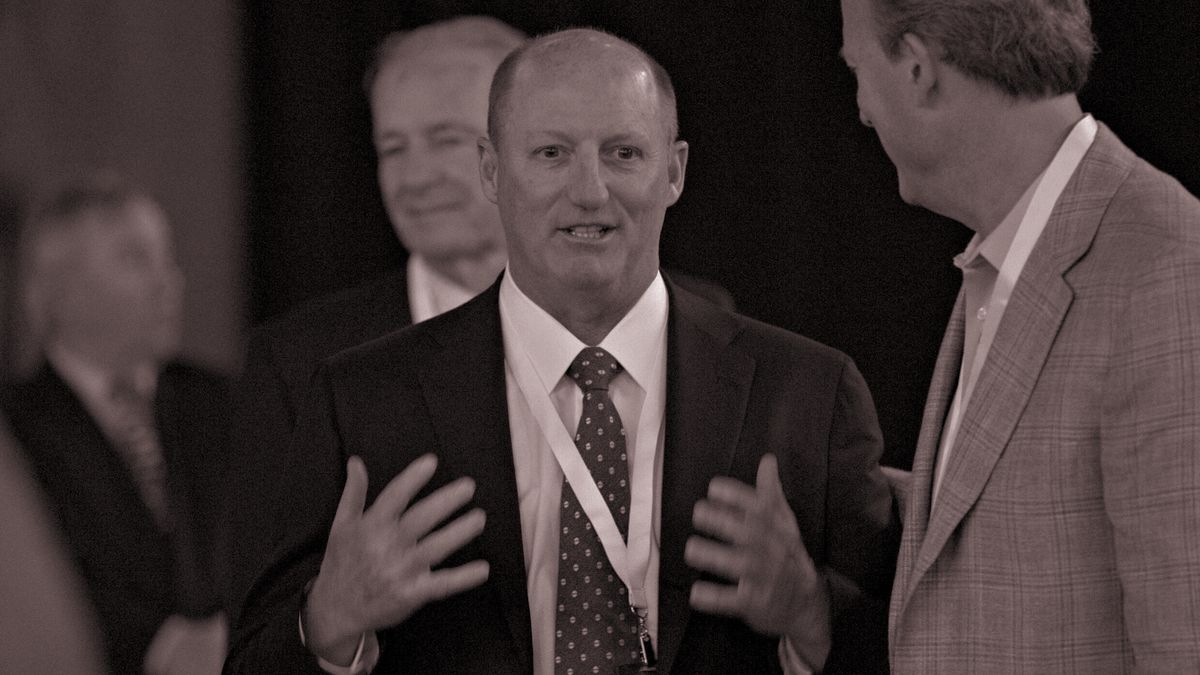
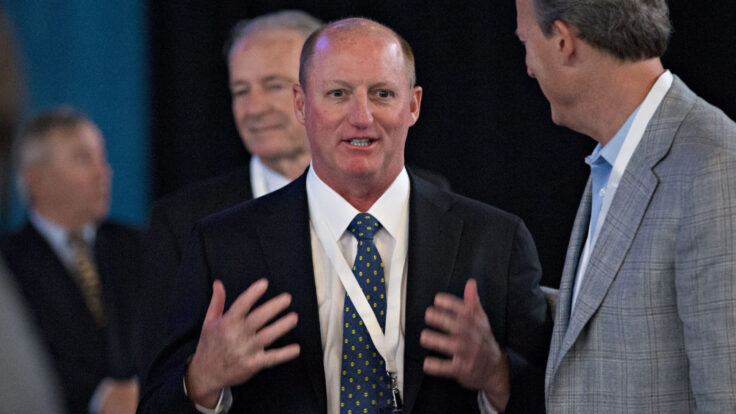
Greg Abel, the handpicked successor to Warren Buffett, faces one of the most exalted and
daunting jobs in finance: determining what to do with the staggering $358 billion bequeathed to him by the most legendary investor of his generation. Herewith, three proposals for what Abel should buy with all that cash. |
|
|
Once upon a time, when I was a banker, one of my responsibilities was to come up with actionable ideas for
companies that private equity firms could invest in or buy outright. This was decades ago, mind you, when private equity firms were known as L.B.O. businesses—very small and entrepreneurial shops filled with partners willing to listen to a banker who might have a random idea that could be spun into gold for their L.P.s or G.P.s. It was a weird assignment: If the idea hit, the unstated arrangement was that the firm would hire me and the bank to advise on the deal and provide financing.
It
didn’t always work that way, of course, but the old muscle memory kicked in last week as Warren Buffett, aged 95, finally served his last day atop Berkshire Hathaway and formally handed the reins to Greg Abel, his chosen successor. Abel, who is 63, now faces one of the most exalted and daunting responsibilities in the world of finance: determining what to do with the astounding $358 billion in dry powder bequeathed to him by the most legendary investor of his
generation. So, as a former M&A banker once tasked with coming up with wacky acquisition targets for companies, allow me to humbly propose a few ideas. (Full disclosure: I’m a longtime Berkshire Hathaway shareholder myself. This is not investment advice.)
First, of course, any acquisition ought to be big: Berkshire Hathaway, after all, is now a $1 trillion market cap company. Buying a small company just won’t cut it, unless it’s an add-on to an existing Berkshire business, and maybe not
even then. It also has to be an iconic company, one that has stood the test of time and the vicissitudes of various economic cycles. It should have a highly defensible position in the marketplace—a “moat,” so to speak—that would be extremely difficult for competitors to penetrate. Finally, it has to have a first-rate management team: Berkshire is really just a holding company for equity positions in other companies that continue to be run by their existing leadership.
As we
all know, Warren spent the past few years doing very little on the acquisition front—preferring to be a seller, rather than a buyer, in this overheated market. (His primary focus had been futzing around with the $25 billion or so the firm has tied up in Occidental Petroleum.) So let’s move the needle for Berkshire. Herewith, three suitable big ideas for Greg Abel. |
The
Bloomberg Opportunity
|
First up, Greg should buy Bloomberg L.P., which is probably valued around $125 billion these days.
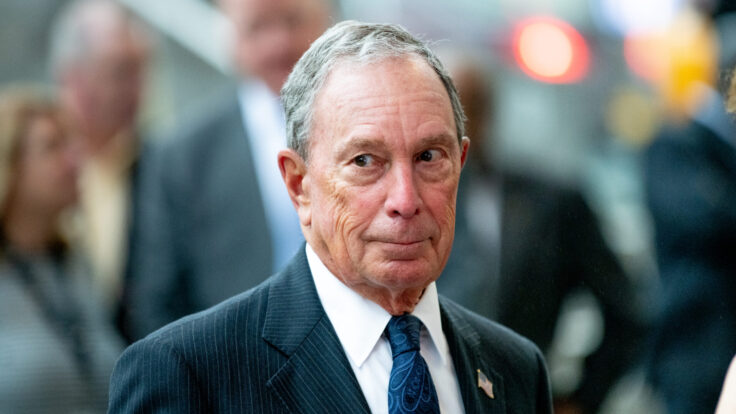
Mike Bloomberg, the controlling shareholder with 88 percent ownership and around a 91 percent voting stake, could run the company for another decade or more—his mother lived to be 102 years old. But he still needs to think about succession, as I wrote in November. As best as I can tell, Mike last commented on his plans for the future of Bloomberg
L.P. at a climate summit in September 2023, where he revealed that his Bloomberg Philanthropies would inherit his stake in the company. But, he added, “because of tax laws,” the foundation will “have to get rid of it” within five years.
And what better buyer could there be than Berkshire Hathaway? The cash is there, even if it takes $150 billion or more to buy the whole thing. In the meantime, why not think about taking steps toward that long-term outcome, by selling a minority stake in
Bloomberg L.P. to Berkshire? It sure seems like a perfect fit for Berkshire: There is obviously a highly competent management team, and it has a highly unique and seemingly impenetrable niche in providing real-time trading data to a loyal group of devoted customers willing to pay $30,000 a year to rent a Bloomberg terminal.
Yes, the Bloomberg terminal has competitors, such as a division of the London Stock Exchange and Capital IQ, a division of S&P Global, as well as FactSet. But there is
little question that Bloomberg is the market leader. Bloomberg L.P. is a private company with minimal financial disclosure at best. If Bloomberg sells to Berkshire, as opposed to doing an I.P.O. or some other merger, chances are good that its financials can remain largely hidden in the overall Berkshire disclosure statements, assuming that might be a desirable outcome for Mike. To me, this seems like a match made in heaven between two billionaire moguls: Warren, with a net worth of around $150
billion, and Mike, with a net worth of around $100 billion. Go for it, Greg. |
Okay, maybe that one won’t work for any number of reasons—maybe Mike isn’t ready to sell, or maybe Bloomberg
L.P. has to sit with Bloomberg Philanthropies for some number of years for tax reasons. So let’s move on to something that could get done right now: Goldman Sachs. That’s right, for a mere $300 billion or so, Goldman Sachs can be yours, Greg. (It has a market cap of $270 billion, and I’m applying a premium.) The premium would normally be more, and maybe it will take more to get David Solomon and his board to sell to Berkshire—the folks at Goldman know something about selling
companies—but the Goldman stock is up 55 percent in the past year, so it’s already had quite the run.
Would David sell Goldman Sachs? I have no idea, but Berkshire bestows a certain prestige on a company. Like Bloomberg L.P., Goldman seems like a classic Berkshire company: It has a long history, since 1869, of performing well through every manner of economic cycle, with a highly defensible position in its industry. Yes, there is plenty of competition in financial services, but Goldman
Sachs has proved to be the gold standard of the industry through thick and thin.
Plus, Berkshire already has had a highly positive experience investing in Goldman Sachs. Back in 2008, at the height of the financial crisis, Warren invested $5 billion in Goldman through one of his patented preferred stock investments, with a 10 percent dividend—generating $500 million every year for Berkshire—plus warrants to buy another $5 billion of Goldman stock. It was a big vote of confidence from
Warren in Wall Street and Goldman at a time when the financial system looked like it might implode. (Warren also invested in Bank of America and GE, after its big financial services arm floundered during the financial crisis.) By the time Warren sold out of Goldman completely, in 2020, he had reaped a profit of some $3.8 billion on his original $5 billion investment.
There are other precedents for this sort of transaction. Back in 1987, Buffett invested $700 million in Salomon
Brothers, the big Wall Street investment bank, in the weeks prior to the 1987 stock market crash. Buffett acted as a so-called “white knight” for Salomon, which was facing a hostile takeover from none other than Ron Perelman. But things turned dark on the Salomon front four years later, when the firm found itself engulfed in a scandal involving the alleged manipulation of the market for Treasury securities. Buffett ended up becoming Salomon’s interim C.E.O. and then cleaned
house before Salomon was eventually sold to Sandy Weill’s Travelers Group in 1997. It was an unpleasant 10-year saga for Warren, although he ended up making about $1 billion in profit on the sale of Salomon to Travelers.
Of course, Goldman now is not like Salomon Brothers then. Solomon runs a tight ship down at 200 West Street. Would David sell the company to Berkshire? Depends on the price, obviously. What better way for Goldman to end its 26-year tenure as a public
company than by selling to Berkshire Hathaway and yet be able to keep strutting its stuff? |
Berkshire also had a positive experience investing $3 billion in GE, just weeks after it invested $5 billion
in Goldman. By the time Buffett finally exited the GE investment in 2017, he had made a profit of $1.5 billion, a 50 percent gain. Around the same time, he also invested in Synchrony Financial, a provider of private-label credit cards, that had been spun out of GE. He held a stake in Synchrony for about four years, generating a profit of around $200 million on his original $500 million or so investment.
I mention all this because I think a third
opportunity for Abel would be buying the remains of GE in the wake of the spinoffs of its healthcare and power businesses. GE, of course, is no longer a conglomerate, as I documented in Power Failure, my 2022 book chronicling its rise and fall. What’s left of the original GE is known as GE Aerospace, the world’s largest manufacturer and servicer of jet engines, found in three out of every four commercial flights globally. The moat around GE Aerospace is quite large and nearly
impenetrable. In other words, another perfect potential Berkshire Hathaway acquisition candidate.
The problem is that GE Aerospace now has a market cap of $333 billion, so it would use up every bit—and more, probably—of Berkshire’s cash hoard if Greg decided to buy it. It would be, by far, the largest acquisition in history, and by far Berkshire’s largest acquisition. And unlike Goldman, which has a price-to-earnings ratio of around 18, GE Aerospace has gotten quite pricey. The stock is
up 132 percent since it became the successor company to GE in April 2024, and its P/E ratio is more than 40x. Still, it does strike me as just the kind of company Berkshire should own—a technological leader in a capital-intensive and ever-growing and changing industry, with few competitors. (It operates in a “duopoly of duopolies,” or so it’s said—a very big moat indeed.) It could be done, but only if Greg decided to shoot the moon.
I suspect that Greg—and Warren, who remains chairman of
the Berkshire board of directors—will have any number of reasons not to do any of the three deals suggested above. But the cash hoard is sitting there, earning perhaps 4 or 5 percent a year from short-term U.S. Treasury bills and other cash equivalents. It could be earning much more than that if Berkshire were to step up and swing for the fences by buying one of these companies. And Greg probably has to make some sort of move early on, so that the market knows Berkshire Hathaway still has a
pulse. |
|
|
Puck sports correspondent John Ourand and a rotating cast of industry insiders take you inside the executive suites and owners
boxes where the decisions that shape the entire sports business are made. You’ll hear interviews with players, network execs, and everyone in between. The Varsity is an extension of John’s private email for Puck by the same name. New episodes publish every Wednesday and Sunday. |
|
|
Puck’s daily political newsletter from Washington on what’s really happening in this town, from the White House to the Pentagon
to Capitol Hill, K Street, and the campaign trail. |
|
|
Need help? Review our
FAQ page or contact us for assistance. For brand partnerships, email ads@puck.news.
You received this email because you signed up to receive emails from Puck, or as part of your Puck account associated with {{customer.email}}. To stop receiving this newsletter and/or manage all your email preferences, click here. |
Puck is published by Heat Media LLC. 107 Greenwich St., New York, NY 10006 |
|
|
|