 |
 |
|
Happy Wednesday. I’m Bill Cohan.
|
|
Welcome back to Dry Powder. In today’s issue, a close look at how UBS’s Swiss-government-assisted acquisition of Credit Suisse is, in many ways, a funhouse-mirror version of JPMorgan Chase’s Fed-assisted deal for Bear Stearns. The idiosyncrasies of this deal—and there are many—could forever change Wall Street.
|
|
|
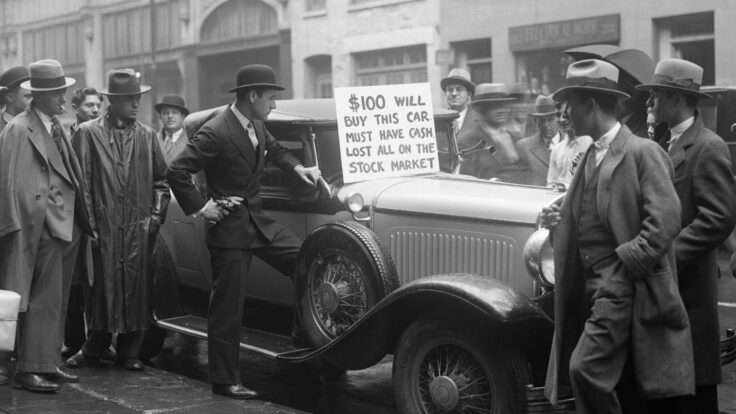
| Fifteen years ago, just as it was beginning to look like Bear Stearns was about to go down the tubes, I remember thinking of that old Hemingway line about bankruptcy from The Sun Also Rises, how it happens “gradually, then suddenly.” After a prosperous 85-year run on Wall Street, some of Bear Stearns’ debt was trading at around 30 cents on the dollar. And its equity, which had traded as high as $171 a year earlier, was collapsing. The confluence of these events revealed to the markets that Bear’s bankruptcy was imminent. In fact, as I know from reporting my 2009 bestseller, House of Cards, Bear was ready to go kaput that March of 2008. The bankruptcy papers had already been drawn up.
Bear’s demise seemed like it would prove to be a financial disaster for its equity holders, who would presumably be wiped out. But, of course, since this is Wall Street, there were plenty of people who would likely be enriched by its demise. Many clever investors, who had bought Bear’s credit default swaps (betting correctly that the bank would default on its debt), or who had purchased short-dated put options (betting that its stock would go to zero, and fast) seemed poised to make a killing. They were certain to be rewarded for their astute analysis that Bear Stearns was about to eat a shit sandwich.
But that’s not what happened. Political, extra-financial forces took hold. The Federal Reserve, working closely with the U.S. Treasury and JPMorgan Chase C.E.O. Jamie Dimon, decided that Bear Stearns was too interconnected to the entire financial system to be allowed to fail—that its collapse would initiate a series of unfortunate events that could have resulted in a serious and prolonged economic crisis. Instead of allowing Bear Stearns to go down the tubes, Bear Stearns was “bailed out” by a combination of JP Morgan Chase and the Feds. Dimon agreed to pay $2 a share for the equity of Bear Stearns, a bid that was later quintupled to $10 a share for reasons that have never been fully explained. Jamie will almost certainly never tell me, but maybe my friend Hank Paulson will one day. (Hank, lemme know.) |
|
A MESSAGE FROM META
|
 |
| Field trips in the metaverse will take learning beyond the textbook.
Students learning about prehistoric eras will use virtual reality to take field trips to the Ice Age and visit the woolly mammoths. As a result, students will not only learn their history lessons - they’ll experience
them.
The metaverse may be virtual, but the impact will be real.
Explore more possibilities with the metaverse. |
|
|
| Anyway, since JPMorgan Chase had agreed to buy the equity, it also assumed Bear’s existing debt. Suddenly, the holders of that Bear debt no longer had to worry about whether the bank would be able to repay what it owed them since the new sugar daddy was JPMC, home of Dimon’s “fortress balance sheet.”
It didn’t take long for the debt market to figure out what had transpired. The Bear debt that had been trading for 30 cents on the dollar soared in value and nearly immediately started trading at par, or 100 cents on the dollar. Those investors who had bought Bear’s credit default swaps, betting that the bank would fail, were now the ones eating the shit sandwich. Their credit default swaps were worthless, or nearly so.
What a stunning turn of events: These investors had conducted all the right analysis and made the correct financial bet, but still lost in the end because they hadn’t contemplated the possibility of a first-of-its kind federal government rescue. Conversely, those people who either continued to hold the Bear debt that they probably bought at par, or those people who had bought the debt at a discount on the lark of an idea that somehow it would trade up, got rewarded for either their stupidity or their dumb luck.
I’ve had 15 years to think about this particular unintended consequence of JPMorgan Chase’s Fed-assisted deal for Bear Stearns and I’ve never been able to come to grips with what happened. Why were the people who were right not rewarded? Why were the people rewarded who were wrong? Is that just the way it goes sometimes when things are moving so quickly and real danger is at the door? And now, it’s happened again, only in reverse, in the case of UBS’s Swiss government-assisted acquisition of its long-struggling rival, Credit Suisse. |
|
|
| Like JPMorgan Chase did with Bear Stearns fifteen years earlier, UBS was able to drive a hard bargain for Credit Suisse, since it really didn’t want to do the deal at all. “This acquisition is attractive for UBS shareholders but, let us be clear, as far as Credit Suisse is concerned, this is an emergency rescue,” explained UBS Chairman Colm Kelleher, a former Morgan Stanley executive, at the time the deal was announced. “We have structured a transaction which will preserve the value left in the business while limiting our downside exposure.”
Indeed, it did. UBS agreed to pay roughly $3.25 billion for the equity of Credit Suisse, or about 90 cents for each Credit Suisse share, which is down about 95 percent in the last five years. That sounds like a bargain price, especially for a once-powerful 167-year-old international bank that was an important player on Wall Street. And, to boot, there won’t even be a shareholder vote to approve the deal; it is already a fait accompli.
If the UBS-Credit Suisse deal were structured like JPMorgan Chase’s deal for Bear Stearns, UBS would have also assumed Credit Suisse’s $170 billion, or so, of debt and the price of that debt, which had been trading at a discount in the weeks leading up to the deal, and would have traded up to par, or near par, given that the obligor on the debt became the much healthier UBS, not Credit Suisse. And that largely has been what happened, except for some $17.2 billion of Credit Suisse debt known as Additional Tier 1 (AT1) bonds, which will be written down to zero on the orders of the Swiss regulator, known as FINMA.
These kinds of bonds, which can be converted to equity at the issuer’s request, were born in the wake of the 2008 financial crisis, as a way to give big European banks more Tier 1 equity capital, if necessary. In other words, these AT1 bonds were always considered to be risky given that they could be converted to equity in times of trouble. But, needless to say, for an entire class of bondholders to get wiped out unilaterally by a regulator while the equity beneath the bonds receives a non-zero recovery, in this case the aforementioned $3.25 billion, is extremely rare.
The way things usually work, of course, is that creditors have the first claims on a corporate carcass. They have a contract that says they will get paid back. And there is even a priority among creditors—with so-called senior secured creditors having the first claim on the assets, or the value of the estate, followed by other senior unsecured claimants, followed by subordinated unsecured claimants, followed by convertible debt holders, preferred equity holders and then, at the bottom of the pecking order, common equity holders. On Wall Street, this is known as the “absolute priority rule,” and of course there are nuances and fights over what various provisions in various debt indentures mean. And bankruptcy allows contracts to be abrogated. This is the preserve of $2,500-an-hour bankruptcy attorneys and savvy hedge fund managers and distressed debt investors, and it’s not for the faint of heart. (For what it’s worth—and this will have you scratching your head—Wilbur Ross, the former president’s octogenarian and often sleepy Commerce Secretary, was once one of the cleverest players in the bankruptcy game.)
That’s not how it played out at Credit Suisse. It would have been one thing for the AT1 bonds to get less than a par recovery, while the equity holders also got some crumbs. But for the AT1 bonds to get nothing while Credit Suisse’s equity holders get $3.25 billion is making those bondholders crazy and litigious, to put it mildly. FINMA’s action “can be interpreted as an effective subordination of AT1 bondholders to shareholders,” Goldman Sachs’ credit strategists wrote in a recent research report. “It also represents the largest loss ever inflicted to AT1 investors since the birth of the asset class post-global financial crisis.”
If Credit Suisse had filed for bankruptcy, as Lehman Brothers did in September 2008, there would be a years-long fight in bankruptcy court about how to divide up the Credit Suisse remains. But at the end of the fight, the likely outcome would have been that the holders of the AT1 bonds received some recovery on their $17 billion of bonds, and in any event, it would be difficult to imagine a scenario where the Credit Suisse shareholders would get $3.25 billion and the AT1 bondholders get wiped out. That would likely never happen as part of a bankruptcy filing.
But since UBS, working with the Swiss authorities, negotiated the deal for Credit Suisse under duress, the decision was mysteriously made that the AT1 bondholders would get zero while the shareholders got the $3.25 billion. The fact that the shareholders received billions suggests that the bank was solvent, making the decision to wipe out the AT1 bondholders even more of an anomaly.
Among the bondholders, who likely bought the AT1 bonds at a steep discount, perhaps as low as 20 cents on the dollar, hoping for the kind of asymmetrical payoff that Bear Stearns’ bondholders got from JPMorgan Chase, are hedge funds, such as Davidson Kempner, Redwood Capital Management, and Centerbridge Partners. Par bond buyers, such as Invesco and Pimco, were left holding the wiped-out AT1 bonds. |
|
|
|
|
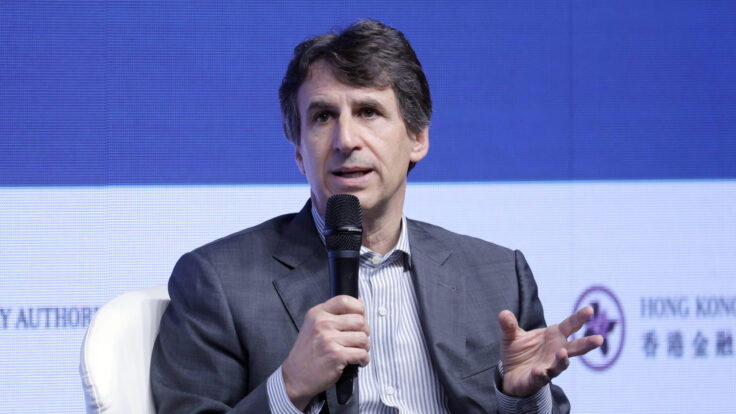
| This is the kind of seismic event in the credit markets that gets deep-pocketed hedge funds and money managers riled up, and lawyered up. Quinn Emanuel held a conference call for these aggrieved bondholders last week and 750 participants joined the call. This decision has also greatly upset the natural order of things on Wall Street. Bill Winters, the former JPMC co-head of investment banking who is now the C.E.O. of Standard Chartered Bank, in the U.K., told a financial forum in Hong Kong that the decision will have a “profound” effect on how banks are managed.
Meanwhile, the price of similar AT1 bonds at other European banks—among them Barclays, Standard Chartered, BNP Paribas and Deutsche Bank—fell sharply last week in the wake of FINMA’s decision. FINMA C.E.O. Urban Angehrn gave what reads like a weak defense of his ruling. “A solution was found to protect clients, the financial centre and the markets,” he said. “In this context, it is important that Credit Suisse’s banking business continues to function smoothly and without interruption.”
Maybe. Other European regulators, such as the European Union, which Switzerland is not part of, distanced themselves from the FINMA decision. The E.U. noted, correctly, that there is a specific order in which “shareholders and creditors of a troubled bank should bear losses.” And that, “In particular, common equity instruments are the first ones to absorb losses, and only after their full use would Additional Tier 1 be required to be written down. This approach has been consistently applied in past cases and will continue to guide the actions of the SRB [Single Resolution Board] and ECB [European Central Bank] banking supervision in crisis interventions.”
Yes, AT1 bonds are risky and accordingly offer investors a higher rate of interest to compensate them for the risks they are taking. And, yes, the AT1 bonds contain specific language telling bondholders they could be converted to equity during times of existential crisis to the bank. That’s fine. But for Credit Suisse equity holders to get more than $3 billion while the AT1 bondholders get zero is the kind of decision that begs for litigation, especially when more than $17 billion worth of bonds is reduced to nothing by a regulator’s decision.
Who knows how this will turn out—it’s Switzerland after all, the land of banking black boxes—but in a fair and just world, the Credit Suisse equity holders would get the metaphorical equivalent of a penny while the AT1 bonds would get the $3.25 billion, or 19 cents on the dollar. If that were to happen, the wiseguy bondholders who bet correctly that Credit Suisse would fail would get their few crumbs and wouldn’t have much of a litigation leg to stand on. Instead, they are fired up and ready to fight. I was hoping to speak with Thomas Kempner, the billionaire founder of Davidson Kempner, to get a sense of how the AT1 bondholders were feeling about the FINMA decision, but he declined to chat. I assume he’ll soon be speaking his mind in court filings. And that’ll probably be close to the top of UBS’s returning C.E.O. Sergio Ermotti’s agenda. |
| The Michael Klein of It All… |
|
| There were at least two other fascinating outcomes in the wake of the collapse of Credit Suisse. First was the fate of Michael Klein, the former Citigroup banker and SPAC opportunist who advised Credit Suisse, for a $10 million fee, on a restructuring that he was trying to pull off as the bank finally collapsed. (He was also on the Credit Suisse board at the same time.) As my readers know, Klein’s idea was to have Credit Suisse spin off the firm’s investment banking division as its own entity, by resurrecting the old First Boston shingle and with Klein running the show. Prior to last week’s deal with UBS, Klein was busy trying to raise capital for the revived First Boston and probably thinking about an I.P.O. (I suspect it was a difficult slog on both counts.)
He also managed to get Credit Suisse to buy his eponymous firm for $175 million in notes and stock. But presumably that deal is no longer on the table and Klein will no longer be part of UBS’s deal for Credit Suisse. One Credit Suisse banker wrote to me that the Klein deal was “D E A D” and that he thought Klein would likely sue UBS, “asking for a pile of money,” but that he hoped Klein ended up with nothing. (He couldn’t believe Klein got a $10 million advisory fee.) In fact, UBS, which has always had a love-hate relationship with its own investment bankers, will likely only cherry-pick the Credit Suisse investment bankers it wants—in media, technology and healthcare—while showing the door to the rest of the lot. Michael Klein will have to wait another day or so for another ridiculous payday. |
| And Now For that Crazy Tidjane Thiam Piece… |
|
| The other bizarre event that occurred in the wake of the UBS deal for Credit Suisse was Tidjane Thiam’s rather startling opinion piece in the Financial Times on March 23. Thiam, of course, was the C.E.O. of Credit Suisse from March 2015 to February 2020, when he was forced to resign in the wake of the so-called “Spygate” scandal, whereby one of Thiam’s top lieutenants arranged for a private investigator to spy on Iqbal Khan, a Thiam rival who ran Credit Suisse’s wealth management division and then left for rival UBS. (Ironically, Khan is now leading part of the efforts to retain Credit Suisse’s wealth managers as part of the takeover.)
The Spygate scandal, and its aftermath, was the beginning of the end for Credit Suisse, which was founded in 1856. It took three more years and a few more scandals, including those involving Greensill Capital and Archegos, for the bank to finally disappear. But, of course, Thiam made no mention in his FT piece of his role in Spygate and in the demise of Credit Suisse. Instead, he boasted of his successes at the bank and all the things he did to make things better.
Needless to say, from my reporting, it is a matter of some considerable debate inside Credit Suisse as to whether Thiam made things better at the bank or whether he started it on its road to perdition. “We managed to get through 16 quarters without a serious issue, had more than $200bn of wealth management inflows, cut risk and cut both operating and legacy costs,” Thiam boasted. “By 2019, Credit Suisse was making nearly as much profit as its new owner UBS. Its current plight saddens me.”
Well, OK, Thiam, but how about fessing up to your own role in this outcome? Alas, that will have to wait until he makes himself available to the media to answer questions, something he admits to not doing since he left the bank three years ago. “I have mostly refrained from commenting on Credit Suisse, but the turn of events now compels me to speak,” he wrote in the FT. He did, though, manage to weigh in on what happened to the AT1 bondholders. He argued that it would end up strengthening the U.S. and Asian banks at the expense of the European banks that rely on AT1 bonds to help bolster their capital position. Now AT1 bonds face an uncertain future. Thiam was right about one thing, though. “What happened will play out in the courts for years,” he wrote.
It’s been quite a two weeks in the banking sector, what with the demise of Silicon Valley Bank (and the acquisition by First Citizens Bank of part of SVB), Signature Bank, Credit Suisse and the ongoing uncertainty surrounding First Republic Bank. These failures represent the unintended consequences of poor management decisions and the policies of central banks around the world to keep interest rates near zero between 2009 and 2022. But, it’s worth noting, this isn’t like the financial crisis that befell us in 2008, at least I don’t think it is. Already it feels like the fever is breaking, although it’s probably still too early to tell for sure. After all, when Bear Stearns failed 15 years ago, many people thought the worst was over, only to realize that it was the calm before the tsunami, which hit six months later. |
|
|
|
| FOUR STORIES WE’RE TALKING ABOUT |
 |
|
 |
| Biden vs. the “Blob" |
| D.C. foreign policy insiders are growing exasperated with Biden’s Ukraine strategy. |
| JULIA IOFFE |
|
 |
| The Netflix Superpower |
| A surprise hit reveals the streamer’s nonpareil distribution capability. |
| JULIA ALEXANDER |
|
 |
|
|
|
|
|
 |
|
|
|
Need help? Review our FAQs
page or contact
us for assistance. For brand partnerships, email ads@puck.news.
|
|
|
|
Puck is published by Heat Media LLC. 227 W 17th St New York, NY 10011.
|
|
|
|