 |
 |
|
Welcome to Dry Powder. I’m William D. Cohan.
In today’s issue, a look at a long-simmering Wall Street legal drama over (what else?) compensation, in which AIG Financial Products is facing off against a group of former executives who helped gut the financial system back in 2008. Do the guys who almost wrecked the economy deserve the $500 million they claim they’re owed? I would love to hear from any of you who have thoughts on this fascinating moral, financial, and legal dilemma.
More on that below the fold.
But first…
- The Illumina nightmare ends: Alas, in what is probably the final twist in a saga that I’ve been following closely, Europe’s top court has rejected the finding of European Union regulators that Illumina, a California biotech company specializing in gene splicing, had to divest itself of Grail, a lab testing company it started in 2015, spun off in 2016, and bought back for $8 billion in 2021. (Grail did not do any business in Europe.) Based on the E.U. regulators’ earlier ruling, Illumina had spun off Grail again in June and also attracted the attention of activist investor Carl Icahn, who ended up with Illumina board seats. These various headaches—a fight with Icahn, the distractions of the divestiture, the nitpicking of E.U. regulators—cost former Illumina C.E.O. Francis deSouza his job. He also left the Disney board of directors in April, after six years.
In 2023, you’ll recall, Lina Khan’s Federal Trade Commission had also ordered Illumina to divest Grail, arguing that owning the subsidiary would reduce competition for various life-saving tests. In any case, the European court’s ruling means that Illumina no longer has to pay the roughly $500 million fine that E.U. regulators had imposed on the company. It’s moot of course, since Illumina spun off Grail as its own public company, and deSouza is now co-founder of the newly formed SynthLabs, an A.I.-related software company, with backing from the likes of Microsoft and Eric Schmidt. In a statement, Illumina noted that the court’s ruling confirmed its “long-standing view that the European Commission exceeded its authority by asserting jurisdiction over this merger.” What a reckless, costly mess. Thanks, guys.
- And now, here’s my partner Eriq Gardner with a Shari Redstone legal update: As I previously reported, a Delaware judge has refused Rhode Island’s request to obtain Shari Redstone’s texts and emails as the state’s treasurer investigates a potential breach of fiduciary duties in her attempt to sell Paramount Global. (Rhode Island’s state employee pension fund holds a stake in Paramount.) Now that an appeal is underway, a closer look at the judge’s surprising basis for denying access…
Under Delaware law, a shareholder may inspect a corporation’s books and records if there is a credible basis to suspect wrongdoing. But what’s the definition of credible? In this case, Rhode Island relied heavily on reports from media organizations like The New York Times, TheWall Street Journal, and yes, Puck, which depicted Redstone as pushing Skydance to overpay for her NAI shares while potentially ignoring bids more advantageous to other shareholders. The problem, as Magistrate Judge Selena Molina saw it, was that the flurry of articles all cited anonymous sources, which the judge equated to reporting rumors and considered weaker than hearsay, and thus insufficient for establishing a credible suspicion of wrongdoing.
Rhode Island is now challenging this view, foregrounding the issues of journalistic integrity and the delicate nature of source anonymity. The state’s legal team argues that Molina erred in dismissing the journalists’ accounts of the deal’s intricacies, setting up a fascinating debate for a Delaware chancellor to resolve. (For the record, Puck stands by its sources and just because they requested anonymity does not make them any less credible or the facts they are sharing any less accurate!)
|
 |
| A $500 Million Comp War Morality Tale |
| A cohort of former AIG Financial Products executives—the same guys who helped precipitate the 2008 financial collapse—have come to collect the hundreds of millions they claim they’re owed. Only on Wall Street… |
|
|
|
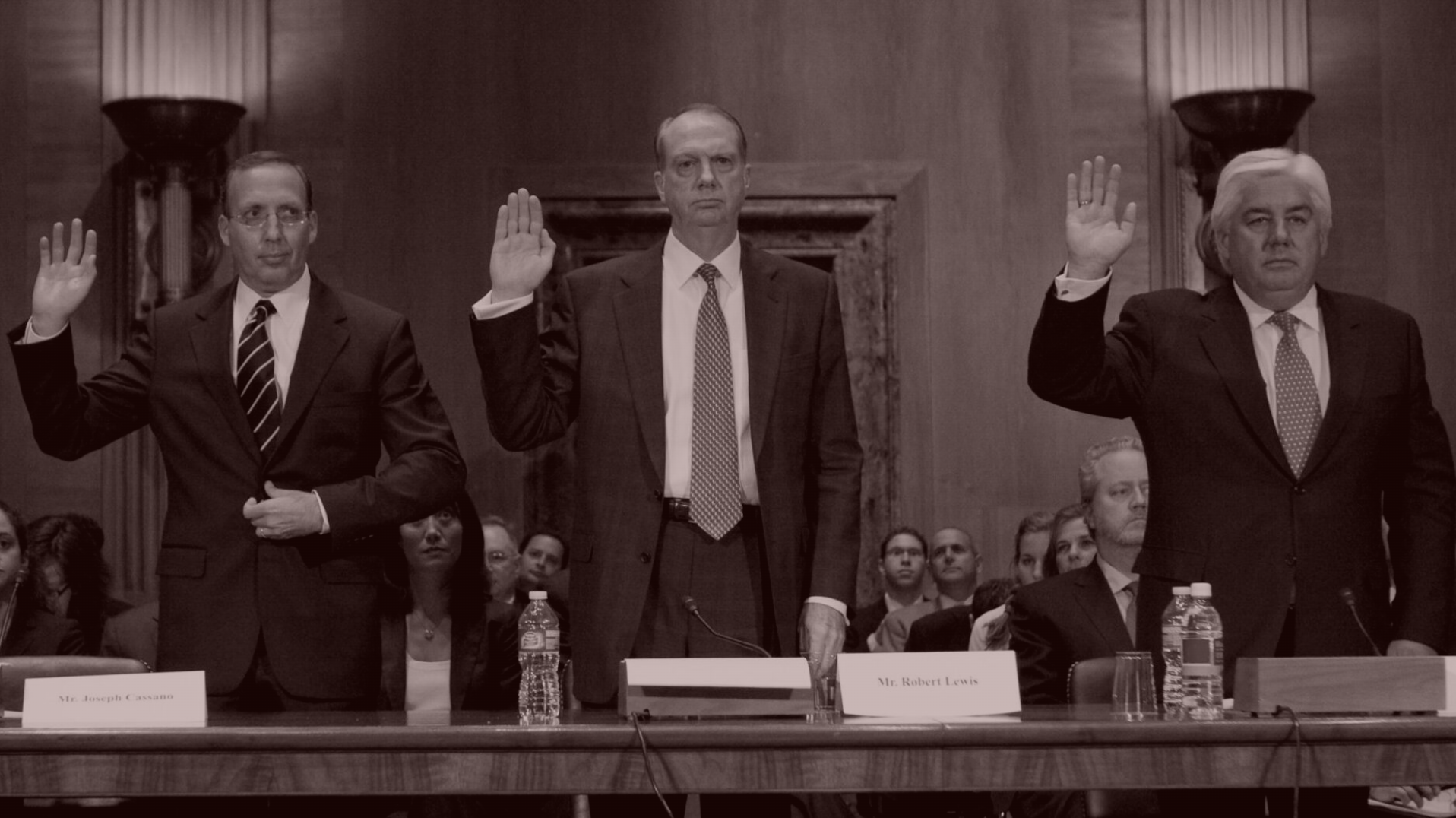
| As summer ends, I’ve been tracking a very Wall Street row concerning (what else?) compensation. The fascinating legal battle, now entering its second decade, pits AIG Financial Products—the derivatives-hedging subsidiary of AIG, the insurance behemoth with a market value of nearly $50 billion these days—against 46 of its former executives who helped gut the financial system back in 2008 by underwriting and selling highly controversial insurance products. The former executives are seeking some $500 million in deferred compensation, including damages, for their hard work, which wound up costing taxpayers a cool $185 billion in bailouts.
The group has filed lawsuits in both the U.K. and Connecticut, where AIGFP is headquartered. In 2022, AIGFP, which is still a wholly owned subsidiary of AIG, filed for bankruptcy protection in Delaware, ostensibly to avoid paying the executives the money they are demanding. It’s as crazy as it sounds, and the litigation is ongoing in Delaware bankruptcy court, where the former employees are now seeking their deferred cash. (The Connecticut litigation has been stayed, given the AIGFP bankruptcy filing.)
The plaintiffs claim that AIGFP forced them to defer a big chunk of their compensation when the shit started to hit the fan in 2007 and 2008. And then, according to their wacky theory of the case, AIGFP supposedly borrowed from that pool of deferred money when the shit really hit the fan—and ultimately refused to repay them. Of course, these former employees were part of the AIGFP business that so thoroughly mispriced risk in the years leading up to the financial crisis that the federal government was forced to step in with the single largest corporate bailout in American history.
Yes, AIG has since paid back the money it borrowed from the Federal Reserve and the Treasury, netting the government a profit of around $20 billion. And yes, AIG is once again a thriving and profitable—albeit much smaller—insurance company under the leadership of Peter Zaffino, who had nothing to do with creating and nurturing AIGFP back in the day. But do the guys who wrecked the economy deserve their money, as claimed? It’s an interesting question—morally, financially, and contractually—that the Delaware bankruptcy court must now try to answer. |
|
A MESSAGE FROM OUR SPONSOR
|
 |
| Reimagining the Defense Industry
As the world continues to digitalize and new challenges arise, governments are updating their cybersecurity defense systems and shifting from large traditional assets to advanced, smaller tech systems like autonomous drones. The Global X Defense Tech ETF (SHLD) invests in dozens of companies that may revolutionize the defense industry.
Explore the Investment Case Behind SHLD. |
|
|
|
|
| The infamous Hank Greenberg, who is still kicking at 99 years old, created AIGFP in 1987 by hiring a group of traders from the now-long-defunct investment bank Drexel Burnham Lambert, led by Howard Sosin, who supposedly had a better model for valuing interest-rate swaps and managing the risk that other financial firms wanted to sell. The market for derivatives was in its infancy, and Greenberg determined that AIG could be at its forefront.
Under Greenberg’s watchful eye, AIGFP contributed “over $5 billion to AIG’s pre-tax income” from 1987 to 2004, as he told me during an interview back in 2010. This success helped the company’s market capitalization increase from $11 billion to $181 billion. The business Sosin and his team created was really nothing more than a hedge fund inside an insurance company, with the added benefit that its access to capital was seemingly unlimited and nearly costless due to AIG’s AAA credit rating. Instead of getting the typical two-and-twenty hedge-fund deal, AIGFP’s executives got to keep between 30 percent and 35 percent of the profits they generated.
Things at AIGFP were humming along so well that the business didn’t miss a beat when Sosin and Greenberg had a falling-out, in 1993, and Sosin quit, taking a reported $182 million in severance with him. After Sosin’s successor, Thomas Savage, retired in 2001, he was replaced by Joseph Cassano, a back-office ops guy at both Drexel and AIGFP. That’s when things started to change. By then, AIGFP had started insuring—innocently enough, it seemed—the risk that corporations might default on the debt they issued.
By selling so-called “credit-default swaps” to nervous investors, AIG agreed to pay off the defaulted debt at 100 cents on the dollar. AIG got the premiums and investors got peace of mind—this was the sort of financial innovation that Greenberg had fancied all along. The biggest part of the AIGFP insurance book, some $400 billion, was written on behalf of European banks. “The European banks went out and were able to buy credit-default insurance on their assets so that they didn’t have to keep as much capital on their balance sheet,” a former AIG executive told me back then. “So here was an insurance company in the United States, with essentially no liquidity, no equity, and no reserves, providing equity relief for European companies. Talk about the house of cards.” |
|
|
| Of Course, the House of Cards Collapsed… |
|
| Long story short, oversight of Cassano lapsed under Martin Sullivan, who replaced Greenberg as AIG C.E.O. in 2005. Sullivan lacked Greenberg’s risk-management skills, and Cassano began running amok, writing credit-default swaps up the wazoo. And he got rich doing it. During his 21-year career at AIGFP, until his forced retirement in March 2008, Cassano took home some $315 million in cash and deferred bonuses. By then, AIG had lost its coveted AAA credit rating, and AIGFP’s counterparties had started demanding more collateral as the debt being insured began to lose value. By the end of 2007, AIG had a credit-default swap portfolio totaling $527 billion!
As the financial crisis began to unfold and the underlying mortgage-backed securities lost value, AIGFP’s promise to pay these securities off at 100 cents on the dollar became a major liability. And it only got worse after the collapse of Bear Stearns and the bankruptcy of Lehman Brothers. “We’re fucked, basically,” Andrew Forster, the head of credit trading at AIGFP, told his colleague Alan Frost, after the credit rating agencies started downgrading mortgage-backed securities in July 2007— which a pretty good summation of why AIG had to be rescued by the federal government. AIGFP has been in wind-down mode ever since.
Notwithstanding that fiasco, former AIGFP employees have been trying to get the firm to pay them the money they claim to be owed. A group of London-based former executives brought a suit against AIGFP in the U.K. in 2014 in an unsuccessful attempt to recoup the deferred compensation. Another group of former AIGFP executives filed a similar lawsuit in Connecticut state court in 2019.
Perhaps hoping to avoid making the payments to its former employees, AIGFP filed for bankruptcy protection in Delaware in 2022. As part of its filing, AIGFP listed assets with a book value of $315 million—$216 million in receivables and investments in subsidiaries, $10 million in cash, and a $99 million “credit-linked” note, whatever that means. Against those assets, AIGFP listed billions in liabilities. “AIGFP is balance sheet insolvent by approximately $37.4 billion,” William Kosturos, the chief restructuring officer of AIGFP, wrote in an early bankruptcy filing. The vast majority of that sum is due to an intercompany loan made from AIG to AIGFP during the financial crisis, funded by taxpayer money, that could not be repaid. AIGFP “never recouped its losses” from the crisis, Kosturos wrote.
The plaintiffs in the Connecticut case argued that AIGFP was “contractually obligated” to restore the deferred compensation account balances, notwithstanding AIGFP’s continued losses. Along with the bankruptcy filing, AIGFP filed a plan of reorganization and a disclosure statement. AIG would essentially agree to forgive the balance of the loan to AIGFP in exchange for continuing to own the equity of AIGFP. If the class of former AIGFP executives agreed to this plan of reorganization, they would have gotten a total recovery, as a class, of $1 million—far below the $500 million-plus they are seeking.
The Connecticut plaintiffs also directly argued that AIGFP was using the bankruptcy process to get out of paying them. AIGFP is “purporting to ‘reorganize’ an entity that does not operate as a going concern, has no business to rehabilitate, no direct employees, and no non-insider creditors other than the [plaintiffs]—in what the [plaintiffs] will demonstrate is an abuse of the bankruptcy process,” their attorneys at Landis Rath & Cobb wrote in a filing with the bankruptcy court. But in May 2023, a judge ruled against former employees who were trying to get the AIGFP bankruptcy case dismissed. They appealed to the federal district court in Delaware, which last week upheld the decision to allow the bankruptcy case to proceed.
Where this all ends up is anyone’s guess. (Adam Landis, the Delaware attorney for the former executives, did not respond to a request for an interview.) The next step is likely a trial in bankruptcy court to decide whether there would even be any value in the estate left for the former executives once AIG gets repaid its $37 billion, or otherwise gets its recovery. (Highly unlikely…) Meanwhile, the moral question remains: Do the people responsible for underwriting the credit-default swaps that almost brought down the financial system in 2008 deserve to get paid all these years later? Or should that compensation be effectively clawed back? We may be about to find out. |
|
|
|
| FOUR STORIES WE’RE TALKING ABOUT |
 |
|
 |
| Carville & Matalin |
| The political spouses dish about Harris’s two-month sprint. |
| PETER HAMBY |
|
 |
| A Kristina Carol |
| On Kristina O’Neill’s new gig running Sotheby’s Magazine. |
| LAUREN SHERMAN |
|
 |
|
|
|
|
|
 |
|
|
|
Need help? Review our FAQs
page or contact
us for assistance. For brand partnerships, email ads@puck.news.
|
|
You received this email because you signed up to receive emails from Puck, or as part of your Puck account associated with . To stop receiving this newsletter and/or manage all your email preferences, click here.
|
|
Puck is published by Heat Media LLC. 227 W 17th St New York, NY 10011.
|
|
|
|