|
Hello, Inner Circle members, and welcome back to Wall Power. I’m Marion Maneker.
Tonight, we’re going to Bentonville, Arkansas, where Alice Walton’s Art Bridges Foundation is located, to hear from C.E.O. Anne Kraybill about the charity’s efforts to make better, and more efficient, use of the art infrastructure in the United States. America is awash in art. Generations of art donations to long-established museums have left huge stockpiles in a few august institutions—but those museums are not always where people are located or headed. That imbalance is a knotty problem to resolve, and Kraybill shares some intriguing and smart solutions.
But first…
|
- Eggleston dye transfer prints make $5.7 million: The first tranche of Guy Stricherz and Irene Malli’s retirement fund has arrived, and it portends a bright future for the artisans. But the most expensive lot in the William Eggleston dye transfer print auction, a portfolio of Eggleston’s work from the 1960s titled Los Alamos, did not do as well as Phillips had hoped: It sold for $1.875 million with fees against an estimate of $2 million. That’s still a record price for the photographer, and substantially more than was paid for a lesser portfolio some 17 years ago.Because the Stricherzes were willing to compromise, all of the lots in the sale found buyers. The remainder of the top 10 lots all sold at prices at or well above estimates. For example, Memphis (Tricycle) from 1970 sold for $508,000; Untitled (Peaches), from 1973, sold for $482,600; and Greenwood Mississippi (red ceiling), from 1973, made $431,800.
- Christie’s Japanese and Korean Art totaled $8.8 million: With a very strong hammer ratio of 1.67, and an 86 percent sell-through rate, Christie’s sale of Japanese and Korean art showed the dynamism of the Asian art category in all its various forms. The top lot was a Korean porcelain Moon Jar from the Joseon dynasty, which sold well above its $1.8 million estimate, for $2.8 million with fees. An example of Hokusai’s Great Wave of Kanagawa was estimated at $400,000, but sold for $882,000, while another, lesser example, was estimated at $60,000 and still fetched $252,000. A wood sculpture of Dainichi Nyorai sold for $630,000, or more than twice the estimate. Numerous works estimated in the low five figures sold for premium prices in the low six figures—the sign of a strong market.
- Sotheby’s Chinese works of art see strong bidding: The sale isn’t over, but several Chinese works of art were subject to very strong bidding yesterday at Sotheby’s. A celadon Yongzheng vase sold for $1.07 million. The Carnegie Museum’s yangcai floral cup sold for $1.04 million, or nearly five times the estimate. And a scroll attributed to Chen Hongshou, estimated at $50,000, sold for $1.4 million.
|
|
Now let’s get to Bentonville…
|
|
|
|
The Art Bridges Foundation’s C.E.O. talks matchmaking for art institutions, particularly at a time when 95 percent of the country’s works are sitting in storage. How can (well-capitalized) regional museums play a crucial role?
|
|
|
|
Alice Walton, the Walmart heiress and daughter of the discount big-box store’s founder, Sam Walton, devotes some of her $105 billion fortune to American art. She played a central role in the creation of Crystal Bridges, the hugely successful museum in Walmart’s hometown of Bentonville, Arkansas. But many people don’t know that Walton also created the Art Bridges Foundation to help many of America’s smaller museums participate in the wealth of American art.
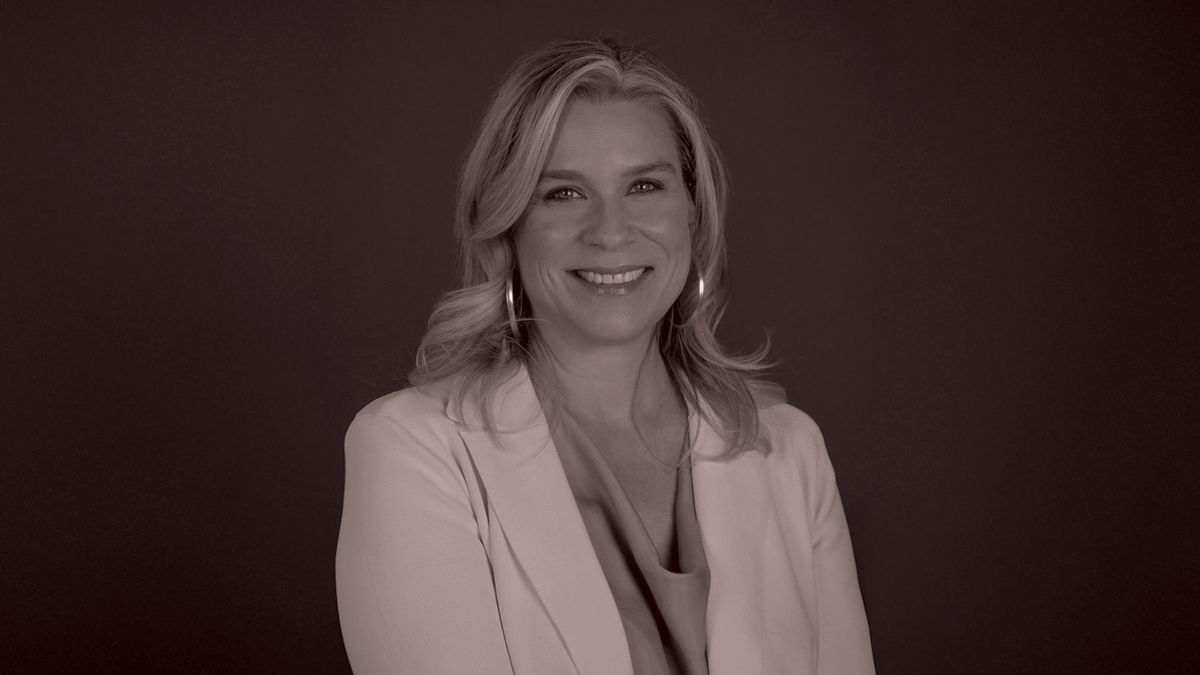
Anne Kraybill was a member of the founding team at Crystal Bridges before becoming a museum director in her own right in Pittsburgh and Wichita. Then, in 2024, she returned to Bentonville to become C.E.O. of the Art Bridges Foundation. We chatted about her ambitions for the foundation and beyond, including the obstacles to moving art around the country, the status problem for small regional institutions, and creating opportunities for early career curators. As always, this conversation has been lightly edited for length and clarity.
|
The Interlibrary Loan Concept
|
|
Marion Maneker: Why don’t we start with the mission of Art Bridges?
Anne Kraybill: Our mission is all about how to increase access to art. But what we actually do is get financial and logistical support to get art out of storage, and get it distributed to museums across the country. From that comes a whole lot of other programs and services.
I’ll give you the origin story. Alice Walton had a vision to create this incredible art museum in her hometown of Bentonville, Arkansas. Of course, there was much skepticism from the East Coast and West Coast—and other art markets—but it’s become beloved. It has about a million visitors a year, which is pretty phenomenal, given that the population of Bentonville is somewhere around 60,000.
She built that institution with pretty minimal storage. She just doesn’t believe that art can truly exist without a viewer. There’s a dialogue, a relationship that happens, and she didn’t want to see this massive collection wind up in storage. So they have a very, very active exhibition program, which informed her thinking in creating the Art Bridges Foundation. The average percentage of what’s on view for an institution is maybe 5 percent—if they’re lucky. So 95 percent of the country’s art is sitting in storage. Couldn’t we do a better job of giving support to institutions, especially institutions that have deep holdings, or institutions with very limited gallery space? Let’s give them some financial and logistical support to get that art out, and redistribute it across the country to institutions that perhaps have gaps in their collections.
When you think about smaller regional art museums, they were created in the heyday of some economic boom. Maybe it was newspapers; maybe it was coal. Then, at some point, the acquisition funding just stopped. Their collections were very much dependent upon the collecting taste of their communities. They can have a pretty narrow focus.
We want to treat art museum collections as more of a public good. I think of Art Bridges as the interlibrary loan network for art museums. In a nutshell, that’s what we do.
How did you end up running this?
I started as an art student. My very first job was a part-time position at the Walters Art Museum in Baltimore. Unlike coming up through the curatorial tracks, I actually worked with people, putting people on the same pedestal as the art. That’s the relationship between the viewer and the object, again.
There was a position at this institution called Crystal Bridges Museum of American Art. I took a chance, and started on the opening team. I remember on my first day, we had a baby shower, because it was nine months before opening. The reason I joined was Alice. She valued visitors and education just as much as the collection. Then I got the urge to become a museum director myself. I wanted to see if I could make change at the top, and create more community-focused institutions. I went to the Westmoreland Museum of American Art, just outside of Pittsburgh, and then I went to the Wichita Art Museum, and was there for almost two years. I had actually envisioned being there much longer. But this opened up. I couldn’t resist the idea that I could make change at one institution at a time, or I could join a foundation, where I could try and make change at scale.
|
|
Your role is to help with the broader infrastructure of museums, but doesn’t change begin with programming that leads to more engagement?
You’re seeing a shift happening, even with curators who are much more public-facing. They’ve got to be accessible to the public. They’ve got to be able to take their deep expertise and make it relevant. They’ve got to be willing to collaborate with educators who are working with all different types of audiences and communities in new ways. Otherwise, you aren’t going to reach the larger segment that we’re going to need to survive, quite frankly.
You saw this shift happening in libraries a while ago. They’re not just repositories for books. They’re creating these fourth spaces, where you can have gatherings and meetings and be more of a community resource. I think museums are going to have to go this way. This model of simply putting art on the walls, and expecting people to come is over—if we do that, we’re not going to have the support we need.
The original museum concept was aimed at educating the working classes by exposing them to art.
We’re not just trying to educate or elevate. A lot of museums were founded, in the 20th century, for new immigrants. Now there is this idea that visitors have just as much to bring to the institution as the object has to bring to the visitor—their narratives, their interpretation of that art, are just as important as whatever historical documentation the institution has. With Art Bridges, we’re trying to democratize access to collections. With every art loan we make, we provide funding for community engagement. We encourage innovative programming done in collaboration with the community.
|
|
What are the roadblocks to all this stuff moving? Is it shipping costs? Is it just a reluctance to lend?
You have a lot of art museums where the permanent collection is thought of as “our” collection. It is not often thought of as a common public good. Who cares who owns it? The public really doesn’t. When they’re walking into an institution to see art, it’s pretty rare that they’re looking at the label. Is it on loan, or is it part of this collection?
Shipping costs are expensive, but we cover that. Insurance is expensive, but we help cover that. Crating is expensive, but we help cover that, too. So it’s not the financial barriers. It’s the mentality of, This is ours. Do we feel safe lending it to another institution? Oftentimes, there are facility standards out there that prevent those loans from happening. Generally, what’s taught is 70 degrees, 50 percent humidity. I can guarantee you, the institutions making those loans aren’t even able to meet those standards.
We’ve been really pushing institutions: Let’s figure out ways to get to yes. Maybe not everything can be loaned. Maybe some things are too fragile. But I’m pretty positive that a painting that was done before electricity was made, that has been inside homes of people, that has been exposed to all kinds of conditions, and has suffered no damage, is going to be just fine.
It sounds like there needs to be some sort of an exchange where it’s easier for curators to see what’s out there, and what their requests would be. Then have someone act as a guarantor between two institutions.
We help broker these all the time. We play matchmaker. So if we’ve got an institution that has works they want to lend, we can help find borrowers. We do all of the legwork of getting the facility reports. And if there’s anything that’s just really out of whack with climate, we can help support mitigation. Sometimes, it’s just simple things, like maybe they need a dehumidifier. I’ve joked that we need to create the Bumble app for art sharing. How could we have a larger database, a repository of works that are available, that institutions could easily put into their shopping basket and check out?
There’s also a status issue here. Small regional institutions want to borrow works that larger museums don’t want to lend. And you’ve mentioned that there’s a growing trend of very small museums putting on particularly strong shows that are traveling.
One of the questions we’re curious about is, if three institutions asked for the same object at the same time, how do you choose? A lot of it goes back to prestige, right? Is there a publication involved? What’s the reputation of the institution—rather than, what’s the impact this could have if it went to that community?
That should really be the question: What’s the maximum impact it can have on the public? We’ve seen through some of our cohort programs, where you have a larger lead institution, their eyes are suddenly opened to the amazing work happening at some of these smaller to midsize regional museums. I’ve used the example of the Boston MFA taking a show from a small museum in Wilmington, North Carolina. How thrilling is that?! Part of what Art Bridges is trying to do is knock down the silos of peer-to-peer work across institutional sizes and institutional reputations.
There’s a lot of great work happening at smaller institutions that could be shared with larger institutions. You’re an early career curator, your show is not going to see the light of day for years. We have a new initiative for large institutions with an early career curator who’s got great ideas, but there’s just not space in the schedule, because it’s set years in advance. So they’re going to come, and they’re going to pitch two to three ideas of exhibitions developed from their collections, which we would then fund and send to partner institutions across the country.
We also have an access-for-all program that’s about reducing financial barriers, and institutions have implemented it. The Whitney is a great example. They used their access-for-all funds to make one Sunday per month free, which led to their every Friday night free, which then led to Julie Mehretu giving a grant for everybody under 26 free. Museums that have high tourism—maybe there’s a way for them to improve access for their local communities. Museums that are already free access for all can actually go toward marketing to new audiences and toward programming. So that was a $40 million investment to 64 institutions. We’re evaluating it right now, and we should be rolling out the next iteration of that at the end of 2025, or early ’26.
|
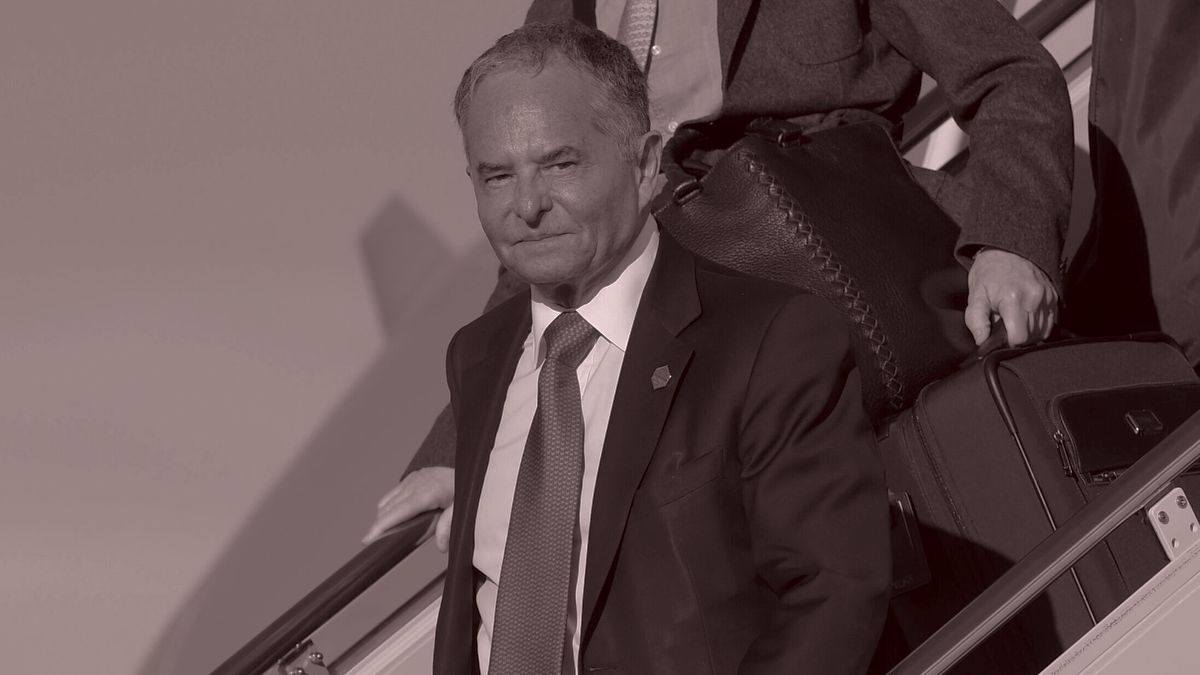
The Met’s public relations department scored a coup with this Wall Street Journal article over the weekend outlining the museum’s move to the front foot in dealing with restitution claims. The museum holds more than 1.5 million objects, and briefly dipping into former director Thomas Hoving’s memoir would tell you that previous regimes took a more swashbuckling approach to obtaining treasures. So the Met hired former Sotheby’s restitution lawyer Lucian Simmons as its head of provenance. He got his own star turn in The New York Times yesterday. He oversees a staff of at least 10 researchers who are now looking for gaps and red flags from within each curatorial department, so the museum can find novel and mutually beneficial solutions.
With that, I will say farewell for now.
M
|
|
|
|
Join Emmy Award-winning journalist Peter Hamby, along with the team of expert journalists at Puck, as they let you in on the conversations insiders are having across the four corners of power in America: Wall Street, Washington, Silicon Valley, and Hollywood. Presented in partnership with Audacy, new episodes publish daily, Monday through Friday.
|
|
|
|
The ultimate fashion industry bible, offering incisive reportage on all aspects of the business and its biggest players. Anchored by preeminent fashion journalist Lauren Sherman, Line Sheet also features veteran reporter Rachel Strugatz, who delivers unparalleled intel on what’s happening in the beauty industry, and Sarah Shapiro, a longtime retail strategist who writes about e-commerce, brick-and-mortar, D.T.C., and more.
|
|
|
Need help? Review our FAQ page or contact us for assistance. For brand partnerships, email ads@puck.news.
You received this email because you signed up to receive emails from Puck, or as part of your Puck account associated with . To stop receiving this newsletter and/or manage all your email preferences, click here.
|
|
Puck is published by Heat Media LLC. 107 Greenwich St, New York, NY 10006
|
|
|
|