{{ 'now' | timezone: 'America/New_York' | date: '%b %d, %Y' }} |
|
|
|
Hello, sports fans, and welcome to another edition of the Inner Circle, where we get
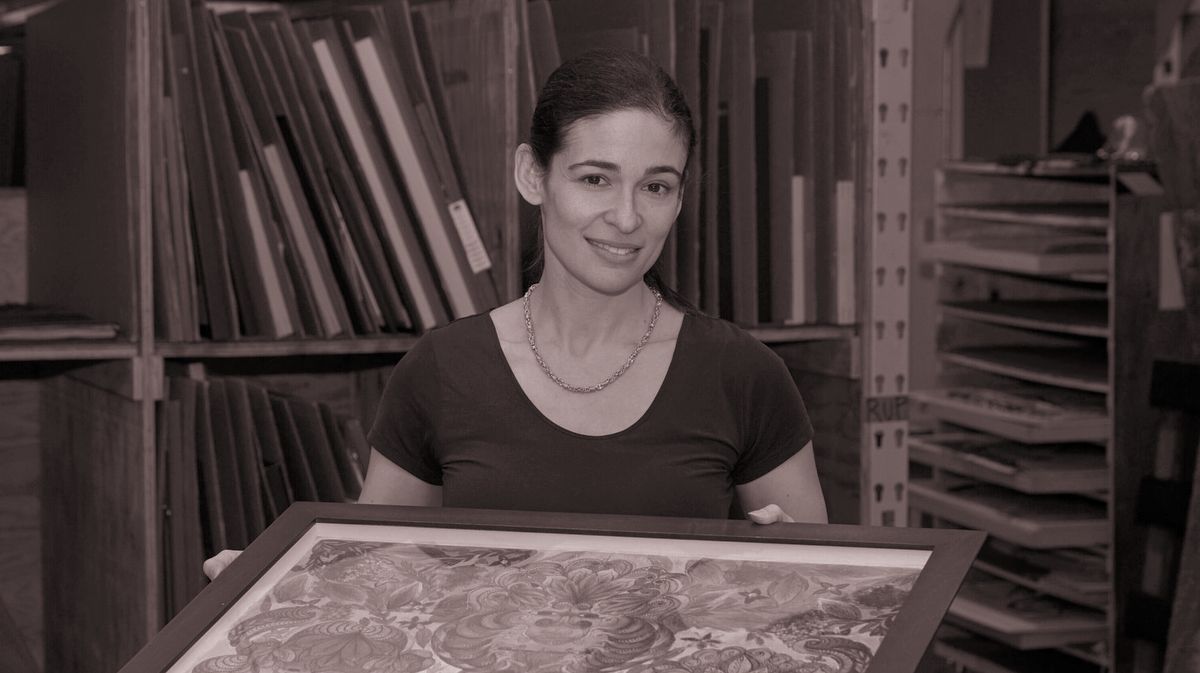
deep into the changing nature of selling art. I’m Marion Maneker.
Tonight, I spoke to Christie’s head of outsider art, Cara Zimmerman, about how she’s bringing the category’s best works into the marquee auctions to meet a new audience of buyers. Up top, Loic Gouzer’s Fair Warning has a new sudden-death art-selling option; the de Gunzburg design sale set a new Lalanne record at $33.5 million; Detroit
billionaire Jennifer Gilbert is selling work at Sotheby’s to fund a local arts initiative; Mitchell Rales has endowed a program to get the National Gallery’s art around the country at no cost to regional museums; and the Financial Times just can’t find evidence of a cash crunch at Sotheby’s no matter how hard it tries.
Also mentioned in this issue: Dan Gilbert, Yves Saint Laurent, Pierre
Bergé, Kenneth Noland, Elizabeth Peyton, Madge Gill, Nellie Mae Rowe, Thornton Dial, William Edmondson, Winfred Rembert, and more…
Here we go… |
-
Lalanne fever grows: Jean and Terry de Gunzburg chose the perfect moment to sell their design collection, especially the suite of 15 mirrors that Claude Lalanne created for Yves Saint Laurent and Pierre Bergé. Earlier today, the mirrors sold for $33.5 million. That’s a new record for Claude and François-Xavier, surpassing the $31.4 million paid for François-Xavier’s hippopotamus
bar at Sotheby’s last December. The rest of the sale was bonkers, with most lots selling for multiples of the estimates. More on that Friday.
- Jennifer Gilbert’s $4M Kenneth Noland: Jennifer Gilbert, the ex-wife of Rocket Mortgage co-founder and Cleveland Cavaliers owner Dan Gilbert, is selling four works at Sotheby’s to benefit a Detroit arts initiative. The couple recently divorced amicably after 30 years of
marriage, leaving Jennifer with a net worth currently calculated at $6.4 billion. One of the works she’s selling is Kenneth Noland’s Circle, with an estimate of $4 million. The record for a Noland is almost $4.3 million, and this work in particular made $2.1 million at auction in 2013.
Gilbert is also selling
Joan Mitchell’s Loom II, with an estimate of $5 million—that work was also auctioned in 2013, when it made just over $1 million. The proceeds of the two sales will benefit Lumana Detroit, a cultural nonprofit opening in the city in 2027 in partnership with the Cranbrook Art Museum.
|
|
|
|
A MESSAGE FROM OUR SPONSOR |
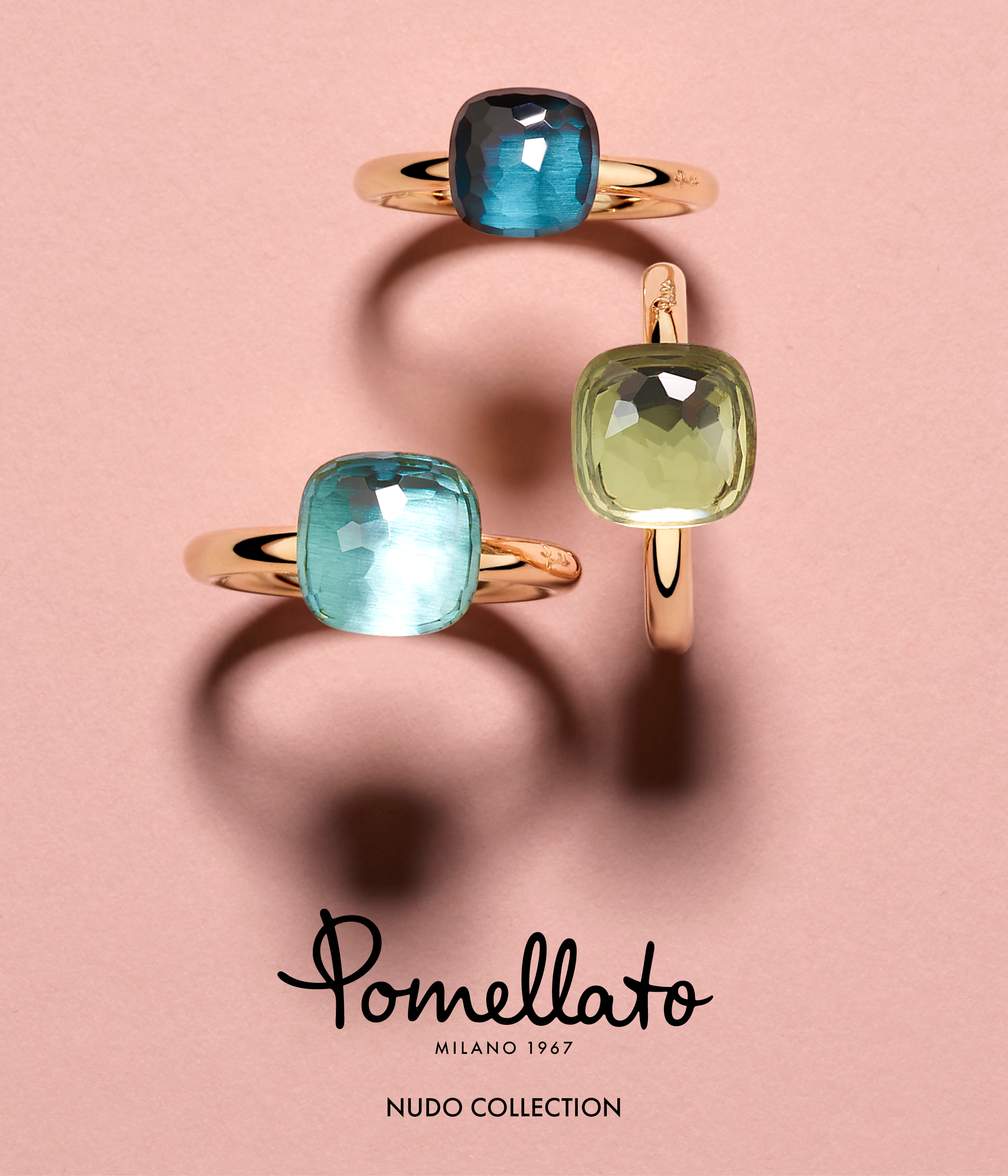
Color That Moves With You
When a single stone captures a spectrum of emotion, the appeal of Nudo is
clear. Marking its 25th anniversary, Pomellato’s iconic design evolves with a fresh expression of color. Each gem is thoughtfully paired to create balance and depth. Designed to reflect the rhythm of modern life, Nudo is effortless, versatile, and distinctly personal. Free in spirit and easy to wear, it invites layering, stacking, and everyday expression. |
|
|
|
-
Mitchell Rales gives $116M to National Gallery: Mitchell Rales, a former president and 20-year board member of the National Gallery in Washington, D.C., has given $116 million to endow a lending program at the museum. Dubbed “Across the Nation,” and timed to coincide with America’s 250th anniversary, the gift will enable the National Gallery to ship, insure, and install art at museums around the country, as well as market their shows—thereby lowering the cost
barrier that keeps most art in major metropolitan areas.
- The FT is obsessed with Sotheby’s debt: Yesterday, FT reporters uncovered a $100 million credit facility that Sotheby’s secured with KKR, backed by the auction house’s receivables on the fees owed by buyers. The funniest part is that
Sotheby’s hasn’t tapped into the money, which would allow it to borrow at 8 percent while it waits for cash from the buyer’s premium. The FT’s stories are important only in the sense that they might suggest Sotheby’s is facing another cash crunch. But so far, there’s no evidence of that. In fact, the newspaper seems to be uncovering efforts by Sotheby’s C.F.O. to reduce his working capital. To recap, we’ve learned that Sotheby’s is offering 7 percent to sellers against
settling their consignments, 8 percent to KKR against receivables, and 8.5 percent for the $825 million in bonds it sold last week. That seems relatively consistent and in line with other corporations.
|
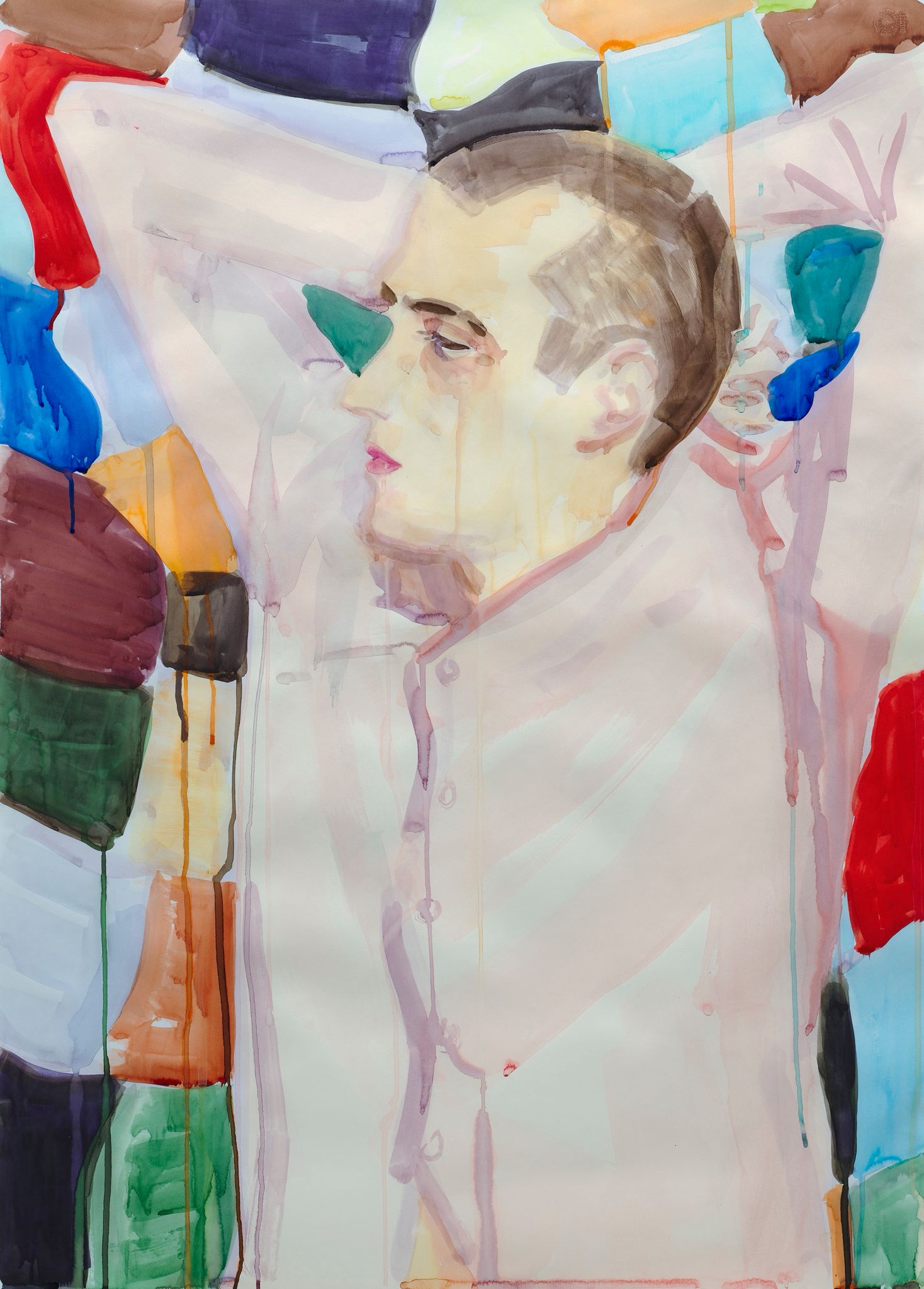
Elizabeth Peyton, Daniel in Berlin, June 1999. Photo: Courtesy of Fair Warning
|
Loic Gouzer’s Fair Warning is launching a new sales channel designed to expand the auction house’s volume and give sellers a new way to take advantage of its digital platform. Artworks will be offered at a fixed price that includes Fair Warning’s 20 percent commission. When the works are posted online, buyers can pay the asking price immediately, or they can make their best offer, which expires in 72 hours if not accepted. Buyers can’t negotiate, and their offers will not be
communicated to other potential buyers. The artwork may also disappear—because the seller has accepted an offer or withdrawn the work—without warning. The service has been dubbed No Warning.
The first work to be offered this way is Elizabeth Peyton’s Daniel in Berlin, June 1999, a watercolor on paper with an asking price of $400,000, including Fair Warning’s $80,000 commission. It will be available beginning tomorrow, April 23. Let the games begin.
Now
here’s Cara… |
|
|
|
Outsider art’s auction insider talks about integrating the category into
contemporary sales, the importance of quality over backstory, and elevating self-taught artists. |
|
|
|
Outsider art is at an exciting moment, according to Cara Zimmerman, who runs the
category for Christie’s—it’s drawing collectors who are attracted more to the quality of the works than to the stories of poverty, imprisonment, obsession, or mental illness behind them. As Zimmerman describes it, this is “a meaningful shift away from … the connoisseurship of dysfunction, and into the realm of This is freaking awesome.”
As such, she’s finding ways to offer such art in Christie’s biggest sales—and setting records along the way. This season, the auction house will
sell a Bill Traylor painting and a Grandma Moses work in the day sales. I spoke with Zimmerman recently to discuss her strategy for bringing outsider work to new audiences, why she’s “flipping” the value proposition of a narrative-driven field, and what she learned after moving the dedicated annual sale online. As always, this interview has been lightly edited for space and sense. |
“Exceptional
on Its Own Terms”
|
Marion Maneker: Tell me about the
state of the outsider art market in 2026.
Cara Zimmerman: What I’ve always loved about this field is that every day you can discover something new—about artists, the art world, collectors. It’s an ever-evolving, very exciting, organic community. Right now we’re at a really fun point for this field, because it’s established enough that it’s really starting to integrate itself into the larger art world and art market—whether in museum
exhibitions or, in my case, at auction, where we’re starting to integrate self-taught and outsider artists into our postwar, contemporary, and modern sales. We’re seeing this cross-pollination and exciting nexus point where we can push the field and the conversation about who gets to make art and what art is. |
|
|
|
A MESSAGE FROM OUR SPONSOR |
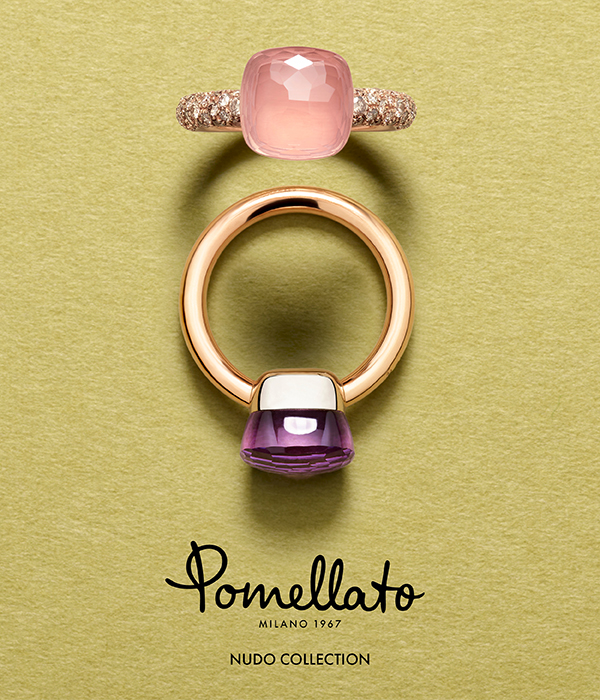
Elevate your everyday with Nudo
Pomellato’s Nudo rings celebrate color, form, and individuality. The
brand’s signature “naked” setting rests on rounded shanks with delicate diamond pavé that catch the light and move with you. Versatile and effortless, each ring encourages mixing, matching, and layering, turning everyday wear into a personal expression of style, color, and contemporary elegance. |
|
|
|
Talk me through that integration. In some ways it’s obvious—you pull work into a day or
evening sale when the value and audience are there. But I assume there’s a limited number of artists you can do that with. Is that determined by work, or artist by artist?
It has to be conceptually resonant. That can be value-driven—with artists like Bill Traylor or Henry Darger—but it can also be based on the works themselves. For example, this past February, we included a selection of self-taught artists in our
postwar-to-present auction, including some dynamite works by female artists. We set two auction records by artists you’d never expect to be in that pantheon of cross-category artists. We sold the first embroidery work by Madge Gill ever to come to market—an exceptional object by an artist getting a lot of attention right now. And we sold a really powerful work on paper by Nellie Mae Rowe, who is, again, not someone you would think automatically belongs in a
postwar sale. The timing was just right to push the envelope with some of these artists who have slightly different narratives, because visually they connect, and conceptually they fill gaps in those sales.
Andrew Edlin, a dealer who also owns the Outsider Art Fair, once said that the way one sells contemporary artists today—leading with identity, backstory, personal narrative—was modeled on how the self-taught field had been presenting artists for decades. I’m curious whether you
think that’s true, and if so, what the downstream ramifications are.
I think one of the biggest—and most fun—challenges I’ve faced in my role is taking that idea of outsider art as a narrative-driven field and flipping it. Yes, contemporary art relies on narrative, just as self-taught art always has. But I believe the work has to stand first. The stories should support great objects, not the other way around.
What I’ve been pushing at
Christie’s is that every object we sell has to be exceptional on its own terms. Yes, you want to know the background—why it was created, by whom, where, and how it relates to the larger art world and popular culture—but it starts with the object. That’s a meaningful shift away from what I’d call the “connoisseurship of dysfunction,” and into the realm of This is freaking awesome. |
Does the contemporary art market’s recent focus on identity and artist narrative
make it easier or harder to bring these artists across? You’re essentially going to where the collectors are, rather than waiting for them to come to you.
Because I started as a scholar, I still think about this as more than just a market move, but as a broader understanding of the artistic ecosystem. On many levels, it augments the work that’s already there, by filling in gaps and inviting new conversations. Thornton Dial, for
example, fills in really interesting narratives about what was happening in the South in the 1960s, ’70s, and ’80s. You can go all the way back to William Edmondson and ask what MoMA’s engagement with that kind of material tells us about modernism at the time.
By placing these artists in multiple contexts simultaneously, it’s making people connect the dots: seeing visual similarities, recognizing the popular culture these artists drew on, appreciating the value of working
with different tools and materials for different reasons. It creates a richer ecosystem.
Jean-Michel Basquiat was a self-taught artist. We just don’t think of him that way anymore, partly because the work became so valuable.
Absolutely. There’s a tripod: You need the market, the museum, and the critic to raise an artist’s role in society—to give them the credence that enables them to achieve higher values and get institutional
shows. We’re trying to engage a new audience that approaches this from a modern and contemporary perspective. And getting that fresh set of eyes on material that has long been “othered”—for reasons that have very little to do with the objects themselves—is long overdue. |
|
|
|
Where are the buyers coming from now? Are they contemporary collectors? Are they coming
from other fields or areas?
Part of why we made this shift is because, increasingly, our buyers were coming from modern and contemporary sales. When I started, we had a tight-knit community of outsider art collectors and traditional American folk art collectors. Over the last decade—really accelerating in the last six or seven years—we’ve seen a huge shift in where those buyers are coming from. For artists like Edmondson, we’re seeing crossover
buyers from the modern arena. For Winfred Rembert and Nellie Mae Rowe, we’re seeing collectors from the contemporary world. We’re seeing a lot of cross-category buyers from people who are interested in African American art. And there’s an interesting thread of modern art buyers drawn to European self-taught art, probably coming from the Breton–Dubuffet lineage. Different artists are acting as lightning rods for different collector communities. So when we move
this work into broader sales, we’re going where the data already tells us the collectors are.
Is it right to assume that the supply is still coming from the traditional outsider and folk art collectors—and you’re identifying what, within those collections, can speak to a hybrid audience?
Yes. At this point, most of our consignors are people who collected in the ’70s, ’80s, and ’90s. We’re starting to see a few people who bought
from us a decade ago cycling back, but it’s still predominantly coming from focused outsider art collections. As those collections thin out, we’ll see works coming from more-integrated groupings, which will propagate this conversation as part of the self-taught and contemporary continuum.
One thing that’s genuinely distinctive about this field: It is not a dealer-driven auction market at all. We have very little dealer participation in our sales. It’s almost entirely individual collectors
consigning to individual buyers. That allows me to really see where the market value is for these objects.
You’ve also moved your dedicated sales online, right? How has that gone?
We just switched to that format as we’ve started integrating. We used to have an annual outsider art sale, usually timed with the Outsider Art Fair. As the fair has shifted its timing, and as we’ve realized that our buyers are increasingly coming out of
contemporary and modern sales, we’ve realigned so that we’re going to be putting more and more of our work into those venues directly. And I’m hoping that what will become the annual online sale is a place for real discovery, and gives us an opportunity to break new artists into the auction realm that may not be able to go into those bigger sales from the jump.
We just had our first one, and a lot of people showed up. It was fun because we had many more European buyers than we’ve had
before. One of the things I enjoy about these online sales is that sense of discovery in the field. This field is about finding things that you respond to and are accessible. It’s all about how this speaks to the larger art world. It’s idiosyncratic. These artists are delving into personal worlds and ideas, and it can be a really interesting counterpoint to mainstream and contemporary offerings. In that sense, I think it can shake things up in a fun way, given the right opportunities. |
Thank you to Curtis Rowser for all of his help with this interview. I’ll
be back on Friday with more art-world news.
M |
|
|
|
Puck founding partner Matt Belloni takes you inside the business of Hollywood, using exclusive reporting and insight
to explain the backstories on everything from Marvel movies to the streaming wars. |
|
|
|
Ace media reporter Dylan Byers brings readers into the C-suite as he chronicles the biggest stories in the industry:
the future of cable news in the streaming era, the transformation of legacy publishers, the tech giants remaking the market, and all the egos involved. |
|
|
|
Need help? Review our
FAQ page or contact us for assistance. For brand partnerships, email ads@puck.news.
You received this email because you signed up to receive emails from Puck, or as part of your Puck account associated with {{customer.email}}. To stop receiving this newsletter and/or manage all your email preferences, click here. |
Puck is published by Heat Media LLC. 107 Greenwich St., New York, NY 10006 |
|
|
|
|