Welcome back to Wall Power, Inner Circle edition. I’m Marion
Maneker.
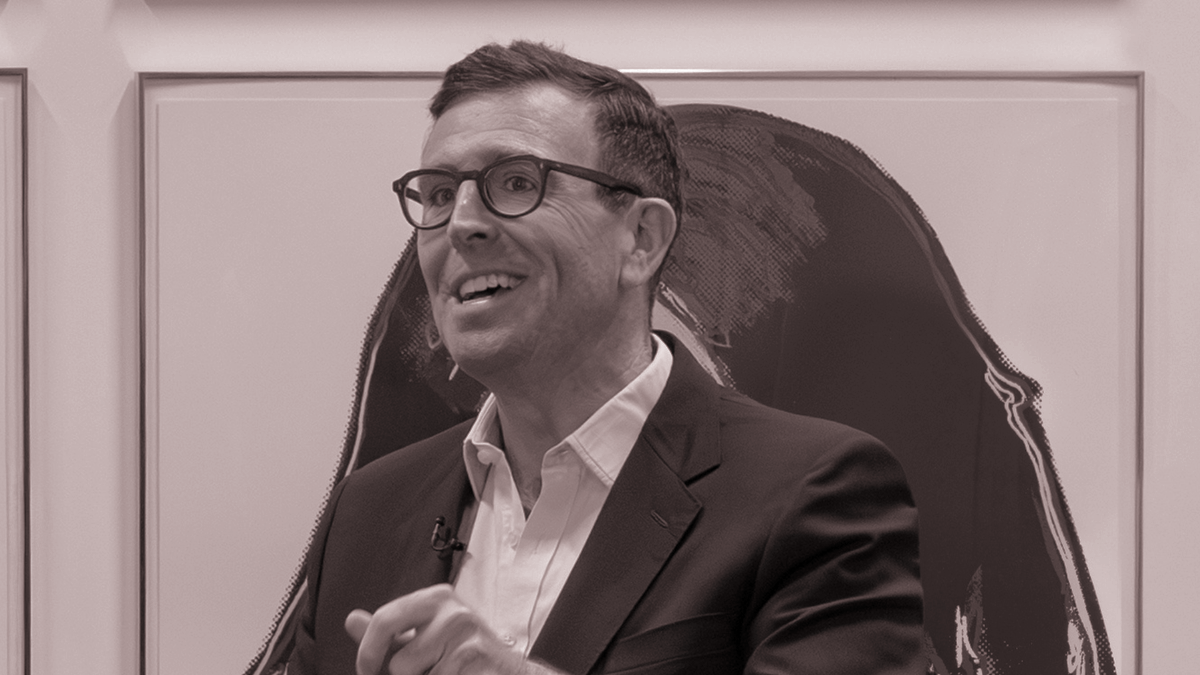
Tonight, I’m speaking to Jay Krehbiel, the executive chairman of Freeman’s, a proud middle-market auctioneer. Building upon an initial investment in Chicago’s Hindman, Krehbiel then acquired Cowan’s in Cincinnati and Freeman’s in Philadelphia. The combined enterprise now operates under the Freeman’s name and focuses on collections in the $1 million to $5 million range—a growing sector of the business that’s been relatively immune to the recent slump.
We’ll get into it below the fold.
Mentioned in this issue: Jay Krehbiel, Fred and Kay Krehbiel, Leslie Hindman, Mark Rothko, Leonard Lauder, and more…
Let’s get started… |
Number of
the Year: $14.1 Billion
|
Now that the final auctions of December are mostly done, Christie’s, Phillips, and
Sotheby’s have released preliminary numbers for 2025, showing a combined total of $14.127 billion in sales. Here’s how the numbers break down… |
-
Sotheby’s totals $7 billion: Sotheby’s had a strong recovery, especially in the second half of the year, when auction sales rose 59 percent from the year before—a clear reminder of the importance of collections in today’s marketplace. Overall sales—including real estate sales, which are not applicable to the other auction houses—rose 17 percent from 2024, to $7 billion. Auction sales increased by 26 percent, to $5.7 billion. Private sales fell to $1.2 billion.
|
|
|
A MESSAGE FROM OUR SPONSOR |
The first steps towards a masterpiece starts with a dream. The all-electric BMW i7 – the
evolution of brilliance. Learn more at BMWUSA.com |
|
|
- Christie’s sold $6.2 billion: Global sales at Christie’s rose 6 percent from last year, to $6.2 billion. That broke down to $4.7 billion in auction sales—which now include vintage car division Gooding Christie’s—and $1.5 billion in private sales, which remain flat from last year.
- Phillips sold $927 million: Phillips’s total sales rose 10 percent year over year, to $927 million. Auction sales accounted for $725 million, which was basically
flat from 2024. Private sales, though, shot up by 66 percent, to $202 million, due to an influx of new clients and higher-value transactions.
|
Stay tuned for more on the year’s results. I’ll dig into these numbers in greater detail
in Friday’s newsletter, but I wanted to give you the top lines now since they’re fresh from this morning.
Now, let’s get to the main event… |
|
|
Freeman’s, the ambitious Midwest auction house, is conquering the
middle market between multimillion-dollar auctions and weekend estate sales. Herewith, executive chairman Jay Krehbiel opens up about his M&A pathway, the economics of undercutting the big houses, and the tension between operating locally and globally. |
|
|
Jay Krehbiel grew up in a family of collectors. His father,
Fred, ran Molex, the family electronics manufacturing business that they ultimately sold to Koch Industries for $7.2 billion, and along with his mother, Kay, Jay developed a keen interest in the decorative arts. The family’s homes in Chicago and Palm Beach were filled with English porcelain, silver, and furniture; Ballyfin Demesne, the Irish manor house that his family bought and restored, was later converted into a hotel.
Fred was one of
the first investors in Leslie Hindman Auctioneers, a regional Chicago powerhouse founded by a relative, and Jay has continued the Krehbiel tradition by expanding the family’s interest in that firm and acquiring others in Ohio and Philadelphia. He now serves as the executive chairman of the combined enterprise, Freeman’s, which has staked out a position in the surprisingly strong middle market. I spoke to him earlier this month about how he assembled the company, the unique opportunities and
challenges facing regional auctioneers, what it means to be a “national middle-market champion,” and why the American paintings market remains an engine of his business. As always, this transcript has been lightly edited for clarity and length. |
Marion Maneker: Can you start by talking about
Freeman’s as a business? Where do you see yourselves in the market?
Jay Krehbiel: This is my endeavor in the art market, which is now approaching 10 years. It started with conversations I had with my cousin Leslie Hindman, and her vision for a national middle-market champion. That’s what we set out to build. There was an increasing disconnect between what we saw in the market at the top end—represented by Christie’s,
Sotheby’s, and Phillips—and a series of very regional houses that were selling everything else. When we talked to fiduciaries, they would tell us, Christie’s and Sotheby’s want to come in and just take the five best things. Then we feel like we’re sending everything else to some place that might not represent the material as well as we think it deserves. |
|
|
A MESSAGE FROM OUR SPONSOR |
The first steps towards a masterpiece starts with a dream. The all-electric BMW i7 – the
evolution of brilliance. Learn more at BMWUSA.com |
|
|
There are, of course, very strong names in that space. Leslie Hindman Auctioneers was
one of them; Freeman’s was another in Philadelphia. But the complicated natures of so many of these estates we were dealing with—involving hundreds of objects across many different categories of sale, many of which were of real value—suggested there was this hole in the middle. And that’s where we’ve really tried to build.
Was that the first business you bought in the art space?
Yeah. Dad was one of Leslie’s original backers when
she opened in 1982 in Chicago, and was on her board. I had never worked in the business. We talked over the years as she evolved her business strategy, which is the one I think we’re following quite closely.
Can you speak to me about your expansion over the years?
First was Leslie Hindman Auctioneers. Then we bought Cowan’s in 2019 in Cincinnati. That allowed us to expand the reach of the company to the entire Ohio Valley—Northern
Kentucky, Cincinnati, Cleveland, Columbus—in addition to selling material that we hadn’t had the level of expertise and depth in, such as Native American material, certain American historical ephemera, American furniture, etcetera.
From there, it’s been a combination of organic growth, as well as bringing in team members and groups as we’ve continued to build in Florida and in the Northeast, which culminated in the acquisition of Freeman’s. Freeman’s had an incredible reputation and
legacy in the Philadelphia area and in the Northeast more broadly, and brought a great reputation for American furniture and American painting, which strengthened the overall offering of the combined firm. |
“They Weren’t Just Hoarders”
|
What are the buyers like?
I
can’t speak to the very top of the market—there are households you walk into and there’s nothing on a wall that costs less than $1 million. But that’s not my experience, and I’ve had the great privilege of being in some pretty extraordinary collectors’ homes. The fact is, most collectors buy across the value spectrum. As much as there might be a $10 million painting on the wall, there’s a little drawing that they paid $1,000 for that they love. And yet the reality is that when it comes time to
bring those collections to market, the economics of the big auction houses is that they can’t take the material and sell it profitably below a certain value level. At the same time, when you bring a full collection to market with a story and a name, and you present material across the value spectrum, the market reacts to that. We’ve seen that time and time again.
We have to constantly communicate to our clients, the sellers, that we can maximize value for them if they bring us the whole
collection. We also recognize that at certain price points, the market looks to the big guys. Notwithstanding the fact that I have one of the best teams in the country, I’m not expecting Rothko or Klimt to walk through the door anytime next week. |
|
|
You say there’s value to single-owner collections in your $1 million to $5
million price band. Is that value simply the knowledge that these works were collected by someone with taste, or does it lie in the storytelling, or the idea that these aren’t just random objects?
I think it’s a little of all three. The provenance matters. People are known collectors. Whenever you see furniture that happened to pass through certain dealers, even that improves the provenance. The story matters, how these objects were brought together. When we have single-owner
sales, people will come up to me and say, I knew that person. I bought something from their collection, and I think of them when I look at it. We have those stories, and people have those connections. Especially for sellers, when you bring a collection together and present it in a unified and thoughtful way, I think it makes people go, Gosh, Mom and Dad had a good eye. They weren’t just hoarders. They brought together this collection of objects that’s interesting, and interesting to
other people. I think that’s true in many cases, no matter what category people are collecting across.
Do the types of connections you speak of correlate to the advantage of being local? For example, Leonard Lauder was well known for his business and philanthropy, but few people would say they knew him personally or want to own something connected to him. In a regional or local context, you’re more likely to see these kinds of connections. Is that part of what sets you apart
from the global auction houses?
We always say we’re operating locally and globally. I think you can do both, and that’s what our mission is—to have these relationships, these points of connectivity with families, and to be able to bring those stories. But for us, $1 million to $5 million is potentially the collection in totality. We’re not active in the $1 million to $5 million object space. We’ve been privileged to sell lots
for over $1 million. We’ve sold lots up to $4 million, and that’s great. But the space we’re operating in is—the collection may be $5 million in total, but the individual objects we’re selling are far more between $1,000 and $1 million, and more often than not between $2,500 and $25,000. The market for that material is active, it’s strong, it continues to perform well, and there are people out there who want to buy it.
You mentioned to me before that there’s a really active market
for American paintings. I’ve noticed that seems to also be happening at Sotheby’s and Christie’s. Can you describe how the American paintings market plays into your business?
Absolutely. The Freeman’s team has long had strength in American paintings, and has been committed to that market. There remains a devoted collecting community to that space. And these are really extraordinary, beautiful works of art. So we’ve remained totally committed to
that space, and the results have been strong. American paintings may not be keeping up with postwar and contemporary art, but there’s real value there and a deep collecting community who loves them. We’ve been thrilled to continue putting together great sales of that material. |
I want to thank Curtis Rowser for his assistance editing this
transcript. That’s it for today, folks. I’ll be back on Friday with a look at the year-end numbers.
Let’s speak then,
M |
|
|
The ultimate fashion industry bible, offering incisive reportage on all aspects of the business and its biggest
players. Anchored by preeminent fashion journalist Lauren Sherman, Line Sheet also features veteran reporter Rachel Strugatz, who delivers unparalleled intel on what’s happening in the beauty industry, and Sarah Shapiro, a longtime retail strategist who writes about e-commerce, brick-and-mortar, D.T.C., and more. |
|
|
Finally, a media podcast about what’s actually happening in the media—not the oversanitized,
legal-and-standards-approved version you read online. Join Dylan Byers, Puck’s veteran media reporter, and Julia Alexander, a longtime media analyst, as they sit down with TV personalities, moguls, pundits, and industry executives for raw, honest, sometimes salacious conversations about the business of media and its biggest egos. New episodes publish every Tuesday and Friday. |
|
|
Need help? Review our
FAQ page or contact us for assistance. For brand partnerships, email ads@puck.news.
You received this email because you signed up to receive emails from Puck, or as part of your Puck account associated with {{customer.email}}. To stop receiving this newsletter and/or manage all your email preferences, click here. |
Puck is published by Heat Media LLC. 107 Greenwich St., New York, NY 10006 |
|
|
|