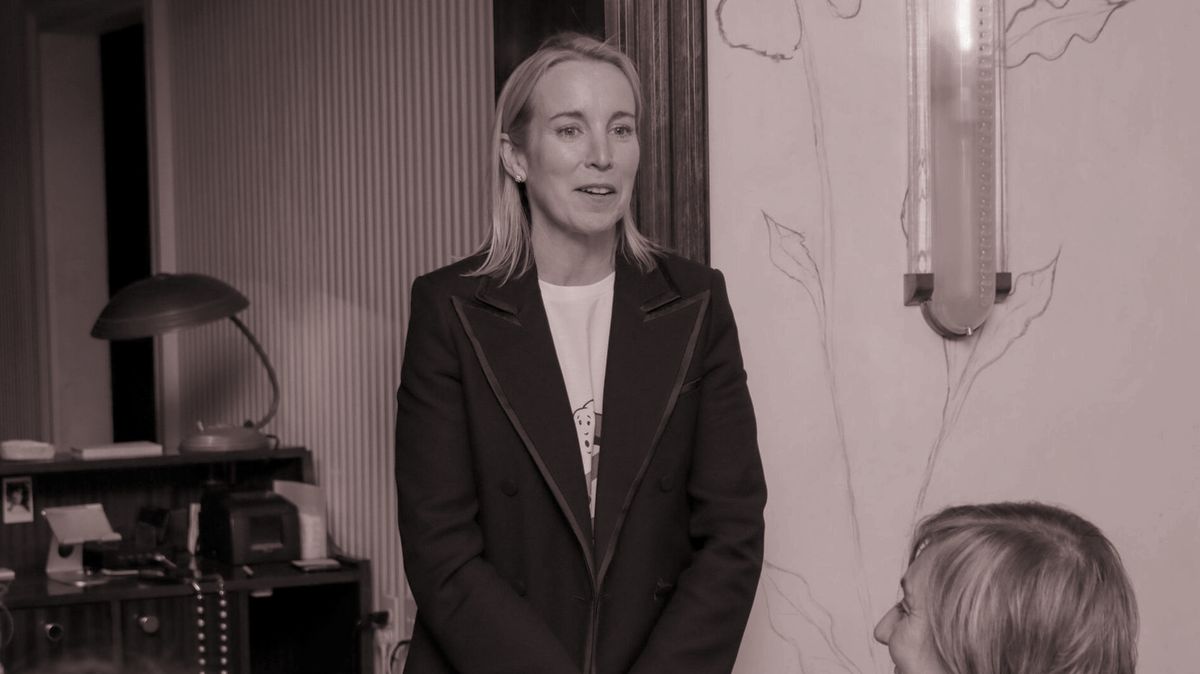
Welcome back to the Wall Power Inner Circle. I’m Marion
Maneker, here to spill the beans about what happens behind the scenes on an auction house press call.
Tonight, we’re going to look at some of the first-half sales results from the major auction houses. Christie’s held the line; Heritage is on pace to have an even better year than 2024. I’ll try to explain what these numbers mean—and why the auction houses take such care to communicate them.
But first, some more news about our upcoming art summit… |
We’ve added some speakers to The Art of Influence, the one-day (10 a.m. to 4 p.m.) event Puck is
holding in partnership with the FLAG Art Foundation at SECOND in Chelsea on September 15. This will be a candid discussion about the current state of the art market and all its key constituencies: artists, collectors, dealers, auction houses, museums, and art advisors.
Joining us will be Sotheby’s C.E.O. Charles Stewart, collectors Michael Ovitz and J. Tomilson Hill, and the director of the Brooklyn Museum, Anne
Pasternak. We’ve previously announced that Larry Gagosian, Nicolas Party, Dasha Zhukova, and Glenn Fuhrman will appear at the event, and we’re not done announcing names yet. So you might want to claim one of the few remaining tickets. We’re keeping the summit small so the conversation stays intimate and
forthright. I hope you’ll join us. |
|
|
A MESSAGE FROM OUR SPONSOR |
The first steps towards a masterpiece starts with a dream. The all-electric BMW i7 – the evolution of
brilliance. Learn more at BMWUSA.com |
|
|
- Dallas Museum of Art names a new chairman: The Dallas Museum of Art has elected Sharon Young as chairman of the board of trustees, succeeding Jeffrey S. Ellerman, who will remain a trustee. Gowri Sharma will continue as president of the board, where she is also serving on the committee leading the search for a new museum director.
- David Mimran fails to pay for
Pollock at Phillips: David Mimran, son of French billionaire Jean-Claude Mimran, has failed to pay for a Jackson Pollock painting he guaranteed at Phillips last November, according to documents filed on July 2 in New York Supreme Court. In papers that include a confession of judgment signed
by Mimram, Phillips alleges that the work was sold to him as the third-party guarantor for $14.5 million, and that Mimran has since missed two different payment deadlines. Phillips wants the $14.5 million plus additional 10 percent interest Mimran agreed to in an April extension agreement, which brings the total due to almost $15 million.
|
Now let’s get to the main event… |
|
|
A report from the auction houses’ earnings calls as they try to steer the press
toward a narrative of stability rather than sky-is-falling panic. While not entirely successful, they did provide some reasons for optimism. |
|
|
Yesterday, in its semiannual call with the global art press, Christie’s announced that it had sold
$2.1 billion worth of art in the first six months of 2025—flat from the year before. Heritage, meanwhile, announced $962 million in sales for the first half of the year, continuing its upward trajectory. Each house has its own reason for releasing the numbers: Heritage wants to highlight its growth; Christie’s instituted these regular press calls several years ago to, hopefully, instill greater confidence in the art market.
Back in the day, when Sotheby’s was a public company that held
regular earnings calls, the conventional wisdom was that Christie’s had an advantage in not having to disclose its performance. Once Sotheby’s went private, it became clear the lack of market information was a detriment to all. In response, Christie’s created these highly scripted semiannual events.
These calls, more than anything else, are meant to set an agenda for the art press, which is notorious for gravitating to extremes. When the market is doing well, we get an overemphasis on the
top lots and many references to eye-watering gains. When the market is doing poorly, the art press wrings its hands and worries that the beguiling spell that compels rich people to spend breathtaking sums on art has been finally and irrevocably broken. Naturally, the auction houses believe that this bipolar depiction of the market creates a climate of fear among their customers. So it’s not enough to demonstrate to prospective sellers that the market has been building momentum;
they also have to get those talking points to the press. |
|
|
A MESSAGE FROM OUR SPONSOR |
The first steps towards a masterpiece starts with a dream. The all-electric BMW i7 – the evolution of
brilliance. Learn more at BMWUSA.com |
|
|
And at the moment, the press is in Chicken Little mode, for obvious reasons, which is why
Christie’s call was designed to deliver a message of stability to combat the sky-is-falling narrative. It was also Bonnie Brennan’s first call since taking the chief executive job, and she and her top lieutenants—global president Alex Rotter, C.O.O. Ben Gore, and international head of jewelry Rahul Kadakia—stayed on-message. Brennan emphasized Christie’s consistency, especially in its “well-developed strategy based on client
service,” which involves “being good listeners.”
Still, judging by some of the questions posed to the Christie’s team, their comms folks have their work cut out for them. One editor from a global financial news outlet asked Brennan whether the Trump legislative agenda would boost the art market. Of course, the centerpiece of the so-called One Big Beautiful Bill Act is the extension of Trump’s 2017 tax cuts, which isn’t actually a new cut, and is therefore unlikely to boost
overall spending in the art or luxury markets—though the expiration of the cuts might have posed a downside threat. Indeed, one of the greatest concerns about the current art market pullback (at least in public markets) is that it’s occurred as the tax profile for America’s wealthy has never been better. Perhaps interest rates play a greater role in art market confidence, but no one on the call pursued that line of inquiry.
We also got a few reporters essentially asking the Christie’s
team to do their work for them. There were questions like, “What do these results say about the changing tastes of the global rich?” or “Why do you create elaborate displays of your consignors’ works? Is it to satisfy their egos or get better prices?” and others too banal to even mock here. |
Brennan’s priority was to convey “confidence in the market’s strength,” which involved
citing some encouraging top-line figures. Aside from Christie’s $2.1 billion in first-half sales—including seven of the top 10 lots sold—the house’s global sell-through rate was a strong 88 percent, up from 87 percent last year. Christie’s experts have been selective in the works they bring to market, and successful in convincing consignors to keep the estimates as low as possible.
It wasn’t always this way. Not too long ago, auctions were a wholesale business that tolerated much lower
sell-through rates. Two different but related factors have driven them much higher. The first was the recognition that the auction houses could be retail businesses, interfacing with consumers rather than dealers. Although the auction house is a fiduciary for the seller, its strength comes from its ability to attract end users willing to pay full price (with fees) rather than dealers who then have to add their own markup. The second factor was the growth of the secondary market in luxury goods,
where buyers needed to be confident that the objects they were acquiring would retain some of their value in the long run. Strong sell-through rates have proven essential in conveying that message to end users.
The hammer ratio for those lots—the aggregate of all hammer prices before fees, divided by the aggregate of low estimates—was 1.15 for the first half of the year, up from 1.11 in 2024. This, too, shows that Christie’s specialists are getting estimates to a level where they attract
bidders. There’s no hard and fast rule about hammer ratios, but in my experience 1.2 is the threshold for a solidly advancing market. To me, that 1.15 hammer ratio for the first half validates Christie’s claims. |
|
|
As for the regional breakdown of Christie’s buyers: 45 percent came from the U.S.; 34 percent from
Europe, the Middle East, and Africa; and 21 percent from Asia. Asian buyers are underrepresented compared to past years—my observation, not Christie’s—which may offer a clue to the prolonged auction downturn. On the call, however, Gore offered some more causes for, if not optimism, perhaps confidence. Gore, who oversees the house’s guarantee book and lending arm, among other things, testified to strong momentum in client engagement. In midyear reporting, Christie’s doesn’t divulge
private sales or the performance of their loan book, but he said those two areas continue to perform well.
He also offered some interesting statistics. The average number of bidders per lot is a robust four, which Gore said reflected strong participation online, where 80 percent of bids occur. (Most of the interest is focused on lots priced below $100,000.) Even with lots priced between $100,000 and $1 million, Gore pointed to a seemingly strong average of three bidders. He also
preemptively addressed whether third-party guarantees might be dampening enthusiasm for works at auction, noting that only 1.5 percent of all lots had guarantees, representing roughly one-third of the value of sales, which is well within historical boundaries.
The sectoral results offered a mixed picture. Rotter explained that the 20/21 division had auction sales of $1.29 billion in the first half, down 2 percent from the previous year. Asian art had $156 million in sales, down 28
percent; classics came in at $90 million, down 32 percent; and Old Masters surprised with $55 million—up 15 percent, mostly on the back of the $43 million sale of a Canaletto. Kadakia outlined the continuing strength in the luxury markets: Christie’s sold $405 million in jewelry, watches, handbags, and wine, up 12 percent from the first six months of 2024. Once you add in classic cars following Christie’s acquisition of Gooding, that number swells to $468 million—bringing the
growth of luxury sales at Christie’s to 29 percent year over year.
The strong luxury sales are also important because, as Kadakia noted, the sector is often the entry point for new buyers. It accounted for 41 percent of Christie’s new clients, which brings us back to the importance of sell-through rates and estimates to give buyers confidence in the markets that Christie’s makes. |
If Christie’s luxury numbers were strong, it should come as no surprise that Heritage,
the Dallas-based collectibles auction house that claims 2 million registered online bidders, is having its best year ever—even though their mix of property has little overlap with Christie’s in the luxury category. Heritage’s $962 million in first-half sales represented a bump of 4 percent year over year, which follows a growth path of 6 percent in annual sales. In 2023, Heritage cleared $1.76 billion; in 2024, that number rose to $1.87 billion. If the first half growth rate holds up, Heritage
could be looking to sell $1.94 billion in collectibles this year.
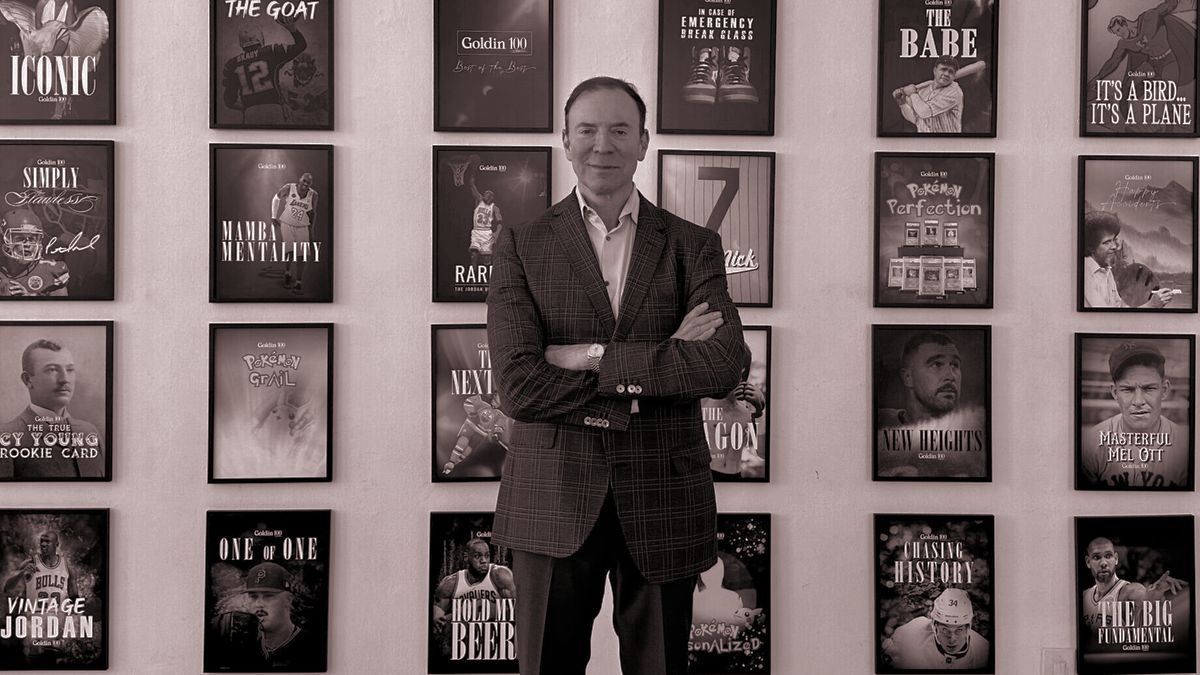
These numbers are likely to revive fears that the demand for art is waning partly because the younger generations are shifting toward cultural property like collectibles, largely to connect with the passions of their youth. (Ken Goldin’s thriving Neverland is but one
manifestation of this trend.) There’s always the chance the Chicken Littles in the media are right, and art has lost its appeal. But, again, the strength of the market for art below $500,000, which we explored here last week, would seem to contradict that notion. Instead, the collectibles market continues to thrive because of its lower price points, even as it builds
toward ever-higher record prices for sought-after objects. It’s that process, of course, which will most likely begin to rebuild momentum in art. |
Okay, folks, that’s going to be enough for today. We will be back with the regular newsletter on
Friday.
M |
|
|
The industry's go-to source for unflinching reporting on the trillion-dollar business of artificial intelligence -
perhaps the single most important technology of our time. Ian Krietzberg, the powerhouse journalist behind The Deep View, delivers twice-weekly insights into the latest dealmaking and breakthroughs in A.I., and how the intersecting worlds of finance, entertainment, media, and politics are being transformed in its wake. |
|
|
Finally, a media podcast about what’s actually happening in the media—not the oversanitized,
legal-and-standards-approved version you read online. Join Dylan Byers, Puck’s veteran media reporter, as he sits down with TV personalities, moguls, pundits, and industry executives for raw, honest, sometimes salacious conversations about the business of media and its biggest egos. New episodes publish every Tuesday and Friday. |
|
|
Need help? Review our FAQ page or contact us for assistance. For brand partnerships, email ads@puck.news. You received this email because you signed up to receive emails from Puck, or as part of your Puck account associated with {{customer.email}}. To stop receiving this newsletter and/or manage all your email preferences, click here. |
Puck is published by Heat Media LLC. 107 Greenwich St, New York, NY 10006 |
|
|
|