
A year after the media declared the death of the theatrical industry for the seventh or eighth time this decade, Hollywood and theater chains are toasting a record-setting Memorial Day weekend: around $327 million in raw domestic grosses, including a record-setting Lilo & Stitch, and a franchise-best launch for Mission: Impossible–The Final Reckoning, which is saying something since there are eight of them. But what, if any, lessons can we deduce from the holiday haul? Five come to mind…
1. Two of May’s Biggest Hits Were (Initially) Headed for Streaming
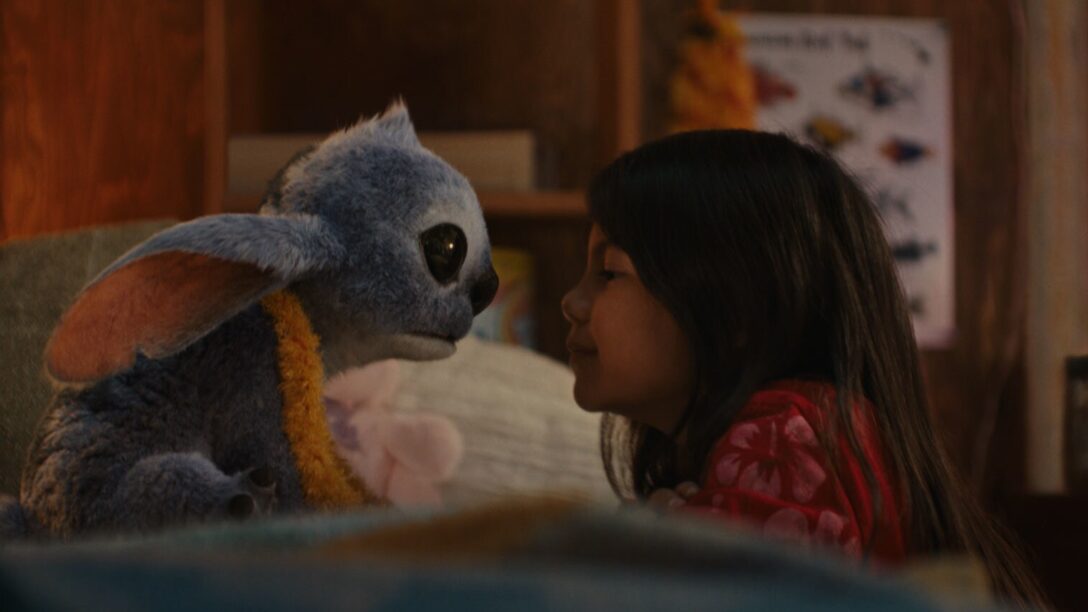
Lilo & Stitch opened with $185 million in its first four days of domestic play, but it almost went straight to Disney+. Likewise, last weekend’s top flick, New Line’s Final Destination Bloodlines ($102 million), was initially developed as a Max original. Instead, Bloodlines is on track to earn more globally than any of the handful of big-deal horror revivals, going back to the Blumhouse-produced Halloween relaunch ($256 million worldwide) in 2018. Almost every studio has at least one movie now seeing theatrical success that was originally intended for streaming.
Paramount’s Smile, from 2022, grossed $218 million worldwide and spawned a new franchise. Warner Bros. just scheduled a new Evil Dead for July 2026—the result of the theatrical success of originally streaming-bound Evil Dead Rise in early 2023. Disney retrofitted a planned Moana Disney+ show into the $1 billion-grossing Moana 2. Indeed, the days of studios sending I.P. films straight to their own platforms, or licensing them to a third-party competitor, are over—at least for now.
2. Even Snow White Couldn’t Kill the Live-Action Remake
After Snow White bombed, many in the industry assumed that live-action remakes of animated classics were toast. But the new Lilo & Stitch’s $350 million global debut suggests that the premonition was unfounded.
Disney should have learned back in 2019 that not all live-action reboots are created equal. The $1 billion-plus successes of The Lion King and Aladdin didn’t mean anything for Dumbo—just because audiences flock to one particular live-action remake doesn’t mean they’ll flock to any remake. The 2002 animated Lilo & Stitch was the only 2000s-era (non-Pixar) Disney toon that was anywhere near as generationally popular as the so-called Waking Sleepy Beauty–era films.
Moreover, the Stitch brand has gained fans over the past 23 years via post-theatrical discovery, direct-to-consumer sequels, and the oft-syndicated animated series that eventually landed on Disney+. It’s a matter of appeal: Unless there’s star power (Angelina Jolie in Maleficent), a novel reinvention (Cruella), or sui generis cinematic razzle-dazzle (The Jungle Book), the source material itself better be popular enough with today’s paying moviegoers to justify the expense. Lilo & Stitch succeeded because it was a Lilo & Stitch remake, and Snow White tanked because nobody cared about the 88-year-old I.P.
3. A Mission: Impossible Movie Should Be Judged as a Mission: Impossible Movie
The eighth Mission: Impossible movie earned $64 million during the Fri-Sun window of its $77.5 million holiday debut, besting the domestic milestone set by the $61 million Fri-Sun launch of Mission: Impossible—Fallout in 2018. Ditto its projected $204.5 million global launch. And yet, whether the supposedly “final” Tom Cruise action sequel ends its run closer to Mission: Impossible—Rogue Nation than Mission: Impossible—Dead Reckoning, it’s still playing like a Mission: Impossible movie. Perhaps the expectations were placed at unfairly high levels due to the $1.5 billion blowout of Top Gun: Maverick.
Sure, Dead Reckoning cost $290 million, while Final Reckoning topped $400 million. But that was primarily due to overages incurred while shooting during the pandemic and dual labor strikes. The larger consideration is that the sequels from the past decade cost between $150 million and $180 million, and benefited from around $12 million in Russia, and between $101 million and $181 million from China, back when American films enjoyed a friendlier marketplace. Final Reckoning debuts on about 800 Chinese IMAX screens on May 30, so we’ll see how it does.
4. IMAX Is Valuable, Not Essential
Yes, IMAX, Dolby, and related premium large format enhancements can persuade consumers to see a given film on the big screen. But if folks want to see the movie, they won’t shy away from non-augmented auditoriums, either. Sinners continued to leg out to nearly 5.5x its $48 million domestic debut—despite not having been in P.L.F. theaters since late April. The sky-high debuts for Barbie and Lilo & Stitch demonstrated that the formats were not zero-sum dealbreakers. Does anyone think Jurassic World: Rebirth is going to bomb because it won’t have IMAX theaters this July? To paraphrase Spider-Man: Homecoming: If a tentpole can’t succeed without P.L.F., maybe it doesn’t deserve them.
5. More Movies, More Money
A key reason we’re seeing a record-high cumulative gross (sans inflation) for the Memorial Day weekend is that the top two earners nabbed more than $260 million combined. However, it wasn’t just the top-tier debuts holding up the fort. The weekend saw a slate of viable holdovers, like Final Destination Bloodlines, Sinners, Thunderbolts, and A Minecraft Movie, contribute a combined $50 million. Meanwhile, A24 expanded the Paul Rudd and Tim Robinson–led comedy Friendship to 1,055 theaters for $5.7 million—a number that would have been impressive a decade ago. Angel Studios’ The Last Rodeo, starring faith-based movie star Neal McDonough, debuted at $6.3 million.
This is how a theatrical ecosystem is supposed to work. We had two mega-movie openers scoring best-case-scenario grosses without somehow cannibalizing each other, all while older movies still generated interest. In the simplest of terms, this occurred because Hollywood bothered to release a comparatively decent volume of movies in April and May, as smaller studios chipped in with underdog sports dramas and character comedies. There was arguably something for everyone, and almost everything earned what it needed to earn for commercial success. It’s too soon to declare what this strong start says about the summer, but it’s trending toward optimism.