Join Puck to listen to this article
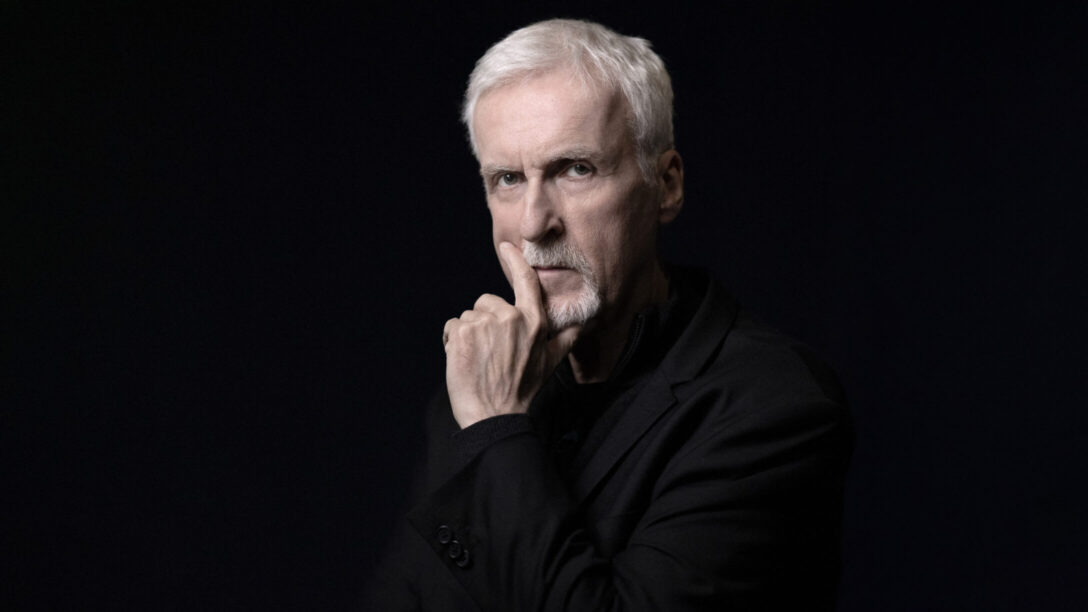
James Cameron might be the best interview in Hollywood. Not, like, someone who saves up an entire career for one great word vomit. Or people who like to pop off and drop F-bombs on politicians (De Niro) or rivals (Barry Diller). Or inadvertent greatness, like when that guy at the Times catches an elderly legend off guard and extracts all kinds of off-the-cuff comments that could get them canceled (Quincy Jones). No, I’m talking about consistency and clarity of insight, total authority, interesting anecdotes, willingness to get testy—and the confidence to have fun.
Cameron, of course, has earned that confidence by directing three of the five highest-grossing films of all time (Avatar, $2.9 billion; Avatar: The Way of Water, $2.3 billion; and Titanic, $2.2 billion, not adjusted for inflation), all of which were nominated for the best picture Oscar (Titanic won). And by using his clout and fortune to explore his curiosities in space travel and the ocean floor. So last week I jumped at the opportunity to visit Cameron, 71, at his studio compound across from the Erewhon in Manhattan Beach, ahead of the press tour for Avatar: Fire and Ash. We talked about everything from his belief in performance capture (the “purest form of cinema acting”) to how much the new movie cost Disney (“one metric fuck-ton of money”) to the coming “Skynet” moment for A.I. The full chat is in two parts on The Town, but I distilled and pulled out some of the most interesting nuggets below…
A.I. and a Netflix “Disaster”
On Netflix buying Warner Bros. Discovery…
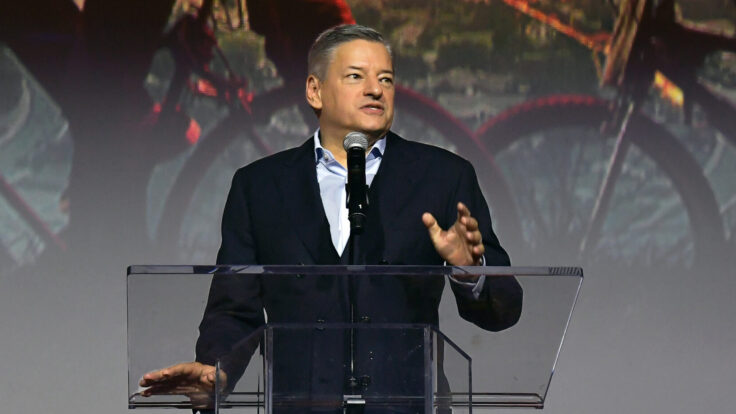
Netflix would be a disaster. Sorry, Ted, but jeez. Sarandos has gone on record saying theatrical films are dead. It’s sucker bait. “We’ll put the movie out for a week. We’ll put it out for 10 days. We’ll qualify for Academy Awards consideration.” I think that’s fundamentally rotten at the core. A movie should be made for theatrical, and the Academy Awards to me mean nothing if they don’t mean theatrical. I think they’ve been co-opted, and I think it’s horrific.
On the streaming takeover of Hollywood…
Streaming got its foothold with the artistic base that they did by throwing crazy money at it and attracting the A-list talent, and then pulling the carpet out from underneath that, right? So now budgets are half or a third of what they were. The [bigger-budget] movies like Dune, Wicked, Avatar, or whatever, they’re not getting greenlit for streaming. And they’re also not getting greenlit by the theatrical side of the existing majors. It’s fallen through the middle.
On what annoys him when people talk about ‘Avatar’ movies…
What annoys me is when it’s misrepresented—especially in media—that, say, Sigourney Weaver voiced the character of Kiri. When you voice a part for, let’s say a Pixar film—we all love Pixar movies; I’m not dissing them. But when you come in to do that as an actor, you stand at a podium for a day or two or maybe three and you say the part, you act it out verbally. And then a team of animators goes off and does the physical character, the visual interpretation of that voice part.
That’s not what Sigourney or any of the other actors did. For making Avatar 2 and Avatar 3, we did 18 months of [performance] capture. They perform everything. Every breath is recorded. Every bit of movement, every hand gesture. If you saw the characters underwater, the actors were underwater. If you saw them riding a creature, they were riding a water jet.
On the allure of performance capture…
I would make the case that it’s the purest form of cinema acting, the purest form of acting in general. What you’ve got is photographic cinema, you’ve got capture-based cinema, and you’ve got theater. Those are basically your three thresholds for acting. And people judge as if 125 years of photographic cinema is best simply because it’s essentially first and the one we all grew up in. But it’s not best from an actor’s perspective. And most actors haven’t done capture, so they don’t know.
On what generative A.I. can and can’t do…
It’s trained on everything we ever valued artistically. So, what you’re going to get is the average. It goes in a blender, and then it precipitates out as a single unique new image, but it’s based on a generic feedstock, if you will. What it can never do is create a unique, lived experience reflected through the eyes of a single artist, right? It won’t select for the quirkiness, for the offbeat. And I think what we celebrate is the uniqueness of our actors, not their perfection, not their kind of glossy, Vogue cover beauty, but their off-centeredness.
On who should police generative A.I.…
We as an industry need to be self-policing on this. I don’t see government regulation as an answer. That’s a blunt instrument. They’re going to mess it up. I think the guilds should play a big role. I mean, the actors certainly did, to the detriment of a lot of people [the 2023 strike], but they definitely drove a flag in the ground over this. I think we have to be self-policing.
We’ve got to talk about it. It’s not a question of what we can legally do, or even ethically, or morally, what we should do, [but] what we should embrace, how we should celebrate ourselves as artists, and how we should set artistic standards that celebrate human purpose. Because the overall risk of A.I., in general—not just Gen A.I., but A.G.I., any form of A.I.—is that we lose purpose as people. We lose jobs. We lose a sense of, “Well, what are we here for?” We are these flawed biological machines, and a computer can be theoretically more precise, more correct, faster, all of those things. And that’s going to be a threshold existential issue.
On his opposition to other forms of machine learning…
That’s Skynet. And it will be Skynet. They always talk about how it’s going to revolutionize medicine and economic efficiencies and there’s going to be this massive [sociological benefit]. Yeah, to the 5 percent of the population that survives the wars that are precipitated by A.I. being put in charge of weapons systems.
On whether he’d collaborate with his friend Elon Musk…
Maybe. I can separate a person and their politics from the things that they want to accomplish if they’re aligned with what I think are good goals. I just think it’s important for us as a human civilization to prioritize—we’ve got to make this Earth our spaceship. That’s really what we need to be thinking.
On the high cost of visual effects…
They’re starting to constrict the number of big, beautiful, imaginative films. A film like Avatar that was new I.P., not based on something that was in a comic book 40 years ago, not based on a bestselling book, just coming out of nowhere, would not get greenlit [today].
“An Asshole in the ‘80s”
On being famously difficult to work with…
Famously is not the same as actually. I’m not! [I’ve aged like] a fine wine, right? I’m a lot more experienced and there’s been a series of evolutions on that. I was an asshole in the ’80s, absolutely. And you know what? That’s what got things done. That’s what needed to happen then. But once you have some stature, you have some responsibility to play within a system and respect other people’s viewpoints and their needs and all that. People are putting up hundreds of millions of dollars. They’re your partner, you’ve got to honor them.
On why nobody is doing big 3D movies like he is…
They’re doing it with conversion. So your Marvel films typically are released in 3D through conversion. It sucks, I know… [Shooting in 3D] is not a pain in the ass at all. On an Avatar set, 3D takes up about two minutes of my day, if that. Every once in a while, there’ll be something that we’re doing that’s a bit unconventional, maybe some splashing coming toward the camera, and I’ll go over and look at a playback of the take. That takes me an extra 30 seconds, and maybe that happens two or three times a day.
When the studio tells a production to shoot in 3D, everything that goes wrong on the movie is 3D’s fault. So that creates a sense, on the studio’s part, over a period of years, “We’re not going to mess with 3D. We’re going to do a conversion.” Now, conversion costs more money than the incremental cost of shooting 3D, which is not zero, but it might be 2 to 4 percent of your entire production budget. It’s not a big deal, as opposed to cramming a fast, bad conversion into your post schedule, and spending $5 million to $8 million doing that, just right out the window to a conversion house, to get a mediocre to bad result that the filmmaker has not put into their authoring. And at the same time, 95 percent of theaters have inferior light levels.
On when Disney’s Bob Iger weighs in with notes…
He’s interesting. He doesn’t weigh in until it’s something for me to show. His comment when he watched [Fire and Ash] for the first time, even though it was at 3 hours, 23 minutes, not including credits at that point, so it’s gotten about 18 minutes shorter since then. He said, “Yeah, I know you’re going to keep chopping away at it. But it’s magnificent.” He basically said, “I love this film.” And it was interesting because there were other heads on the Zoom that were bringing up notes. And he said, “Yeah, you know, I didn’t have a problem with that.” And he basically shot them down on their notes. And I was like, “Okay, we’re done here.”
On why he’s doing a 3D Billie Eilish documentary…
I’ve just admired her career from when she was 15. But my wife, Suzy, is into sustainability and plant-based foods. She’s kind of an entrepreneur. And she knows Billie’s mom, Maggie, very well. I said, “Maggie, why aren’t we shooting the Hit Me Hard and Soft Tour in 3D?” And she said, “I’ll ask Billie.” Now, I hadn’t met Billie at that point. Billie and I met, and I said, “Look, our goal here would just be to shoot your show. I don’t want to impose myself as a director.” In fact, I even offered her, “Why don’t we co-direct this? Because you directed the show. I’ll just show up with cameras and record it, essentially.” And it’s grown a little bit creatively beyond that.
On his interest in something like ‘The Wizard of Oz’ at the Sphere…
I like the Sphere as a format, and I’m looking for a way to actually do something myself. I want to see the decisions that they made around linear narrative with cutting to close-ups and medium shots and wide shots and how well that worked. I’m [also] vehemently opposed to people changing somebody else’s art..
On David Zaslav appearing in ‘The Wizard of Oz’ at the Sphere…
That’s fiddling while Rome burns.