
In the latest installment of Puck’s weekly dialogues about A.I.—an editorial conversation series presented by Meta—I connected with Wall Street expert and Dry Powder author Bill Cohan to ask a handful of pressing questions about how the technology is changing the financial industry. What are the implications for dealmaking? Sure, Nvidia is now one of the most valuable companies on the planet, but what else does the frenzy surrounding A.I. portend for investors? And how are Wall Street’s biggest banks wetting their beaks? We discuss all that and more in this lightly edited conversation below.
Baratunde Thurston: As a former M&A banker and someone who has covered Wall Street closely for such a long time, via award-winning books and now in Dry Powder, I wonder what you’re hearing about how A.I. is invading the world of finance?
Bill Cohan: There are several parts to this. There’s the investment banking opportunity that A.I. presents, which consists of raising capital, equity and debt financing, valuing these companies, and convincing them to go public. These are the things that bankers on Wall Street salivate over. When a company like Nvidia is suddenly worth more than $3 trillion, that’s like an investment banker’s wet dream. All of the companies that are involved in A.I.—Nvidia, OpenAI, Alphabet, Meta, Microsoft, etcetera—create an investment banking frenzy. But it seems awfully toppy and hyped-up to me; you just never know how high these things can go. Trees don’t grow to the sky, as we say on Wall Street.
Then there’s the question of whether A.I. will replace jobs and functions on Wall Street. Do you need a two-year analyst out of Wharton, crunching numbers, doing deal comps, Excel models, pitch books, etcetera? Senior bankers love to have junior investment bankers spend their time churning out pitch books and graphs they think are going to be important in a meeting with their clients, but never are. There was talk of A.I. replacing junior bankers, but I haven’t heard any examples of that yet. That doesn’t mean it won’t happen as A.I. gets smarter, better, and more accurate. But you’re going to have to check everything that A.I. produces, so why bother going down that road in the first place?
I’m curious how automation in general has impacted the way that Wall Street operates—and whether its history can offer some clues about what the future will look like.
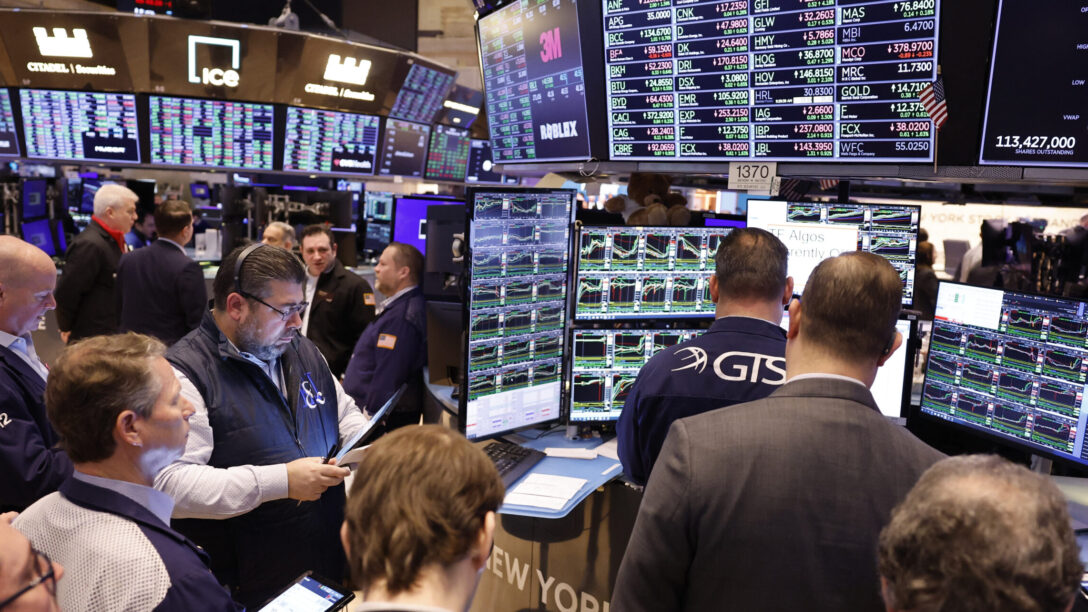
Of course, technology has radically changed the way Wall Street functions. There was a big financial mess in 1969 and 1970 called the “back-office crisis” because the magnitude of trades that were being processed on a daily basis—and everything that was needed to process, document, and confirm those trades—couldn’t keep up with the actual trading volume. That was probably the first crisis of technology on Wall Street. We’ve come a long way from that. So many trades are now fully automated. And now that we have smartphones, you’re always on call. And guess who’s not the slightest bit shy about taking advantage of that access? Senior bankers on Wall Street trying to abuse junior bankers on Wall Street.
Does Wall Street tend to embrace innovative technologies and practices when they come along?
Believe it or not, Wall Street isn’t a particularly innovative place. They sort of latch on to things that work and hang for a long time. When there are innovations, it can be very exciting. They’ve been trying to bring fintech to Wall Street, but let’s face it, the whole fintech thing was a bunch of garbage. JPMorgan is making $50 billion in net income a year, and there’s no fintech company that’s anywhere near that—and there won’t be.
Look at the innovation of something like high-yield bonds, which was one of the greatest financial innovations of the 20th century. What happened? Drexel was the innovator and had a huge market share, and it created resentment, envy, and jealousy around the rest of Wall Street. Then [Drexel’s] Michael Milken started doing things that were illegal, ultimately ending up in prison and barred from the industry for life. Drexel went out of business. Borrowing short, lending long disappeared. And yet, the high-yield market is as important as ever, even though everybody takes the high-yield market for granted. But that innovation was 40 years ago.
What are the biggest questions you have about A.I. and its influence on the financial industry? What should we be bracing ourselves for?
There’s the question of who is going to suffer most when the Wall Street hype machine is done hyping up A.I. companies. We’re not done because a lot of these companies—like Anthropic, OpenAI, and xAI—haven’t gone public yet. It’s going to reach its crescendo when they do. And Wall Street is going to hype up those stocks out of control, and people are going to buy into them because nobody’s better than Wall Street at selling and hyping. And all of these retail investors and individuals around the world are going to buy into these things, and they’ll trade way up, and then they’ll trade way down. The institutional investors, the underwriters, and the founding shareholders will all make a killing. And the retail investors could get stuck holding the bag, as they always do. So that’s one thing I worry about.
Speaking of Anthropic, I recently interviewed one of the company’s co-founders, Jared Kaplan, on my Life With Machines podcast. He talked a bit about customers’ ability to customize A.I. to their own needs and tone rather than be something generic. I’m curious whether you think that’s a challenge on Wall Street, which is such a high-touch, white-glove, service-oriented business.
Well, I do worry about the replacement of workers and expertise. Wall Street is also an apprenticeship business. Personally, I don’t think you can replace human capital and human knowledge. It takes many years; it’s like a Florentine guild. You really have to learn the art of investment banking and the art of Wall Street. And I’m sure cost-cutters at the top who are trying to please shareholders are going to think, We’ll just introduce this science of Wall Street and that’ll replace the art of Wall Street. And the truth is, you just can’t do that—but that doesn’t mean people won’t try. Wall Street is a very bespoke business, just like writing and journalism is very bespoke. I feel like everything I do is utterly bespoke, and it’s going to stay that way as long as I’m doing it. I’m not gonna rely on ChatGPT, or Claude, or any of that stuff.