
Two of the three major studio releases of 2025 have already performed as well as could be expected. Indeed, with Den of Thieves 2 notching a $15.5 million opening, followed by Sony’s R-rated comedy One of Them Days earning $13 million over the M.L.K. holiday frame—you could be forgiven for thinking it’s 2010 all over again. But the success of those relatively modest releases can’t compensate for a holiday weekend that was among the worst since the late ’90s. This dissonance once again reveals an industry in existential crisis: Overall grosses now must be weighed against how each film performs in relation to the new expectations and financial requirements of this multichannel age.
The Survive ’til ’25 mantra has landed movies at a crucial crossroads. With the pandemic and strike delays finally gone, this year’s slate will approximate the number of wide theatrical releases that the exhibition industry became accustomed to in the late 2010s. But will that volume lead to 2010s-level box office? Here’s a closer look at five of the biggest themes, anxieties, and fantasies as the year kicks off…
I. Can the International Box Office Recover?
While the theatrical industry was preoccupied with whether last year’s overall domestic box office could reach 2023’s #Barbenheimer-enhanced $8.9 billion, it should have been more concerned with the overseas marketplace. In 2024, non-domestic revenue fell 10 percent year over year, compared to 3.3 percent in North America.
That decline was driven by a 25 percent drop in China, where economic struggles have impacted local moviegoing and recent U.S. tentpoles underwhelmed, with none topping $500 million. A stronger dollar is partly to blame, but so is a global populace that has grown less reliant on theaters for their access to American pop culture. The Ryan Gosling–Emily Blunt action-comedy The Fall Guy did $92 million domestic, $181 million worldwide, and ended up with a 51/49 domestic/international split. Meanwhile, the Ryan Reynolds-starring, John Krasinski-directed If netted a 58/42 split, earning $111 million in North America—a terrific result for an original, non-action, kid-targeted flick—but only $192 million worldwide. Likewise, the Daisy Edgar-Jones– and Glen Powell-led Twisters earned a rousing $270 million in North America, but barely cracked $100 million internationally.
By now, Hollywood has largely written off the Chinese market for most tentpoles, treating a periodic breakout like Alien: Romulus ($351 million worldwide, with $110 million from China) as a pleasant surprise. But the overall non-domestic dip was 10 percent even outside of China, including 17.5 percent in Japan and 10.7 percent in South Korea.
Yes, breakouts like Wonder Woman or Wicked: Part One, where the domestic overperformance is such that only adequate overseas grosses are required, still happen. And globally skewed hits like Mufasa: The Lion King—which has earned $382 million out of its current $591 million worldwide cume outside of North America—are still possible. But the notion of a nostalgia franchise like Beetlejuice Beetlejuice playing hard only in North America may presage a durable trend. The once-conventional 40/60 split, even for domestic successes, can no longer be taken for granted.
Will this mean that two of this year’s likely global megahits, Jurassic World: Rebirth and Avatar: Fire and Ash, will have to pull more of their weight stateside than previous installments? Perhaps, although those franchises tend to buck the trends by virtue of their uniqueness and generational popularity. Moreover, it’s not like either title will suffer if it earns only 75 percent of its predecessor—or around $750 million and $1.74 billion, respectively. But they are the exceptions, not the rule.
II. Has Marvel Lost Its Luster?
Disney gave the MCU a sabbatical in 2024, slating just one surefire smash—Deadpool & Wolverine—for the entire year. Part of that film’s success can be attributed to the fact that it featured established franchise characters, beloved even among those unafflicted by a slavish devotion to the MCU. Marvel won’t have that same assurance this year. After all, Captain America: Brave New World, Thunderbolts, and The Fantastic Four: First Steps feature new, or at least less established, characters. Still, Disney is hoping that this trio can pull grosses closer to Phase Two (Thor: The Dark World, earning $644 million) than Phase One (Thor, earning $449 million).
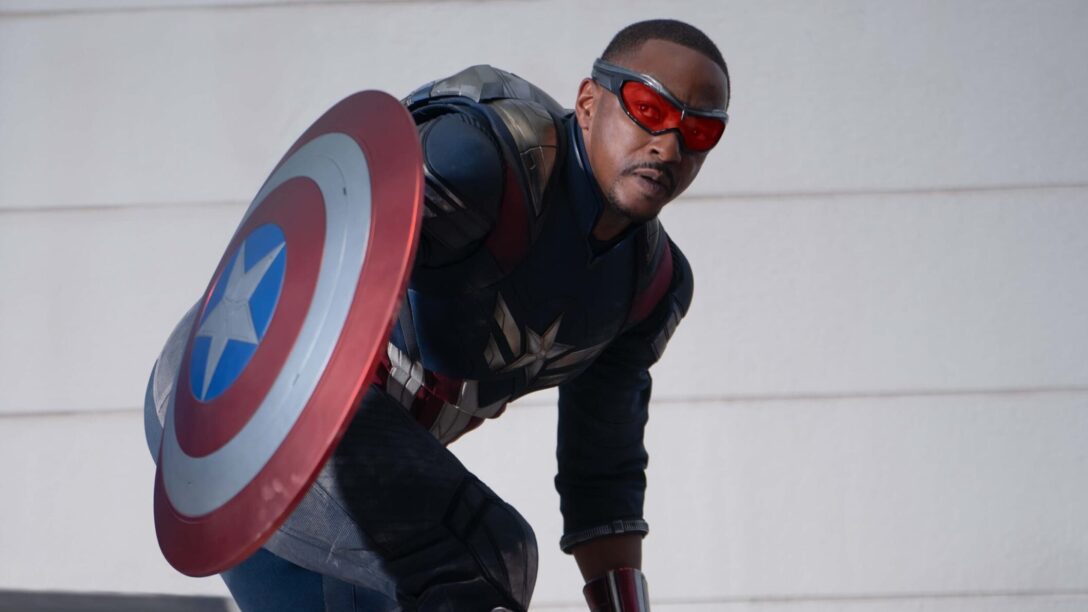
But will general audiences care about another Captain America movie—this one headlined by Anthony Mackie—nearly six years after Chris Evans handed off the shield in Avengers: Endgame? Will Thunderbolts prove to be a must-see MCU summer kickoff despite an ensemble cast populated with B-level characters plucked from B-level MCU movies and Disney+ shows? Meanwhile, The Fantastic Four: The First Steps will be the fourth attempt in just over 30 years to turn Marvel’s “First Family” into a viable franchise.
While Captain America: Civil War earned $1.15 billion in May of 2016, that picture was sold as a glorified “Avengers 2.5.” The sequel pitted Earth’s mightiest heroes against each other while introducing MCU versions of Spider-Man and Black Panther. This time out, Brave New World will be essentially just a Captain America movie with a non-Steve Rogers Captain America, albeit with Harrison Ford included.
As we’ve seen recently, the MCU isn’t the primary selling point that it once was. Eternals barely cracked $400 million in 2021, and The Marvels got to only $200 million in 2023. That in-universe continuity no longer had enough automatic must-see value to pull grosses in the $675 million to $875 million range—i.e., on par with what used to be expected for non-Avengers Marvel movies.
If only established MCU franchises, such as Doctor Strange or Thor, reach upper-level Phase Two grosses, Disney will be in a bind. You can only recapture 2010s glory by casting Robert Downey Jr. as Doctor Doom so many times. And the multiplex industry that once depended on the MCU franchise as an over-indexing buffer will have to hope that other tentpoles can make up the difference, while non-tentpoles overperform here and there.
III. Are Old Franchises the New Comedies?
These days, it often takes familiar, nostalgic packaging to fill theaters. Audiences will show up for a good laugh only if the film is a hybrid action-comedy, horror-comedy, or within an established and often fantastical franchise. (Think Barbie, Inside Out, Despicable Me, Deadpool, Beetlejuice, M3GAN, and Bad Boys.) This year, Hollywood will apply that logic to smaller-scale, less tentpole-sized properties. At least, that’s the optimistic view of how this year’s revivals will pan out.
Disney’s Freaky Friday: Freakier Friday is a pure nostalgia play that targets the grown-ups who made the Lindsay Lohan–Jamie Lee Curtis remake a hit more than 20 years ago. The same could be said of Paramount’s Naked Gun reboot, starring Liam Neeson and Pamela Anderson. Sony’s comedic Anaconda revamp, starring Jack Black and Paul Rudd, could be another example of a studio scraping the bottom of the barrel for any past hit that could be retrofitted into a franchise reboot. Sony, however, could potentially learn from its blockbuster Jumanji revival, and craft something good enough to appeal to moviegoers who couldn’t care less about the original. Along with Paramount’s planned Scary Movie revival, these remakes could remind audiences that they used to show up to theaters for the exclusive purpose of laughing for 90-120 minutes. (This year also features legacy sequels of Karate Kid and I Know What You Did Last Summer, but neither is a reboot or remake.)
IV. Will F1 Change Apple’s Thin-Skinned Stance on Theaters?
Set for a late June theatrical release, courtesy of Warner Bros., the very pricey Joseph Kosinski-directed Formula One melodrama starring Brad Pitt may be the final test for Apple’s theatrical release strategy. After a string of embarrassing flops like Argylle and Fly Me to the Moon, bad press on F1 could take Apple out of the theatrical game for good.
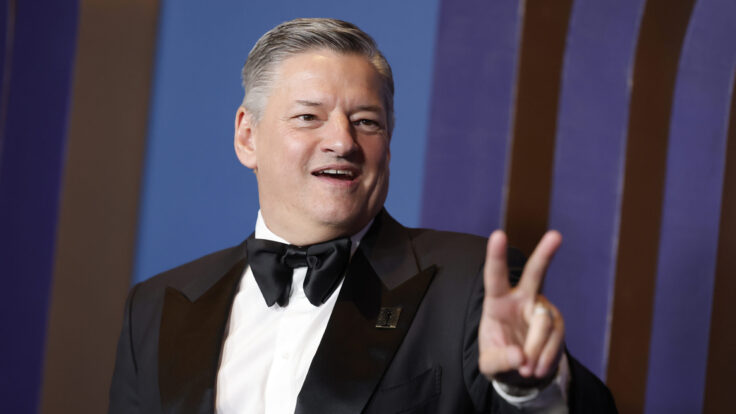
So the stakes are high. As we saw with Margot Robbie’s Wuthering Heights, which Warner Bros. snatched from Netflix with less money but the promise of theaters, the out-of-home debut remains a powerful carrot. Netflix likely won’t budge beyond limited—or, perhaps, token—theatrical releases. Success for the just-announced, Imax-only, four-week theatrical window for Greta Gerwig’s Narnia over Thanksgiving 2026 is unlikely to turn Ted Sarandos into a multiplex true believer. And my guess is that Apple, despite its borderline fanatical desire to work with major stars and filmmakers, will only open itself up to theatrical if F1 becomes an unquestionable commercial success.
V. Is Zaz Betting Warners on a Retro Strategy?
Despite all the emphasis on James Gunn’s long-awaited Superman, Warners’ ’25 theatrical slate is the most ambitious and original of any major studio this year, featuring several big cinematic swings for film chiefs Mike De Luca and Pam Abdy. Is this the result of David Zaslav’s desire to promote Warner Bros. as a big-deal, old-school movie studio, or simply make it (and/or WBD) more attractive to buyers? Perhaps it’s a bit of both.
A reportedly $130 million Paul Thomas Anderson film, even one starring Leo DiCaprio, sounds like commercial madness, particularly after the lopsided buzz-to-box office performance of Licorice Pizza. Indeed, There Will Be Blood is P.T.A.’s top grosser, with just $76 million worldwide. But DiCaprio is among the last butts-in-seats, bona fide movie stars, so if ever there were a time to place a bet on the auteur, this might be it.
Warners will also release Bong Joon Ho’s Mickey 17, a reportedly $118 million sci-fi comedy starring Robert Pattinson; Barry Levinson’s mob drama The Alto Knights, starring two Robert De Niros; and Ryan Coogler’s vampire movie, Sinners, starring Michael B. Jordan as twin brothers, potentially a future franchise. In the key early October slot, where WB launched Joker, Gravity, and A Star Is Born, the studio is releasing The Bride!, a Bride of Frankenstein riff written and directed by Maggie Gyllenhaal, starring Jessie Buckley and Christian Bale.
Yes, Warners still has franchise flicks like A Minecraft Movie, The Conjuring: Last Rites, and Mortal Kombat 2. But the De Luca-Abdy non-franchise lineup suggests an alternate, retro universe, where audiences still show up for original movies because of the concepts, well-liked stars, and filmmakers. Audiences certainly claim they want those movies… If they actually do, Warner Bros. could emerge from 2025 as more than just the home of Batman and Harry Potter, and maybe give Zaz a reason to fetch his tux from the dry cleaner.